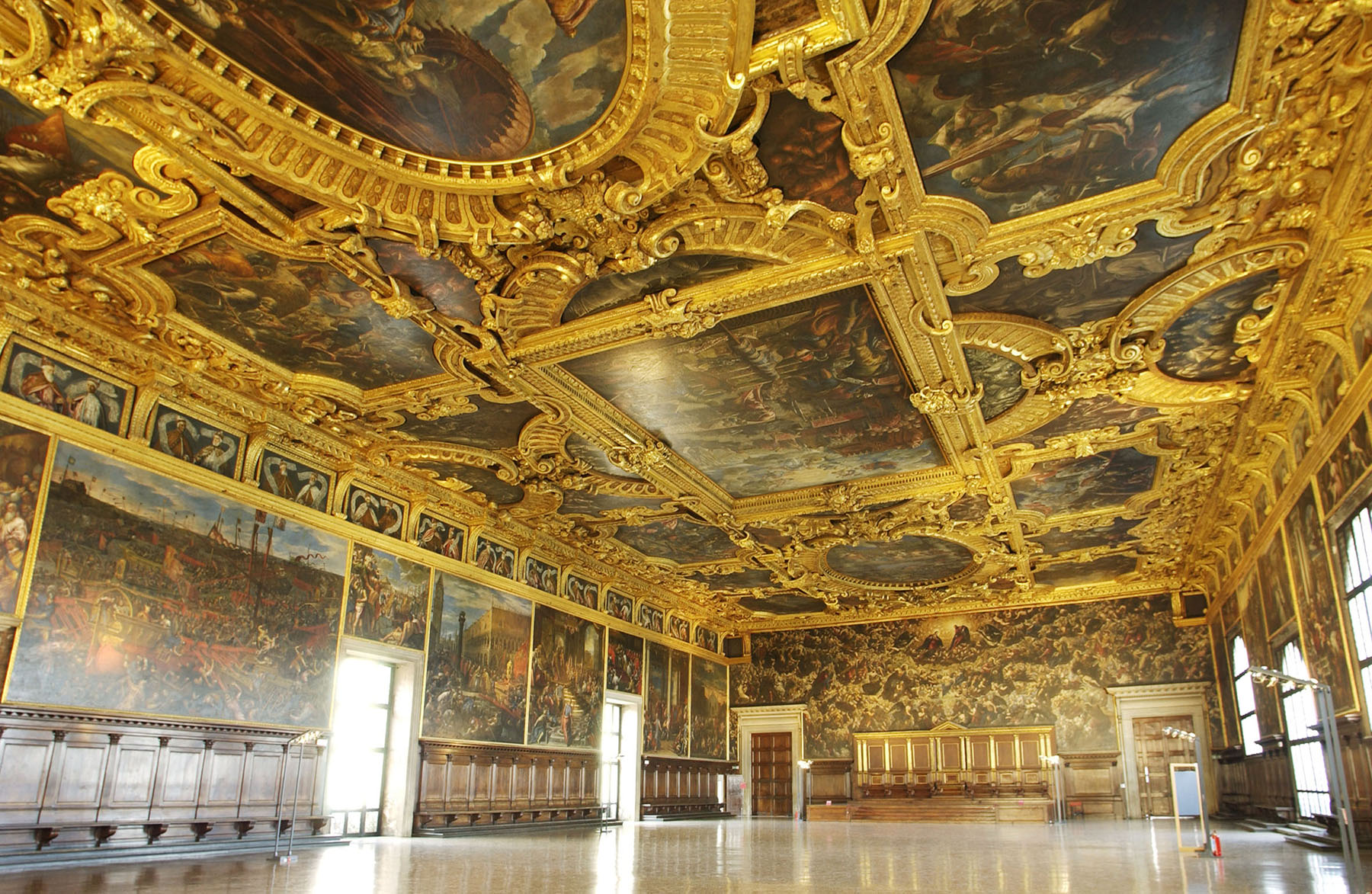
The Cuoi Room
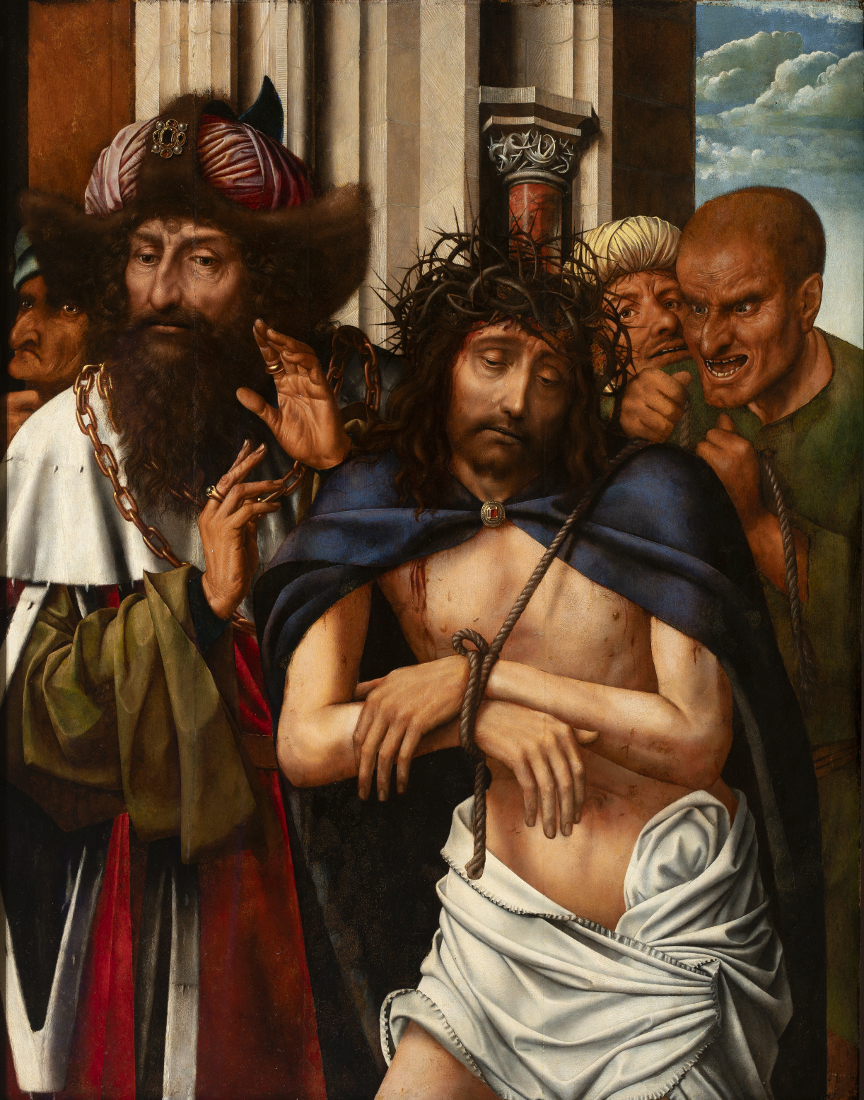
Quentin Metsys (ca. 1465-1530)
Christ Mocked, ca. 1529
Oil on panel
The depicted episode takes up the passage from the Gospel of John in which Christ, after his capture, is presented to the crowd with the words “Ecce homo” or “Behold the Man!”.
The painting captures the moment in which the body of Christ, already emaciated and suffering, is offered by his tormentors to the crowd. Behind him, a man with aggressive and violent features holds the rope that binds his hands. To the left of Jesus is Pontius Pilate, richly dressed: with the gesture of his hands he intends to communicate his non-involvement in the facts, but his gaze betrays the doubt of having condemned an innocent man. Documented in Venice already in the late sixteenth century, as evidenced by the numerous derivations, including a copy preserved today in Museo Correr and a mosaic by Antonio Zuccato dated 1587, this work was noticed in 1581 by Francesco Sansovino, who remembers it on the altar of the small church of Palazzo Ducale.
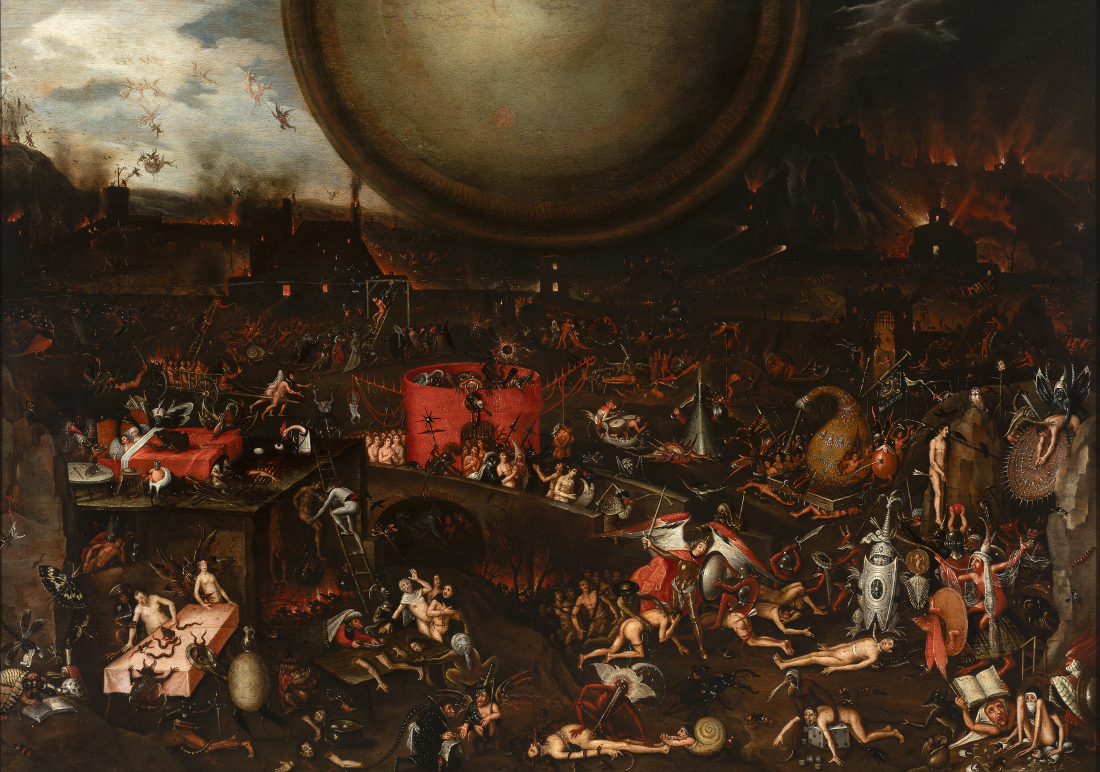
Hieronymus Bosch (follower of)
Apocalyptic Vision, third quarter of the 16th century
Oil on panel
The panel depicts an apocalyptic vision, generally identified as a depiction of hell. The theme was very dear to the followers and imitators of Hieronymus Bosch, a highly renowned Dutch painter active between the end of the fifteenth century and the beginning of the sixteenth century.
The set of these curious and at times cruel scenes directly recall some of the models used by the Flemish master in his works. What stands out is the attention to detail, a typically Flemish feature that was appreciated by numerous Venetian collectors of the time, interested in creating universal encyclopedic collections.
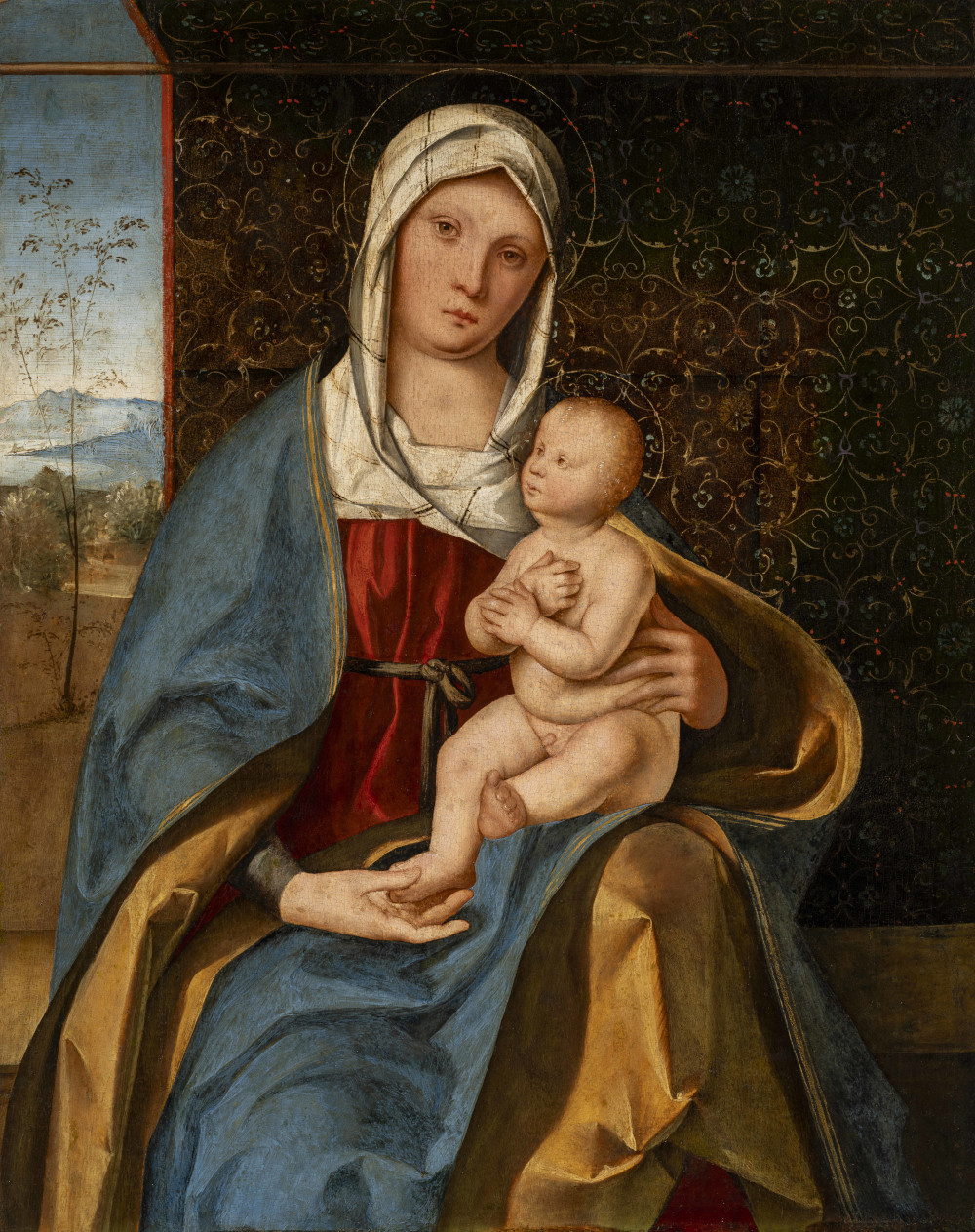
Boccaccio Boccaccino (ca. 1466-1524)
Madonna and Child, 1504-1506
Tempera on panel
This work has been attributed by scholars to the Venetian period of Boccaccio Boccaccino, and is connected to the stylistic models of the Sacre Conversazioni popularized in Venice by Giovanni Bellini.
Here, the artist reinterprets—with some variations—the central portion of another of his compositions, now housed in the Museo Correr: Madonna and Child between Saint John the Baptist and Saint Justina.
However, in his own version, Boccaccino stylizes the folds of the garments, emphasizing the broad areas of color.
The painting belongs to a larger group of works the artist produced in significant numbers, responding to a well-established and growing demand from collectors.
Conservation funded by Save Venice with a contribution from Charles Tolbert in memory of Fredrina Tolbert.
Vincenzo Catena (ca. 1470-1531)
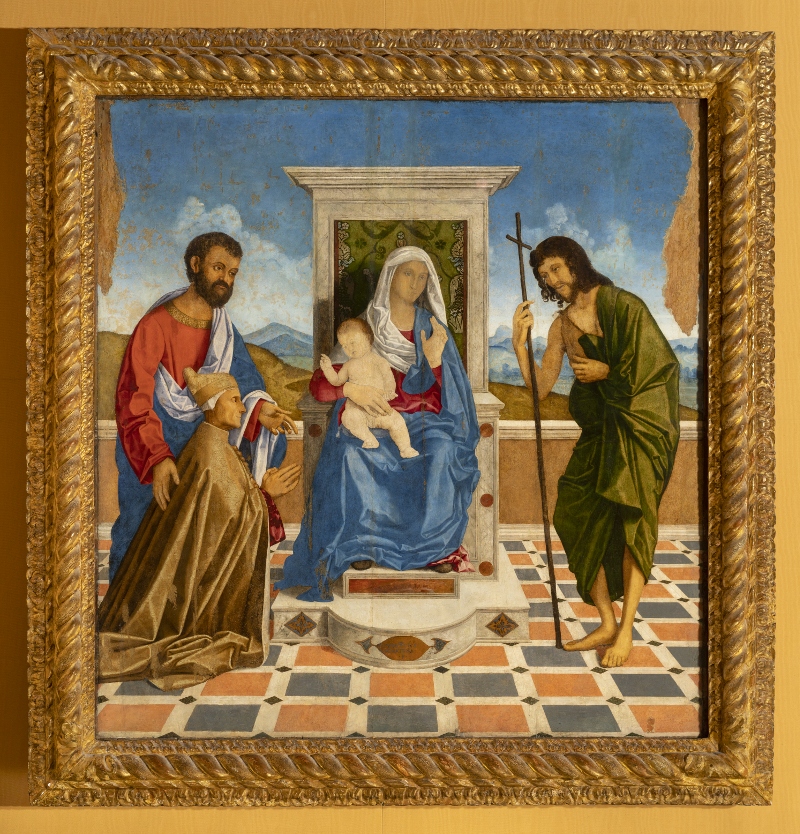
Virgin and Child between Saint Mark, Saint John the Baptist and the Doge Leonardo Loredan, 1505-1507
Oil on panel
The altarpiece was commissioned by Doge Leonardo Loredan (1501-1521) whom we see depicted on his knees, at the foot of the throne with the Virgin and Child. Behind him, there is Saint Mark who presents him to the holy family and on the right Saint John the Baptist, observing the scene.
The work, signed, adheres to the model of the devotional paintings of the doges at Palazzo Ducale and must have initially been placed on the altar of the Church in the Palace, when it occupied the space corresponding to today’s Antichurch. At the end of the sixteenth century, the altarpiece was moved above the entrance door of the current church.
Galería