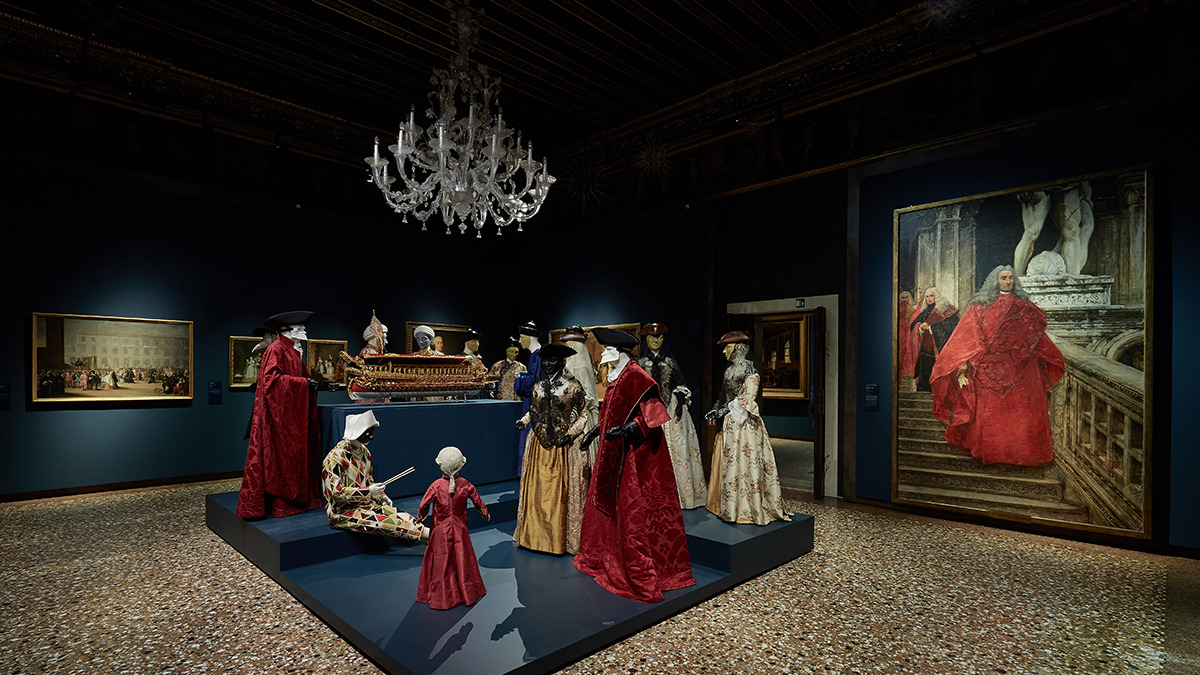
After the collapse of the Republic in 1797, Venice was passed back and forth between French and Austrian control for almost twenty years.
In 1807, Napoleon made his triumphal entry into Venice not from the sea, as was traditional, but from the mainland. A temporary triumphal arch was built in front of the church of Santa Lucia, a location that proved to be prophetic. Three decades later, this became the terminus of the railway line that connected Venice to the mainland. No longer an empire, no longer independent, Venice was no longer even an island.
As revolution swept Europe in 1848, Venetians cast out the Austrians and proclaimed the new Republic of San Marco, consisting of the city and many of its former territories on the terraferma. But independence was to last only seventeen months. The Austrians reconquered the mainland territories one by one, beating Venetian forces back to the city itself. Although the Republic’s assembly voted in April 1849 to resist “at any cost”, relentless bombardment of the city, coupled with famine and cholera, forced the Venetians to surrender in August. Another seventeen years of Austrian rule followed, during which Venetian hopes turned in a new direction.
JOINING ITALY 1846, 1866
“I was born a Venetian and I will die an Italian”. Ippolito Nievo, 1858
With the completion of the railroad bridge to the mainland in 1846, Venice joined the Italian peninsula. Politically, after the failure of the revolution of 1848-49, Venice’s hopes for an end to Austrian occupation became invested in the Risorgimento, the movement to unify Italy under King Victor Emmanuel II of Savoy.
The early operas of Giuseppe Verdi, especially their patriotic choruses, provided a soundtrack to the Risorgimento, giving expression to the long-frustrated desires of the Italian people. His Attila, which premiered at the Teatro la Fenice in 1846, depicted the birth of Venice by freedom-loving citizens fleeing Attila the Hun as the rebirth of the Roman Empire, rising anew from the ashes of its defeat like the legendary phoenix. One line inevitably evoked cheers: “You may have the universe, but leave Italy for me!”
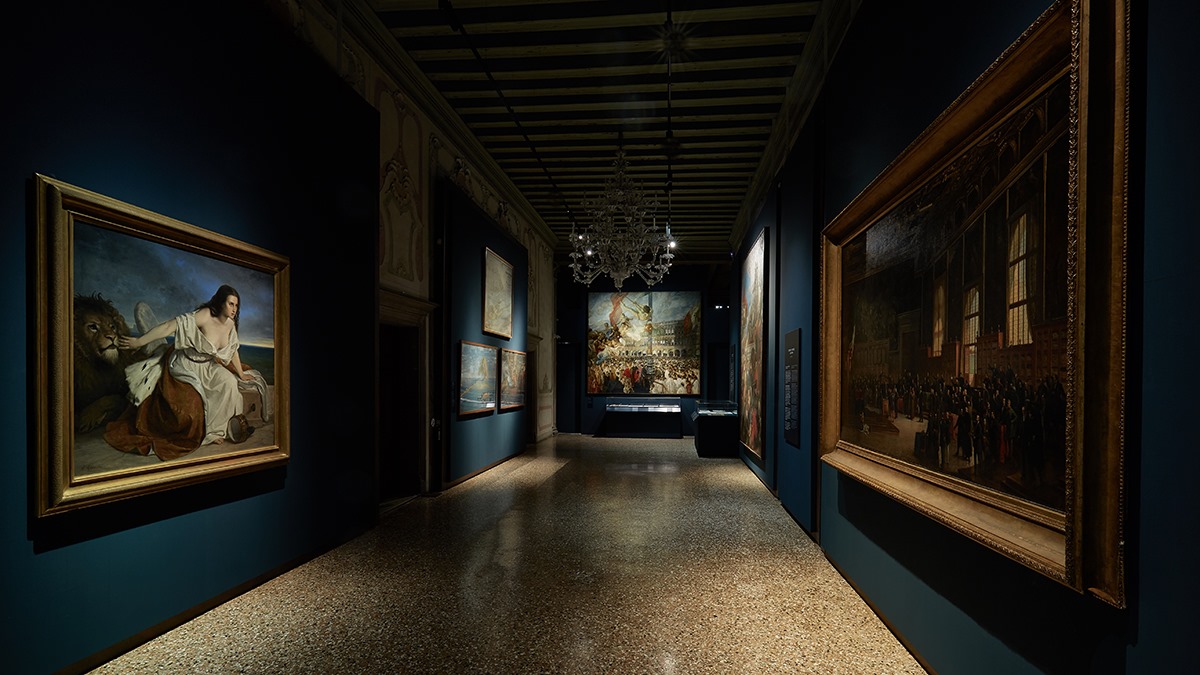
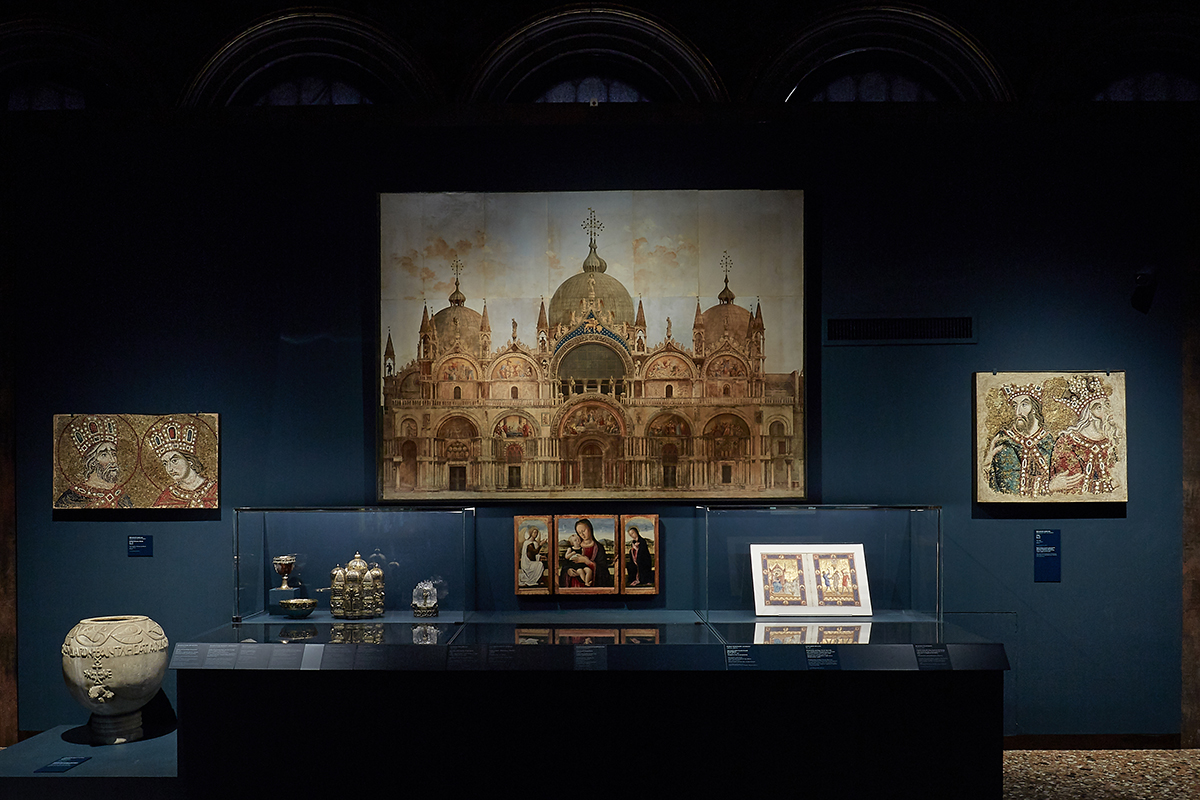
The Kingdom of Italy was achieved in 1861, but Venice was not yet a part of it. Two paintings displayed here express the hopes of Venetians to join the new nation. Five years later, in 1866, after the defeat of Austrians and a referendum that overwhelmingly supported unification, Venice and the Veneto finally became part of Italy.
Once the capital of an empire, Venice was now a city among many in a new country, but a city that for the first time in seven decades was free to govern itself – a partner in the project of a united Italy.
“HOW IT WAS, WHERE IT WAS” 1836, 1902, 1996
On 14 July 1902, the Campanile of San Marco collapsed, weakened over centuries by lightning strikes, fire, and earthquakes, leaving a pile of rubble twenty meters high. That very evening, the council of the Commune of Venice met in emergency session and voted to rebuild.
Some questioned whether the new structure should exactly replicate the old one. “Why should the modern style not also be represented in the Piazza of Venice?”, one Viennese architect wrote. As the debate became heated, the mayor of Venice asserted the traditionalist position: “How it was and where it was – and so it shall be”.
The Modernists were routed. The rebuilt structure – apparently unchanged, although employing modern construction methods – was inaugurated on 25 April 1912, believed to be exactly 1000 years after original tower had been begun.
Like the Campanile, the Teatro la Fenice – prophetically named after the mythical Phoenix – embodies Venice’s ability to rise up after even the most disheartening disasters. First erected in 1792, the opera house was completely destroyed by fire in 1836 and again in 1996. Rebuilt both times, it stands today in its original location, “how it was, where it was.”