Passer au contenu principal
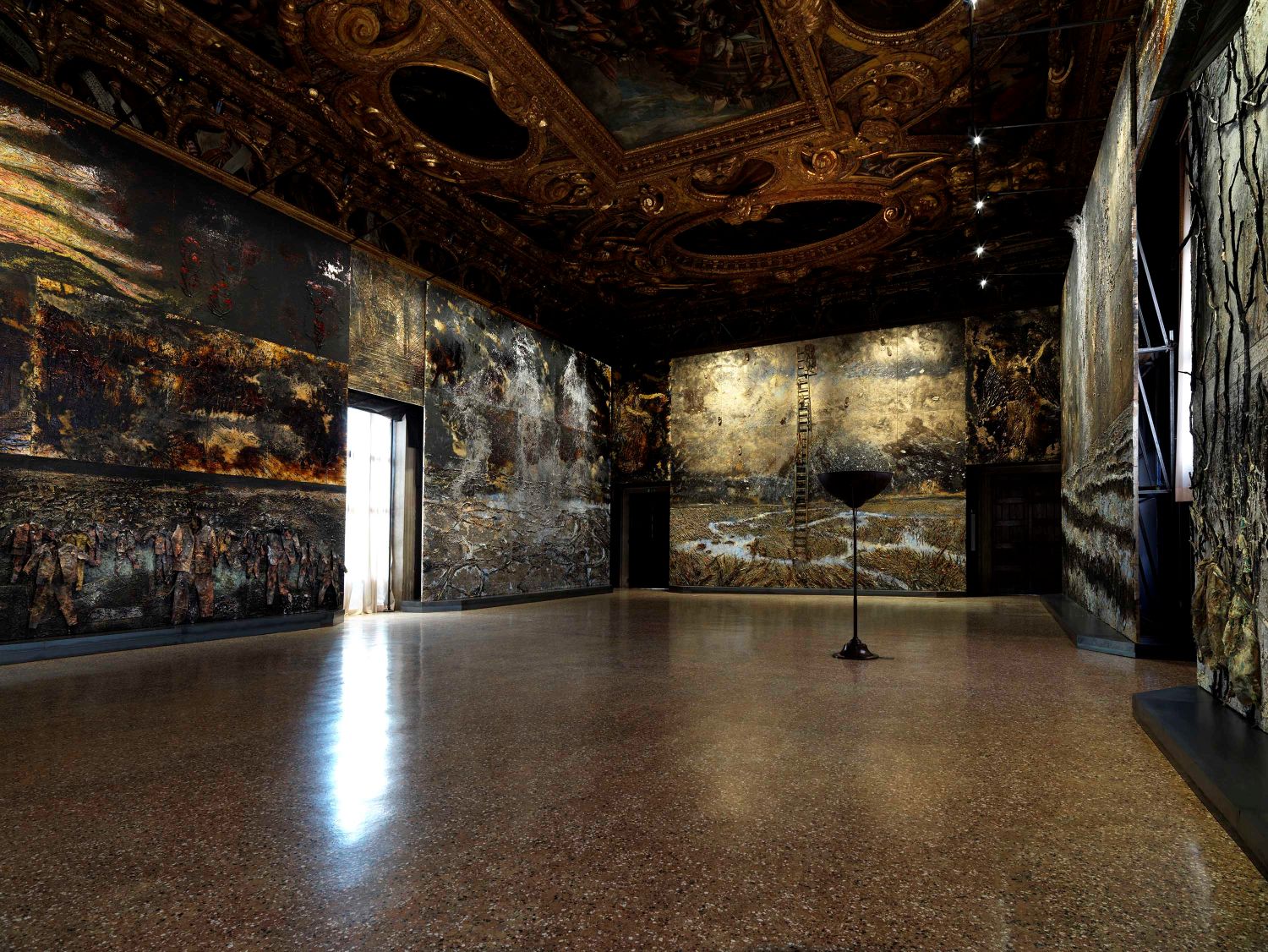
Veduta Mostra Anselm Kiefer

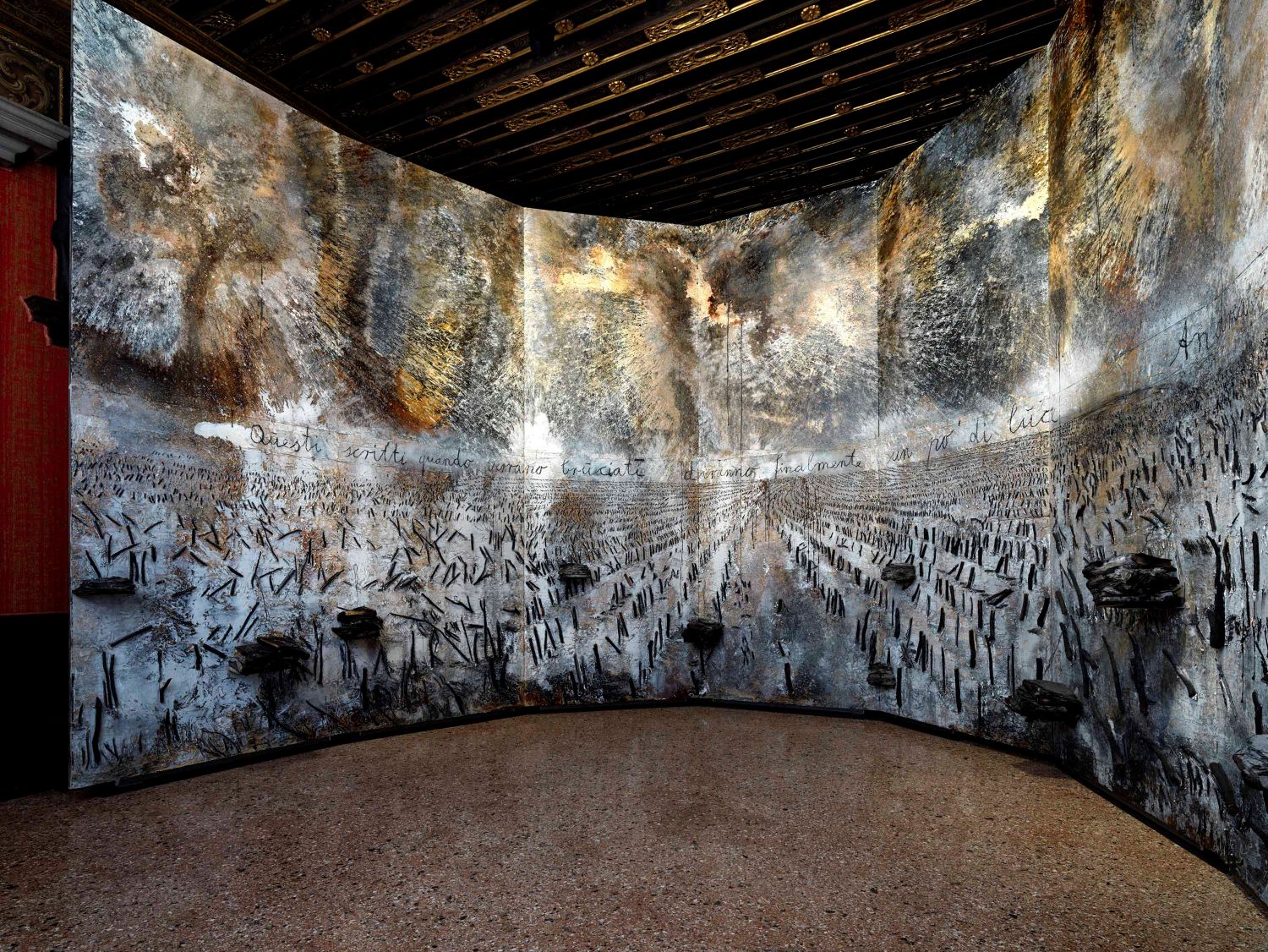
Anselm Kiefer. Questi scritti, quando verranno bruciati, daranno finalmente un po’ di luce (Andrea Emo)

Curated by: Gabriella Belli and Janne Sirén

With Anselm Kiefer contemporary art will be coming to the Palazzo Ducale, with an exhibition that is set to be the centrepiece of the fifth edition of MUVE Contemporaneo, the biennale organized by the Fondazione Musei Civici di Venezia and the key concern of which is to reflect on the relationship between contemporary art and museums.

The opening of the eagerly awaited installation by Anselm Kiefer, one of the leading artists active today, is part of the celebrations for the 1600th Anniversary of the Foundation of Venice. The title of the work is from the writings of the Venetian philosopher Andrea Emo: Questi scritti, quando verranno bruciati, daranno finalmente un po’ di luce (These writings, when burned, will finally cast a little light).

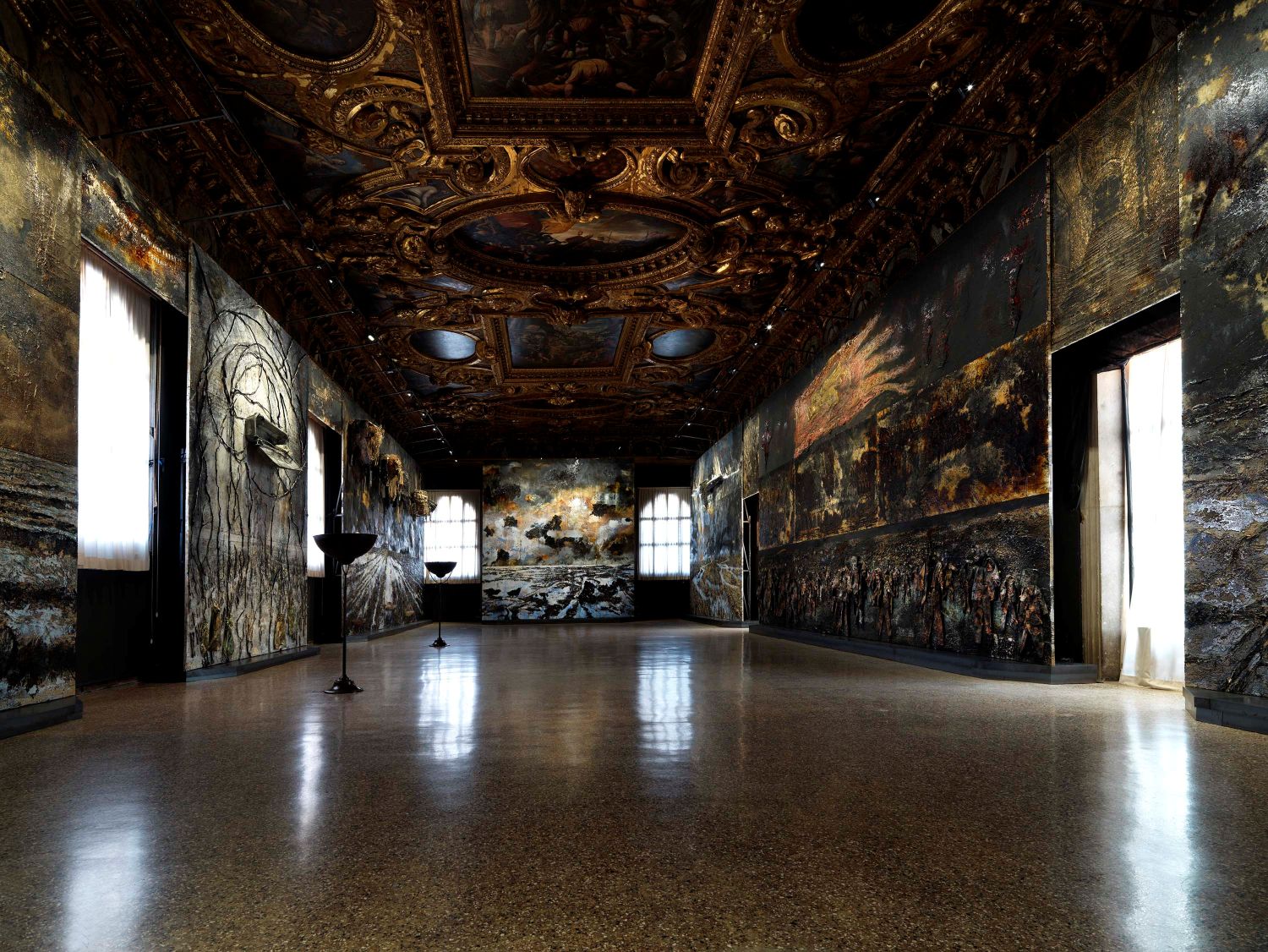
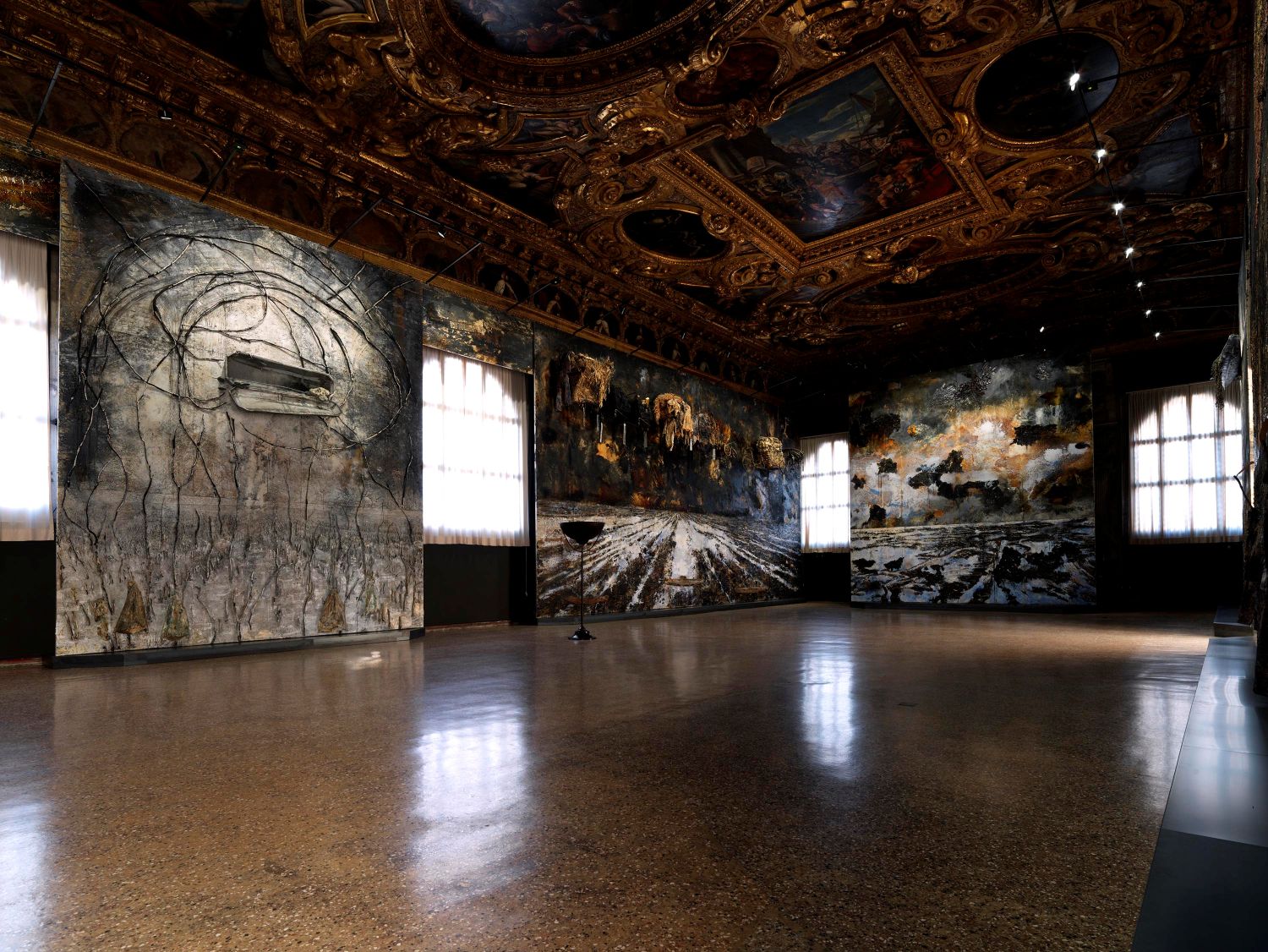
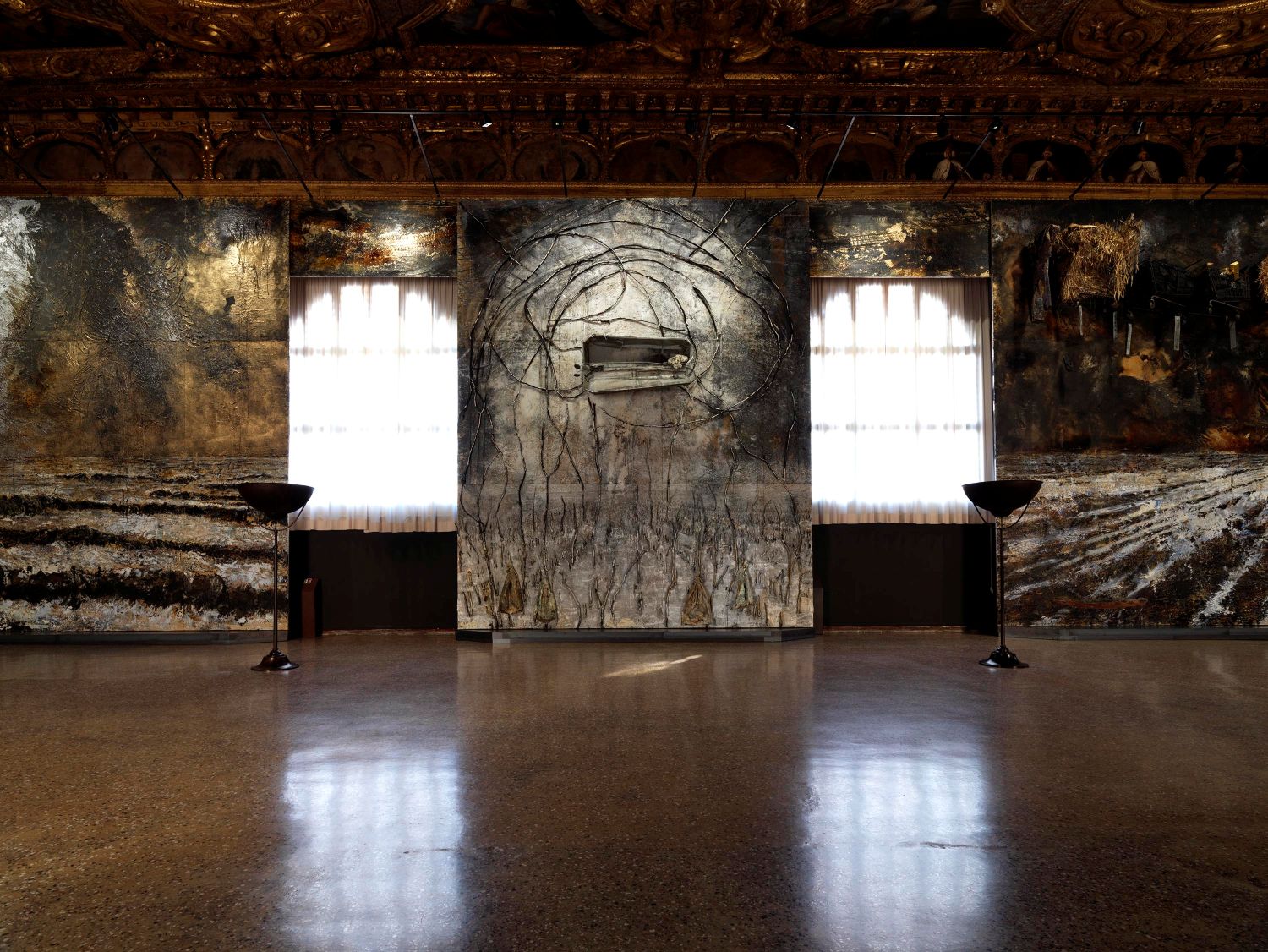
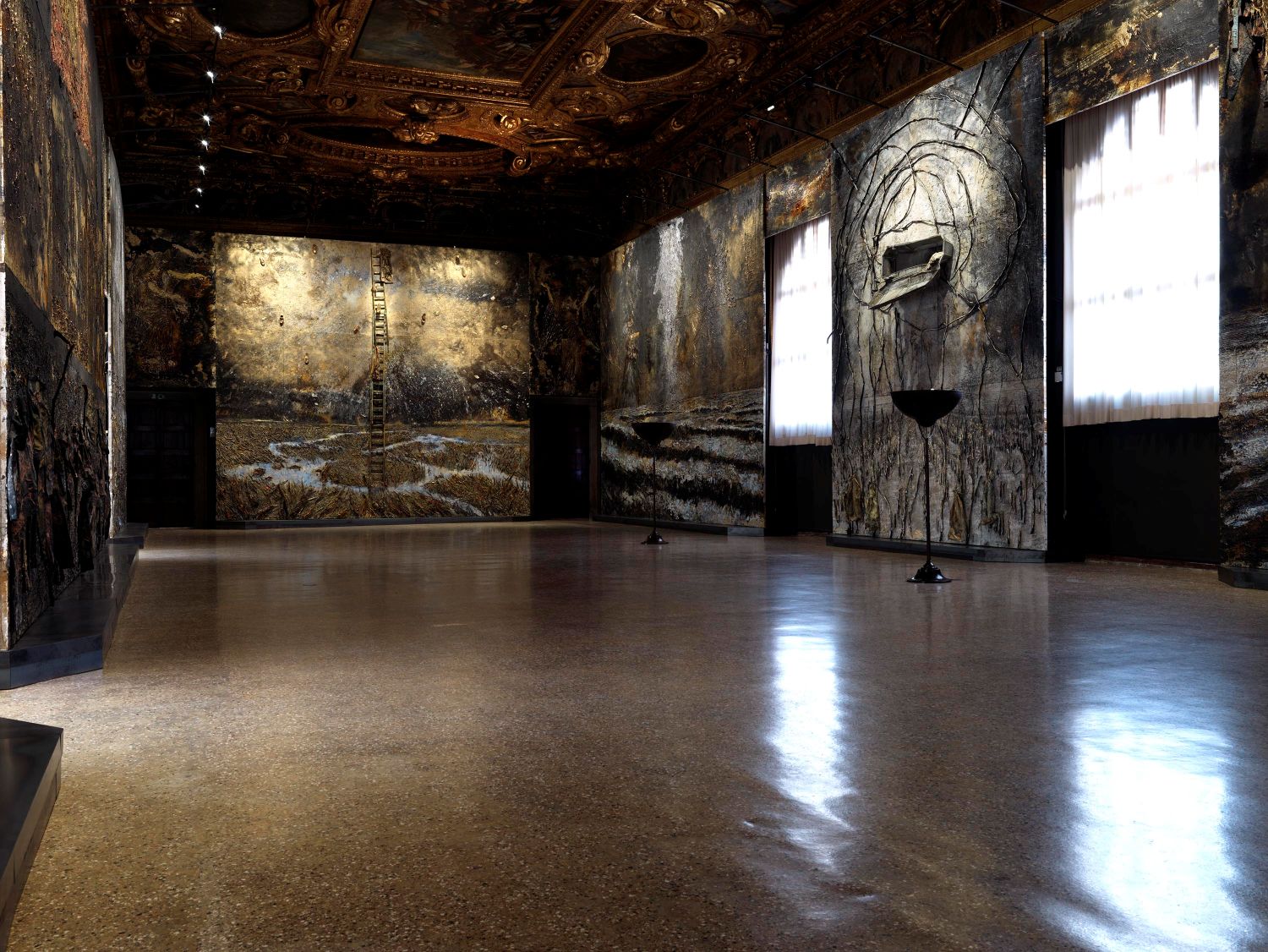
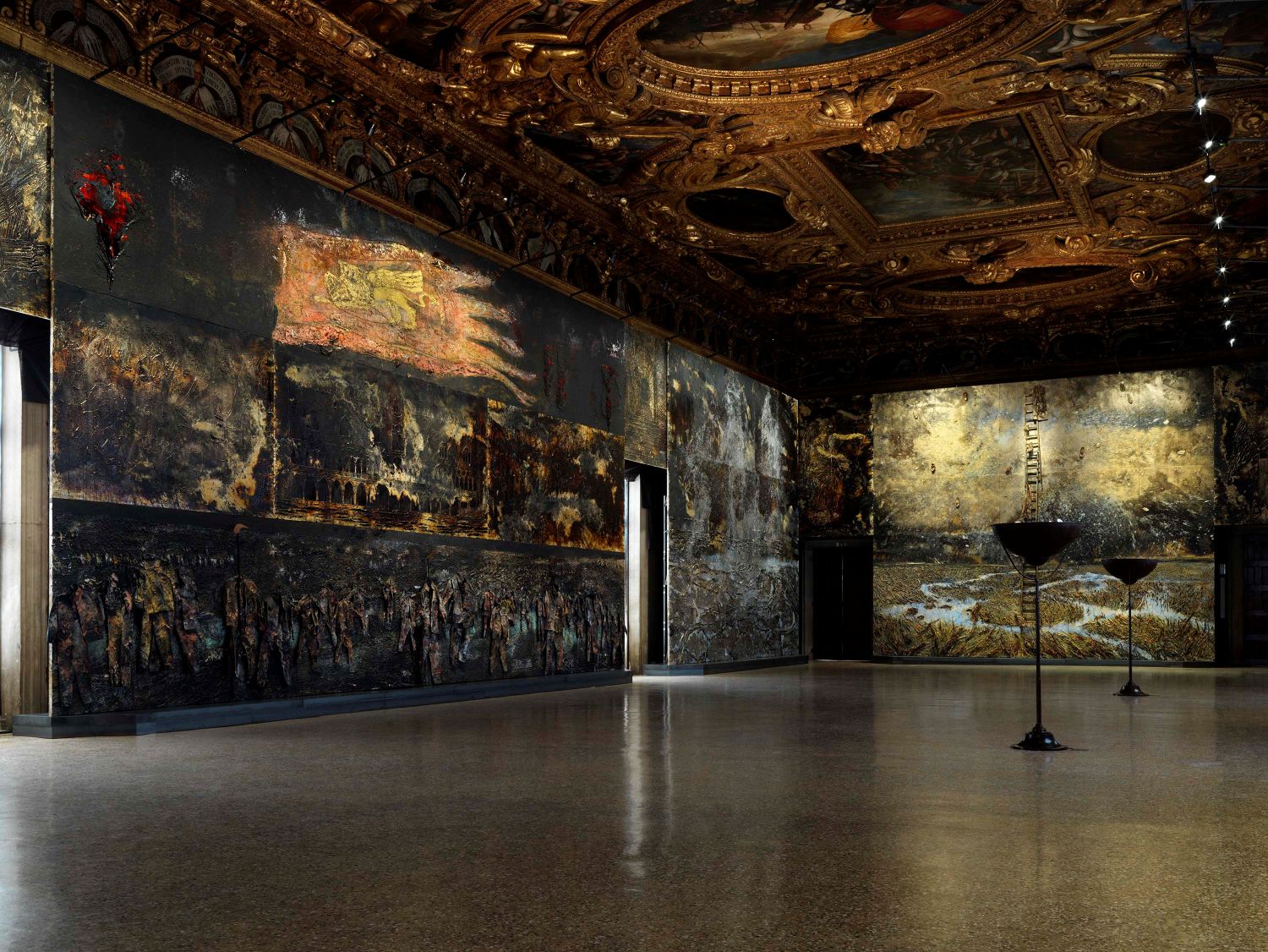
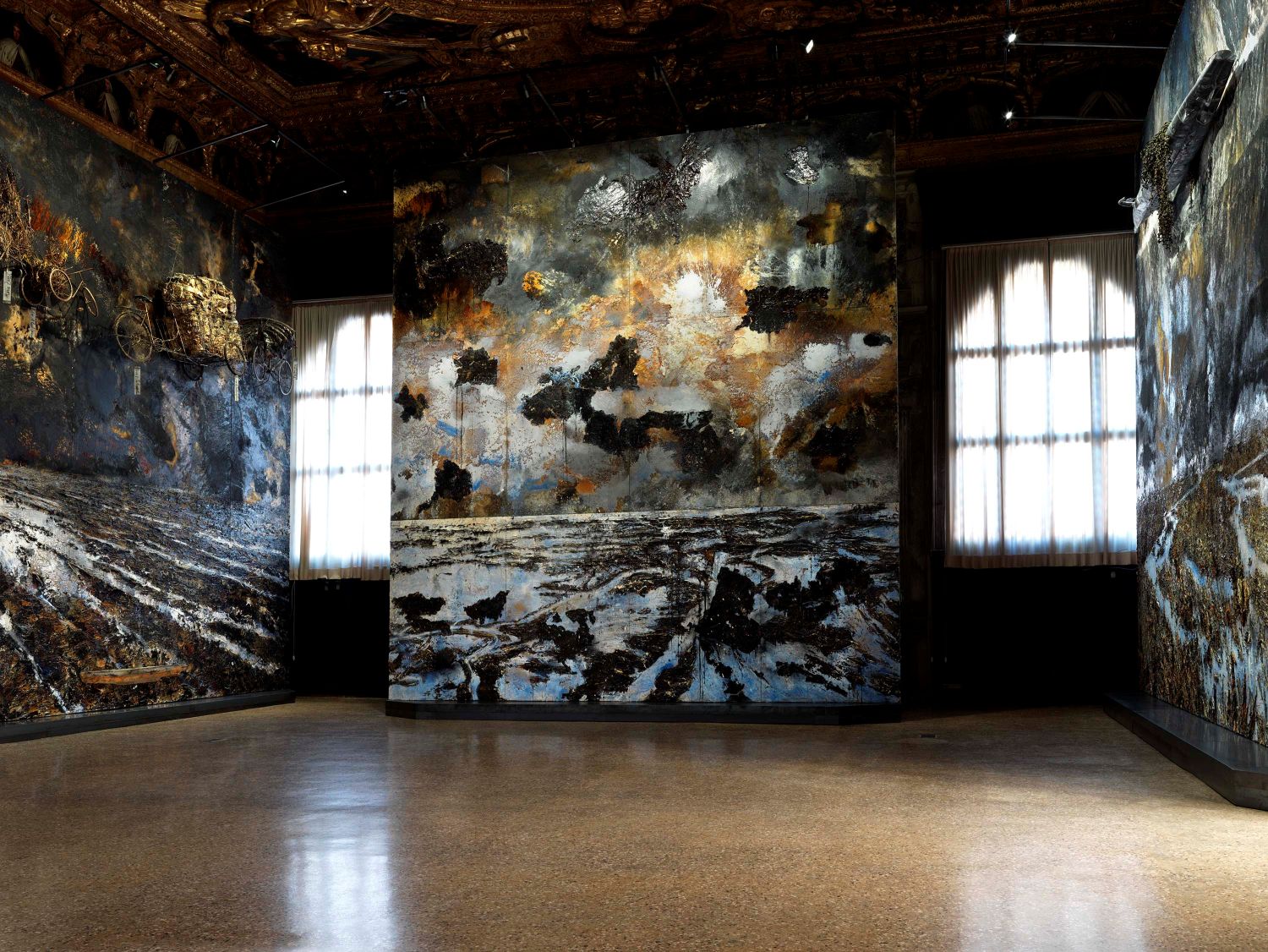
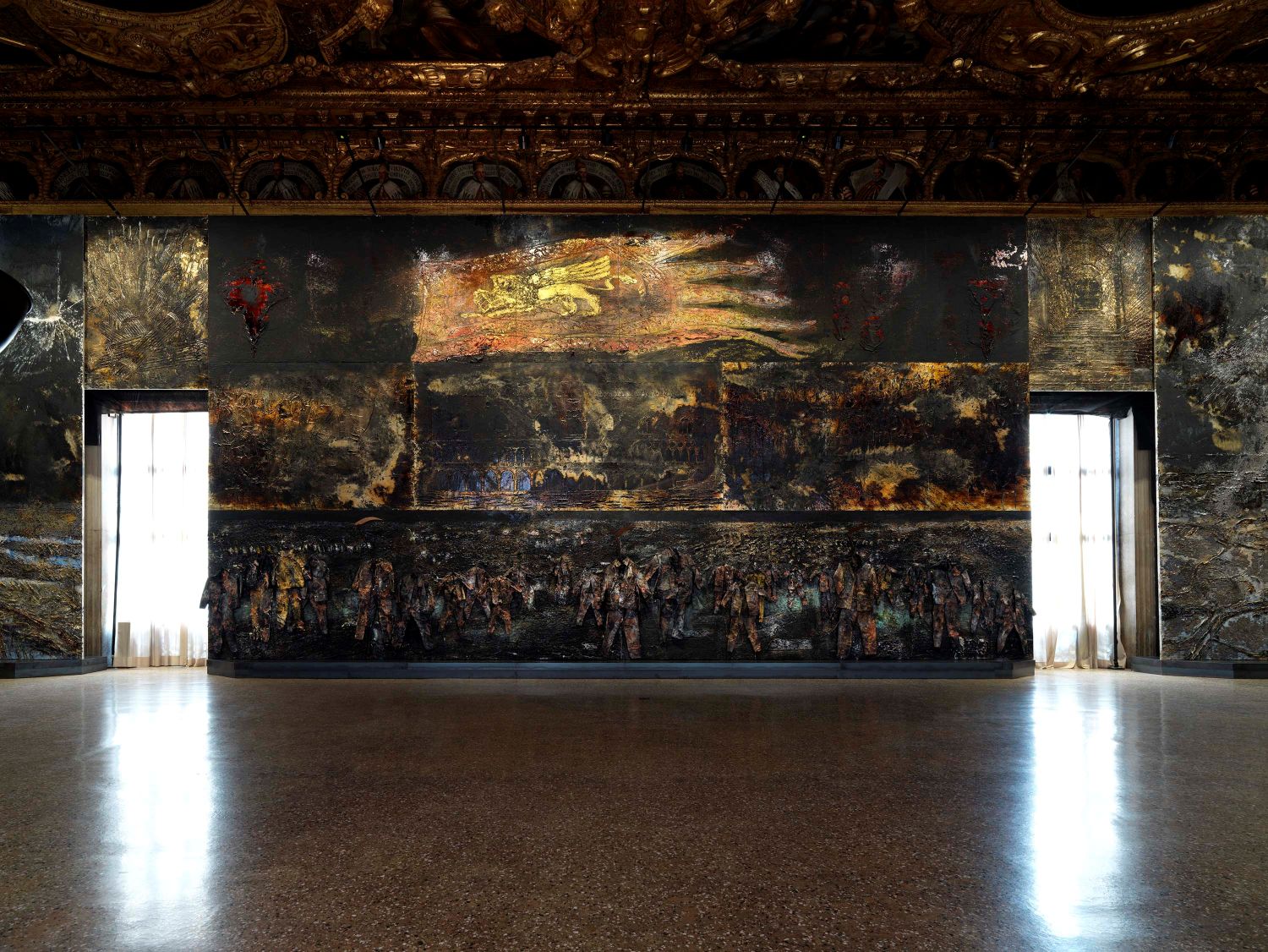
The series of paintings produced specially for the Palazzo Ducale in 2020 and 2021 are arranged in the space and magnificent setting of the Sala dello Scrutinio, engaging closely with the thirty-three monumental paintings on the ceiling and with the heroic values expressed by the palace’s entire decorative scheme. The show underlines the role of contemporary art in reflecting on universal themes, transcending Venice and opening up to current philosophical perspectives.

Du 26 mars 2022
au 6 janvier 2023

Palazzo Ducale
Sala dello Scrutinio
logo venezia 1600

The invitation to Kiefer by the Fondazione Musei Civici dates back to 2019, and the decision to host his work in the Palazzo Ducale was aimed at showing the ability of this site — a symbol of the Serenissima Republic, or Most Serene Republic — to still serve as a dynamic cultural center and not just a memory.

It was a great challenge because it involved adding a new series of paintings to these rooms, even if temporarily, after almost three hundred years, installing them on top of the older ones. Historically, this was something that happened in response to changing tastes or needs of the state.
It was an even greater challenge for Kiefer to work alongside important painters from the past — Tintoretto, Palma il Giovane, Andrea Vicentino — who had been called upon by the Senate of the Republic to repaint the glory of Venice, on land and sea, on the walls of the Sala dello Scrutinio after the devastating fire of 1577.

Veduta Mostra Anselm Kiefer

The result of Kiefer’s impressive undertaking is before our eyes, beginning with the title, a quotation from the philosopher Andrea Emo; both he and the artist remind us that these paintings — as in the inescapable plan of life — emerge from negation, the cancellation of others on which they are superimposed. Those paintings are in a certain sense the outcome of the fire that destroyed the room’s earlier decoration, and the new paintings too are destined to die when they are removed from the Palazzo Ducale. The tragic and irresolvable unity of opposites.

Venice is at the center of this striking contemporary installation, not as an object to be celebrated but rather as a grand metaphor for cultural transits and passages between East and West, as a pretext for a narrative that brings back to the surface the stratification of millennial myths, of solitudes and anxieties to which the artist gives form through a new epic with accents as grave as the darkness of our time.

The visit at the exhibition is included in Doge’s Palace’s ticket

#MUVEContemporaneo2022 #AnselmKiefer

Veduta Mostra Anselm Kiefer

Supported by Gagosian

With the collaboration of Soprintendenza Archeologia, Belle Arti e Paesaggio per il Comune di Venezia e Laguna

Installation view © Anselm Kiefer
Photo: Georges Poncet – Courtesy Gagosian and Fondazione Musei Civici Venezia
MUVE Education for the exhibition

On the occasion of the Anselm Kiefer.
Questi scritti, quando verranno bruciati, daranno finalmente un po’ di luce (Andrea Emo) installation, the MUVE Education Activities Department has planned a series of activities aimed at adults and schools.

Scegli e prenota

Anselm Kiefer
Questi scritti, quando verranno bruciati, daranno finalmente un po’ di luce (Andrea Emo)
With Anselm Kiefer contemporary art will be coming to the Palazzo Ducale, with an exhibition that is set to be the centrepiece of the fifth edition of MUVE Contemporaneo, the biennale organized by the Fondazione Musei Civici di Venezia and the key concern of which is to reflect on the relationship between contemporary art and museums. The opening of the eagerly awaited installation by Anselm Kiefer, one of the leading artists active today, is part of the celebrations for the 1600th Anniversary of the Foundation of Venice. The title of the work is from the writings of the Venetian philosopher Andrea Emo: Questi scritti, quando verranno bruciati, daranno finalmente un po’ di luce (These writings, when burned, will finally cast a little light). The series of paintings produced specially for the Palazzo Ducale in 2020 and 2021 are arranged in the space and magnificent setting of the Sala dello Scrutinio, engaging closely with the thirty-three monumental paintings on the ceiling and with the heroic values expressed by the palace’s entire decorative scheme. The show underlines the role of contemporary art in reflecting on universal themes, transcending Venice and opening up to current philosophical perspectives.
Duration: 45′
Languages: Italian, English, French, Spanish

The rooms of power
The itinerary focuses on the institutional rooms in the Doge’s Palace, where imposing pictorial cycles and splendid sculptural and ornamental motifs adorn the rooms that used to be the prestigious seats of the Serenissima’s magistracies. An interactive tour will highlight the workings of the complex state machinery of the Republic of Venice and the majestic iconographic programme promoted by the Venetian ruling class to establish and celebrate the myth of Venice.
From 26 March 2022 the itinerary also includes a visit to the impressive series of site-specific paintings created by the German artist Anselm Kiefer in dialogue with the important spaces of the ‘Sala dello Scrutinio’ and the themes of the history of Venice. The show underlines the role of contemporary art in reflecting on universal themes, transcending Venice and opening up to current philosophical perspectives.
Duration: 1,30 h
Languages Italian, English, French, Spanish, Russia

A palace to decipher through architecture and sculpture
A dynamic and engaging itinerary focusing in particular on the building and its history, on the phases of construction that led to this extraordinary ‘architectural machine’ and its splendid sculptural array. A not-to-be-missed ‘journey’ to discover the truly unique Venetian interpretation of the Gothic and Renaissance languages that developed during the centuries of the Republic’s greatest splendour. A final surprise will allow participants to try out a fun practical activity at home, closely linked to the visit.
From 26 March 2022 the itinerary also includes a visit to the impressive series of site-specific paintings created by the German artist Anselm Kiefer in dialogue with the important spaces of the ‘Sala dello Scrutinio’ and the themes of the history of Venice. The show underlines the role of contemporary art in reflecting on universal themes, transcending Venice and opening up to current philosophical perspectives.
Duration: 1,30 h
Languages Italian, English, French, Spanish

Anselm Kiefer
Questi scritti, quando verranno bruciati, daranno finalmente un po’ di luce (Andrea Emo)
With Anselm Kiefer contemporary art will be coming to the Palazzo Ducale, with an exhibition that is set to be the centrepiece of the fifth edition of MUVE Contemporaneo, the biennale organized by the Fondazione Musei Civici di Venezia and the key concern of which is to reflect on the relationship between contemporary art and museums. The opening of the eagerly awaited installation by Anselm Kiefer, one of the leading artists active today, is part of the celebrations for the 1600th Anniversary of the Foundation of Venice. The title of the work is from the writings of the Venetian philosopher Andrea Emo: Questi scritti, quando verranno bruciati, daranno finalmente un po’ di luce (These writings, when burned, will finally cast a little light). The series of paintings produced specially for the Palazzo Ducale in 2020 and 2021 are arranged in the space and magnificent setting of the Sala dello Scrutinio, engaging closely with the thirty-three monumental paintings on the ceiling and with the heroic values expressed by the palace’s entire decorative scheme. The show underlines the role of contemporary art in reflecting on universal themes, transcending Venice and opening up to current philosophical perspectives.
Target: Secondary school, 1st cycle, Secondary school, 2nd cycle, University
Duration: 45 min
Languages: Italian, English, French

The Doge’s Palace: The Symbol of the City
A dynamic and fascinating guided tour that enables visitors to grasp the extraordinary beauty and complexity of a structure that is the symbol of the city, a building that embodies the highest aspects of Venetian civilisation and was formerly home not only to the Doge but also to the entire state administration. A masterpiece of Gothic art whose interiors also contain marvels of Renaissance and Mannerist architecture, the building is superbly decorated with works by artists such as Titian, Veronese and Tintoretto; in effect, a visit to the palace is one massive story told in pictures. The paintings and sculpture adorning the place, together with the architecture and the layout of its interiors, all reflect – in both symbolic and practical form – the workings of the Venetian Republic, the fundamental importance attributed to the various branches of the judicial system and to the visual manifestation of power. This visit through the heart of the city and its history is essential if one is to fully understand them.
From 26 March 2022 the itinerary also includes a visit to the impressive series of site-specific paintings created by the German artist Anselm Kiefer in dialogue with the important spaces of the ‘Sala dello Scrutinio’ and the themes of the history of Venice. The show underlines the role of contemporary art in reflecting on universal themes, transcending Venice and opening up to current philosophical perspectives.
Target: Students aged 13/19 and Higher Education System (Universities etc.)
Duration: 1h 30 min
Language: Italian, English, French, Spanish and Russian

The Palace with a Tale to Tell
This interactive visit is designed for younger students, enabling them to discover the history and artistic wealth of the Palace. Divided into stages, it uses games, hidden clues, stories and legends to engage the children, each of whom will have a exercise book that they can take away with them and then use for follow-up work in school or at home. The activities and level of information all vary depending upon the age-level of the students. To ensure the correct execution of the activity, all participants must have a pen or pencil.
From 26 March 2022 the itinerary also includes a visit to the impressive series of site-specific paintings created by the German artist Anselm Kiefer in dialogue with the important spaces of the ‘Sala dello Scrutinio’ and the themes of the history of Venice.
Target: Students aged 10/16
Duration: 1h 30 min
Language: Italian, English, French, Spanish and Russian

Educational activities can be booked online at this link >

Il Ciclo di Venezia

The title of Anselm Kiefer’s exhibition— »Questi scritti, quando verranno bruciati, daranno finalmente un po’ di luce”—is a quote from Andrea Emo (1901–1983), the Italian philosopher in whose world of thought the painter sees a reflection of his own. For Kiefer, life and art are born anew from the ruins, from the remains of that which has been. A recurring concept in his works is the symbiosis of being and time.

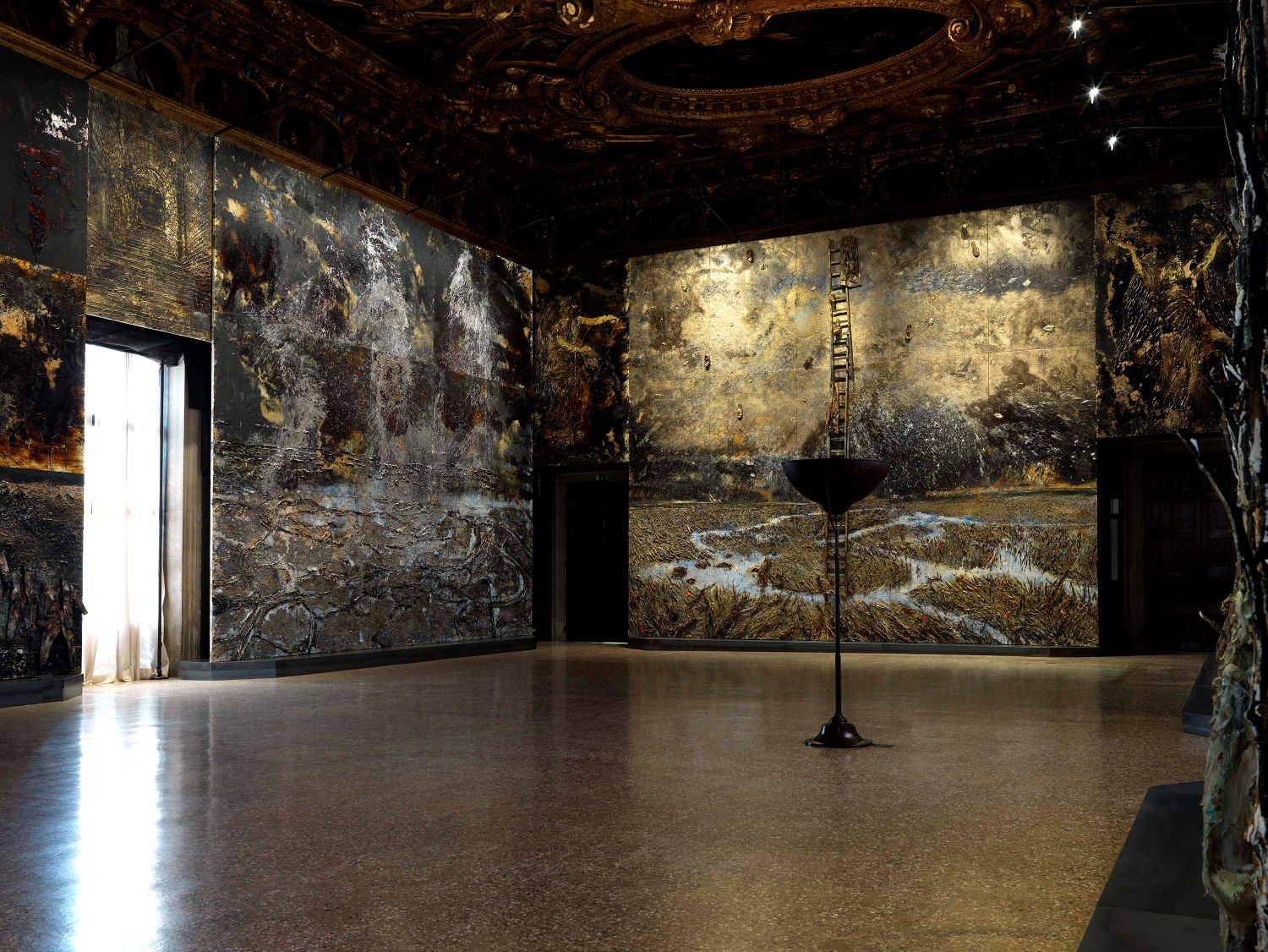
Kiefer’s monumental cycle of paintings in Palazzo Ducale’s Sala dello Scrutinio, created as a site-specific installation for this space, presents visitors with a convergence of motifs, ideas, places, philosophies, and histories. The cycle of paintings, an endless visual rollercoaster, does not have a narrative beginning or a point of closure. Visitors must choose where to begin their exploration of Kiefer’s Venice Cycle.

The luminous canvas on the south wall, vertically dissected by a golden ladder, provides a visual point of orientation. In this canvas, the artist presents one of his recurring leitmotifs, Jacob’s Ladder. In Kiefer’s art the biblical ladder takes on varied meanings. Here it points to the rise and evolution of Venetian glory from modest beginnings in a marshy lagoon towards victory, wealth, and the high heavens.

Turning westward, we encounter a seascape. Venice’s wealth and identity are born from the sea. The city grew from a simple encampment of fisherman and refugees in the late Roman period into Europe’s wealthiest metropolis and foremost maritime empire by the late thirteen century. But what the sea gives, its proximity also takes—sea routes and floods come hand in hand. The large emanation that explodes through the painting transforms a quotidian seascape into a moment of abrupt and mysterious spiritual intervention. Emanations have featured in Kiefer’s art since the mid-1980s and they are generally an allusion to the process of creation in the Kabbalistic tradition.

The next painting on the west wall portrays a wintry vineyard with rows of vine stakes extending towards the distant horizon. Some of the vines twirl towards the painting’s upper register where they form an organic Venetian arch. Nestled in the middle of this vegetative architecture rests a zinc coffin. Its cover is snapped open like that of a crude tin of sardines. Inside the coffin lie two sunflowers made of lead, one resting on a lead pillow, the stem of the other tucked below it. At the foot end of the casket is a money bag; six others have fallen out and hang on vine stakes at the bottom of the painting. An inscription inside the casket reads “San Marco.” By introducing Saint Mark’s empty coffin into this painting, Kiefer knits a component of actual history into his cosmic exegesis of Venice. The relics of Saint Mark, the patron saint of Venice, are believed to have been brought to the city from Alexandria in 828. In 1063, during the construction of St Mark’s Basilica, which was intended to be the final resting place of its namesake’s relics, his remains could not be found. Somehow Venice’s most prestigious treasure had vanished although, according to tradition, the relics were rediscovered a few decades later. In Kiefer’s Venice Cycle, Saint Mark’s empty coffin is not just a reference to a centuries-old disappearance. It also serves as a potent symbol of a void, an absence, a nothingness at the center of Venice’s very being and of history in general.

The final painting on the west wall of Sala dello Scrutinio is larger than its neighbors. In the upper register, a procession of shopping carts and tricycles, each laden with produce symbolizing Venetian wealth, moves from left to right. Nametags hanging from the vehicles identify this as a procession of Doges, leaders of the Republic of Venice. According to tradition, Venice had 120 Doges between 697 and 1797.

In the large canvas on the north wall, Kiefer veers toward dynamic abstraction. Fireworks of paint and patches of shellac light up the sky. Against an ochre backdrop, patches of blue and white are interspersed with blobs of dark resin. Below the horizon line, in an act of painterly bravura, water and earth become ice and snow.

The bellicose fireworks continue on the east wall. In the painting on the left, a large submarine is horizontally dissected by an emanation that extends across the painting. The boat gutted by this cosmic lightning looks like a giant fishbone. Here, apart from the emanation itself, darkness has vanquished light. A net appears to pull the once mighty naval vessel towards the marshy lagoon below, where helmets of fallen soldiers evoke the notion of death in battle.

The next canvas, 9 meters wide, conjoins different registers of being and time. Atop, the imperial standard of Venice flies in the wind with the winged Lion of Saint Mark watching over the mayhem unfolding below. Palazzo Ducale is clearly visible in the central panel, but it appears to be melting, subsumed by fire and smoke. To the left and right of the decaying Palazzo are two panels that are hard to read. They appear to be populated by crowds of outline figures, perhaps a Kieferian reference to the crowds of tourists that flock to Venice each year. The lower register is Hades, the kingdom of the dead. Here stand the young and old who have perished in the course of history. Their ranks are infinite, extending by visual suggestion far into the distance and beyond the frame. This painting, more than any other in Kiefer’s Venice Cycle, foregrounds the artist’s nihilistic view of history in which humanity’s destructive traits lead to the fall of civilizations.

The final painting in Sala dello Scrutinio approaches pure abstraction. It depicts nothing and everything, being and time without being and time. We see three emanations that harken back to others in the room. Reading the painting poetically, we might imagine how Kiefer’s emanations fertilize the birth of a new lagoon and how new life is born from the annihilation of former life—a Venetian Big Bang. And thus, through an interrogation of being and time, the cycle of life in Kiefer’s existential cosmogony continues.

Texts by Janne Sirén