Recorridos especiales
También están los Recorridos Secretos del Palacio Ducal y los Tesoros escondidos del Doge, que no forman parte del recorrido habitual del Palacio, sino que son rutas especiales que solo se pueden visitar bajo condiciones específicas.
Los Recorridos Secretos
Descripción en inglés
The Secret Itineraries through the Doge’s Palace covers the rooms and chambers where the delicate work of some of the most important bodies in the Venetian administration was carried out. The tour offers an interesting insight into the civil and political history of the city, its public organisations and administration of justice.
THE ITINERARY
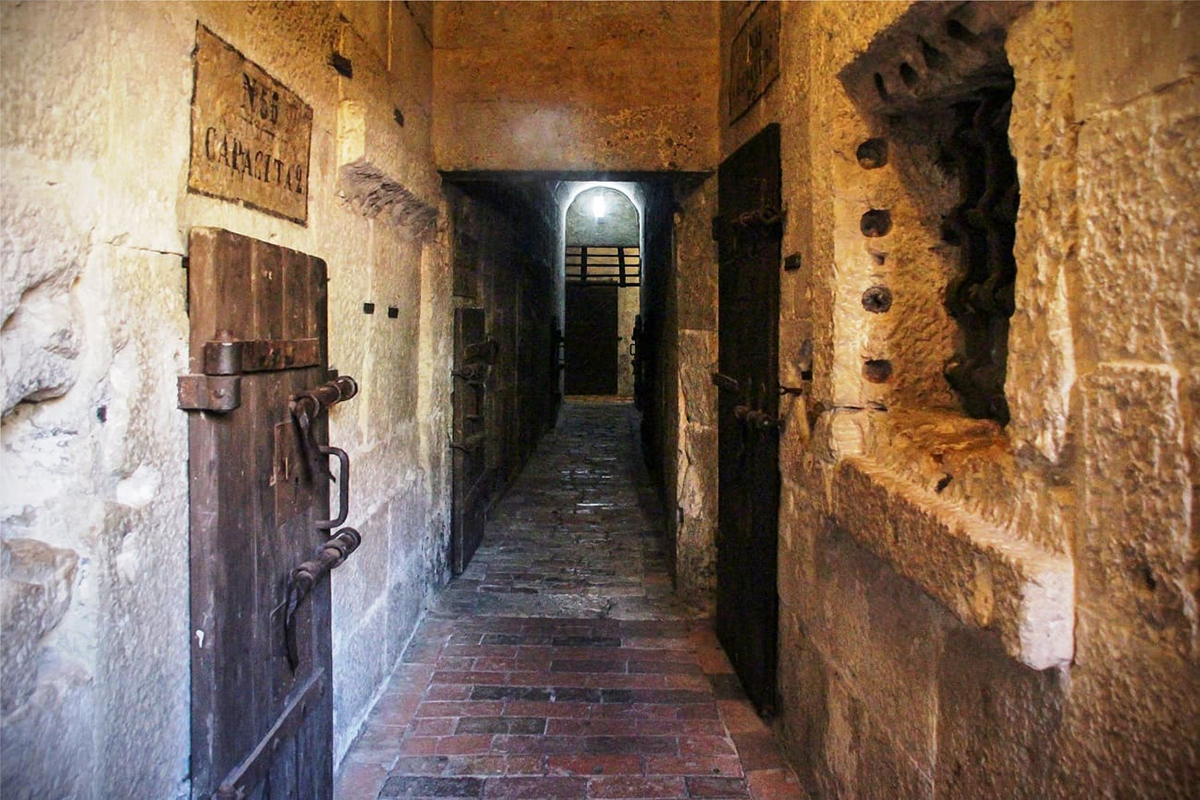
The Secret Itineraries Tour of the Doge’s Palace begins in the courtyard, through a narrow door that leads to the Pozzi (wells), ancient, damp, and dark prison cells once used for detention.
Each cell contains a wooden cot, a small shelf for the few personal belongings allowed, and a lidded wooden bucket used for waste.
Some writings and drawings on the walls hint at the despair felt by the prisoners.
Climbing a narrow staircase, visitors reach the offices of the Ducal Notary and the Deputato alla Segreta of the Council of Ten, officials in charge of the Republic’s confidential documentation.
Higher up is the office of the Great Chancellor, which functioned similarly to what we would now call a central archive, followed by the Chamber of the Secret Chancellery, filled with decorated cabinets that once stored public records and the secret documents relating to the work of most of the Venetian magistrature.
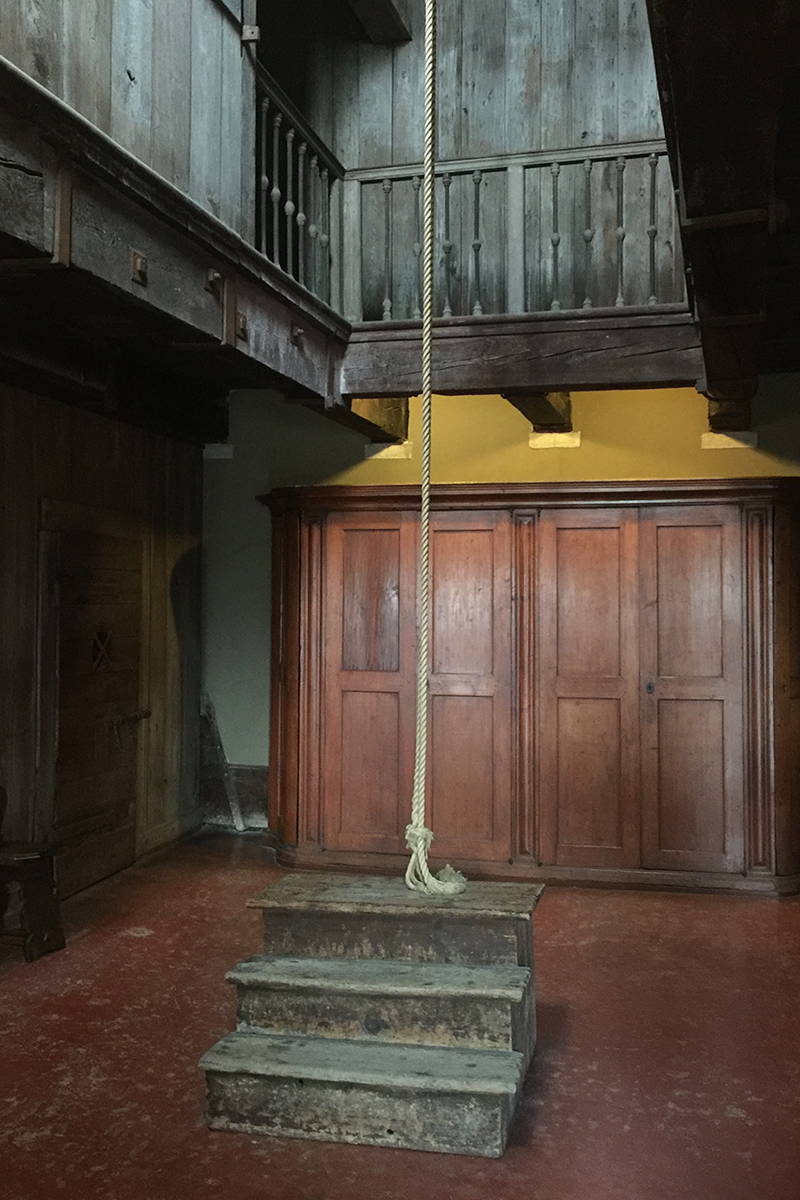
The tour continues into the Torture Chamber, where interrogations were held and the most commonly used instrument of torture was the rope, from which the person being interrogated was hung and pulled by his arms tied behind his back. Although torture was practiced in Venice, it was gradually abandoned starting in the 17th century.
From the Torture Chamber you pass to the so-called Piombi. The name comes from the lead [piombo] covering on the roof. These cells were used exclusively for the prisoners of the Council of Ten, often accused of political crimes.
Famously described by Giacomo Casanova, who was imprisoned here, the Piombi offered prisoners far better conditions than the damp, dark cells of the Pozzi. Both cells that were occupied by Casanova, now reconstructed, are part of the tour.
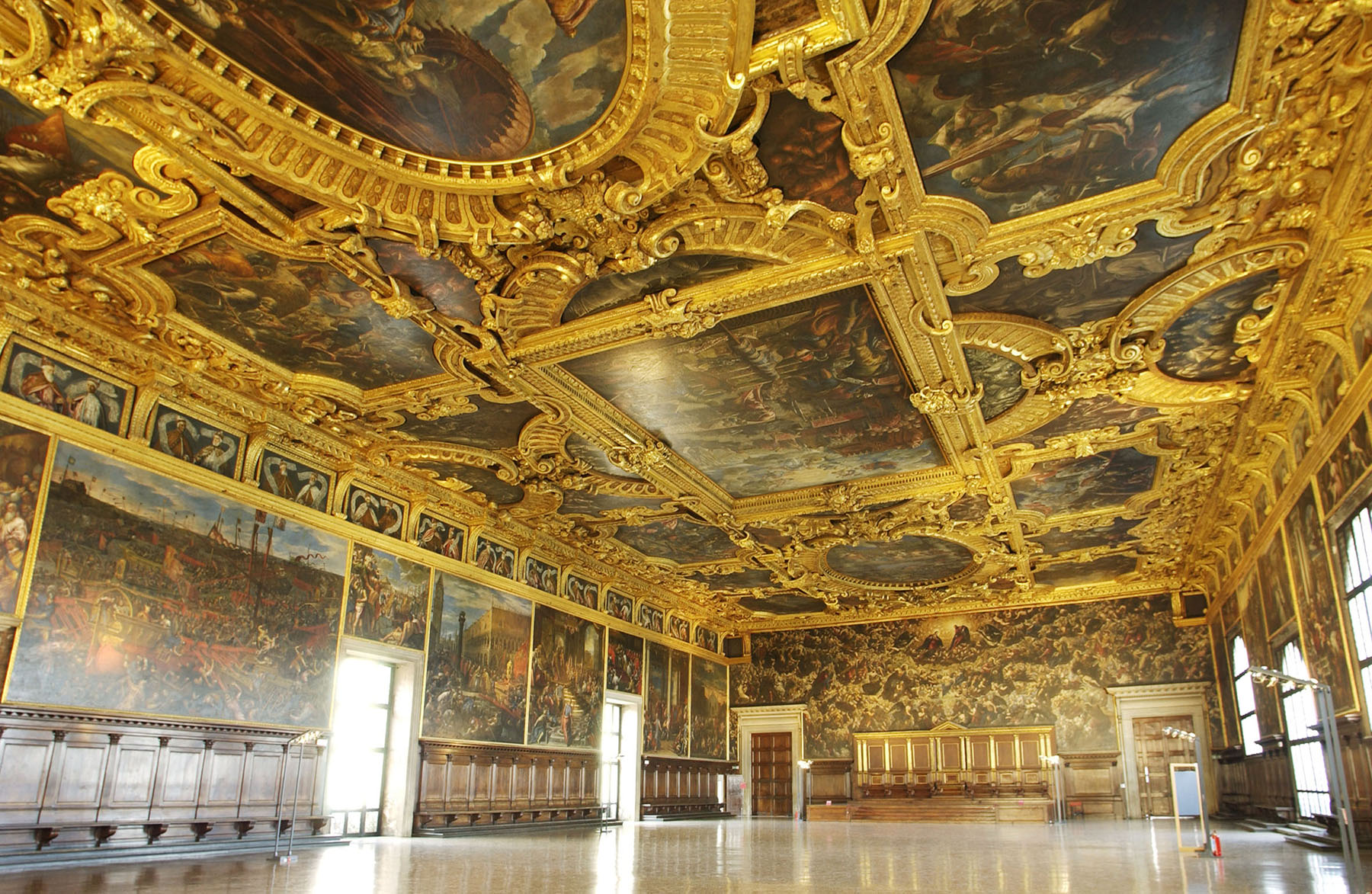
From the Piombi area, visitors pass directly under the roof to the attic, and then descend into the Chamber of the Inquisitors, a much-feared magistratura that was set up in 1539 to protect state secrets, operating with broad authority and under strict confidentiality. The ceiling of this room is decorated with works by Tintoretto, painted in 1566-1567.
The visit concludes in the Chamber of the Three Head Magistrates, where trials of the Council of Ten were prepared. A secret passage leads directly from this room to the Chamber of the Council of Ten.
Los Tesoros escondidos del Doge
Descripción en inglés
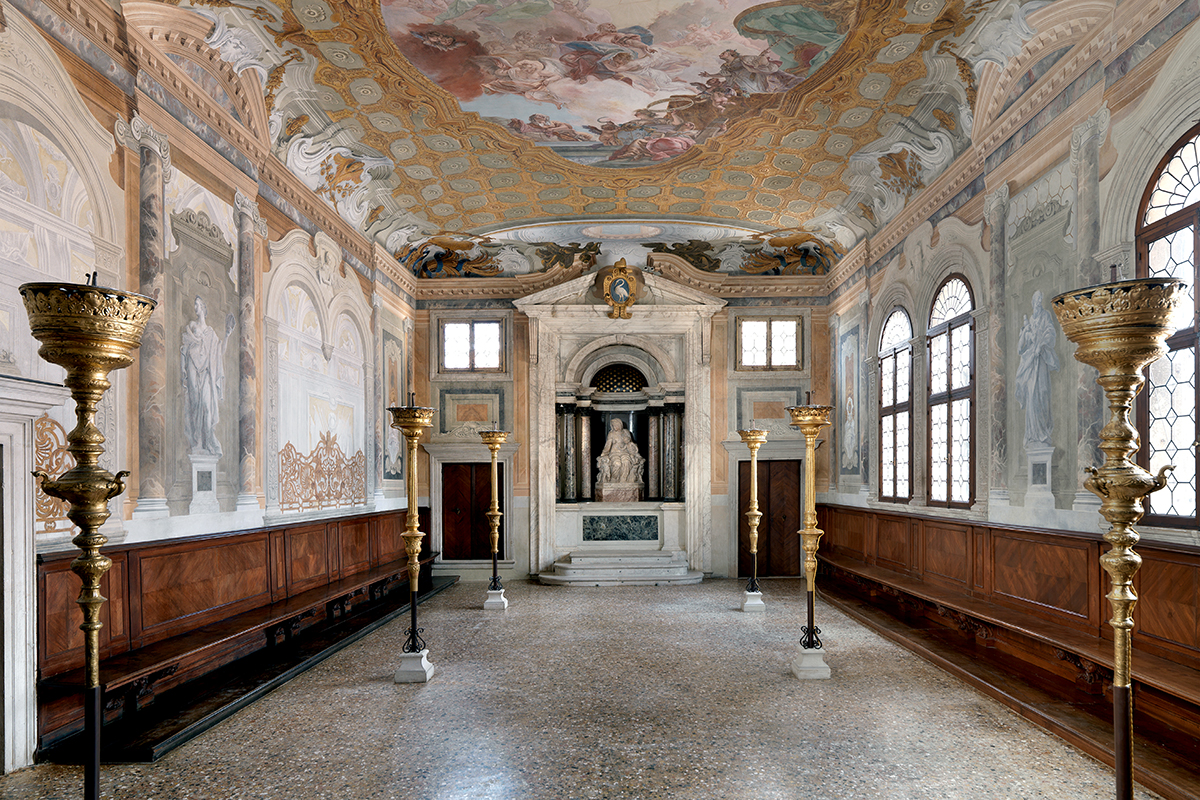
Following the extensive conservative restoration work that has restored the original splendour of its interior, the evocative rooms of the Chiesetta and Antichiesetta del Doge are the fulcrum of a new, fascinating artistic-historical tour to discover The Doge’s Hidden Treasures in the Doge’s Palace.
The new itinerary, which requires reservations and a qualified guide, is an addition to what is already an extraordinary cultural offer from Fondazione Musei Civici in Venice; it unfolds in the Doge’s private rooms in the wing of the Doge’s Palace adjacent to the Basilica.
THE ITINERARY
This fascinating itinerary explores locations originally inaccessible to the public. The guided tour begins at Porta della Carta, the monumental 15th-century entranceway leading to the Terrazza Foscara, where visitors are met by nostalgic 19th-century sculptures that recall the ancient, mythical glories of Venice.
The tour continues to the Loggia Foscara, a Renaissance addition to the Gothic layout of the Palazzo Ducale. Inside, after passing through an antechamber set up as a defence area, visitors enter the heavily armoured Sala dei Forzieri, the ancient Treasure Chamber, where a selection of precious Renaissance objects and artifacts related to the election of the Doge have been returned to public display.
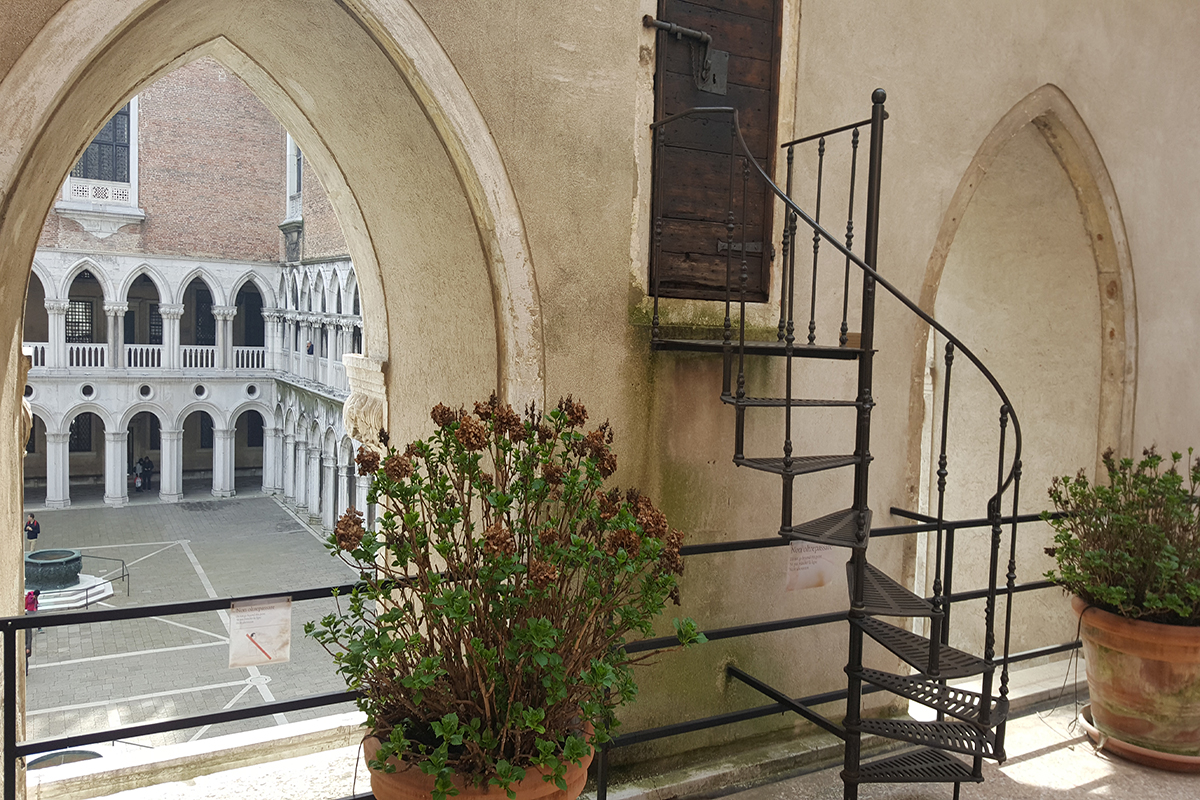
The tour then leads to the Doge’s Terrace, a panoramic vantage point for viewing the east, west and south wings of the Doge’s Palace. From there, the route passes briefly through the Doge’s Apartment, a series of rooms specially reserved for him.
At this point visitors climb a steep staircase, where behind, like a backdrop, hangs Titian’s monumental fresco from 1523, depicting a robust St. Christopher carrying the Child Jesus across the lagoon waters.
At the top, the tour arrives at the evocative Chiesetta del Doge (Doge’s Church), redesigned by the architect Vincenzo Scamozzi. The chiesetta houses a sumptuous altar with the 16th-century sculptural group Madonna con il Bambino e quattro angeli by Jacopo Sansovino and workshop, as well as allegorical frescoes from the mid-18th century by Jacopo Guarana and illusionistic painters Girolamo and Agostino Mengozzi Colonna, which enlarge the spaces with limpid colours and trompe-l’oeil effects.
Finally, one enters the Doge’s Antichiesetta, also frescoed by Guarana, where three canvases depict the Traslazione del corpo di San Marco, painted in 1727 by Sebastiano Ricci as models for the mosaics for the second external portal of St. Mark’s Basilica.