Conservation projects
Conservation plan
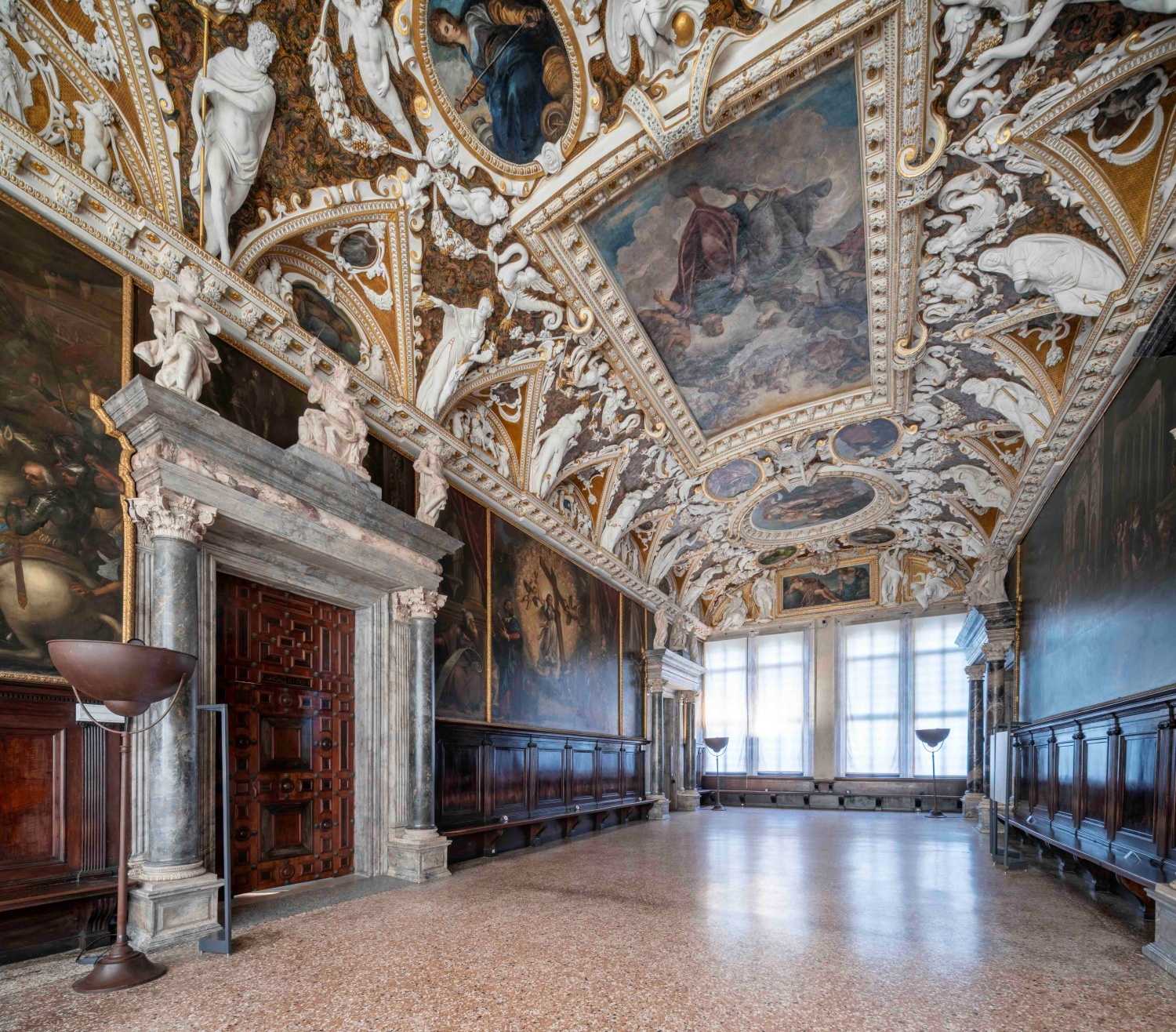
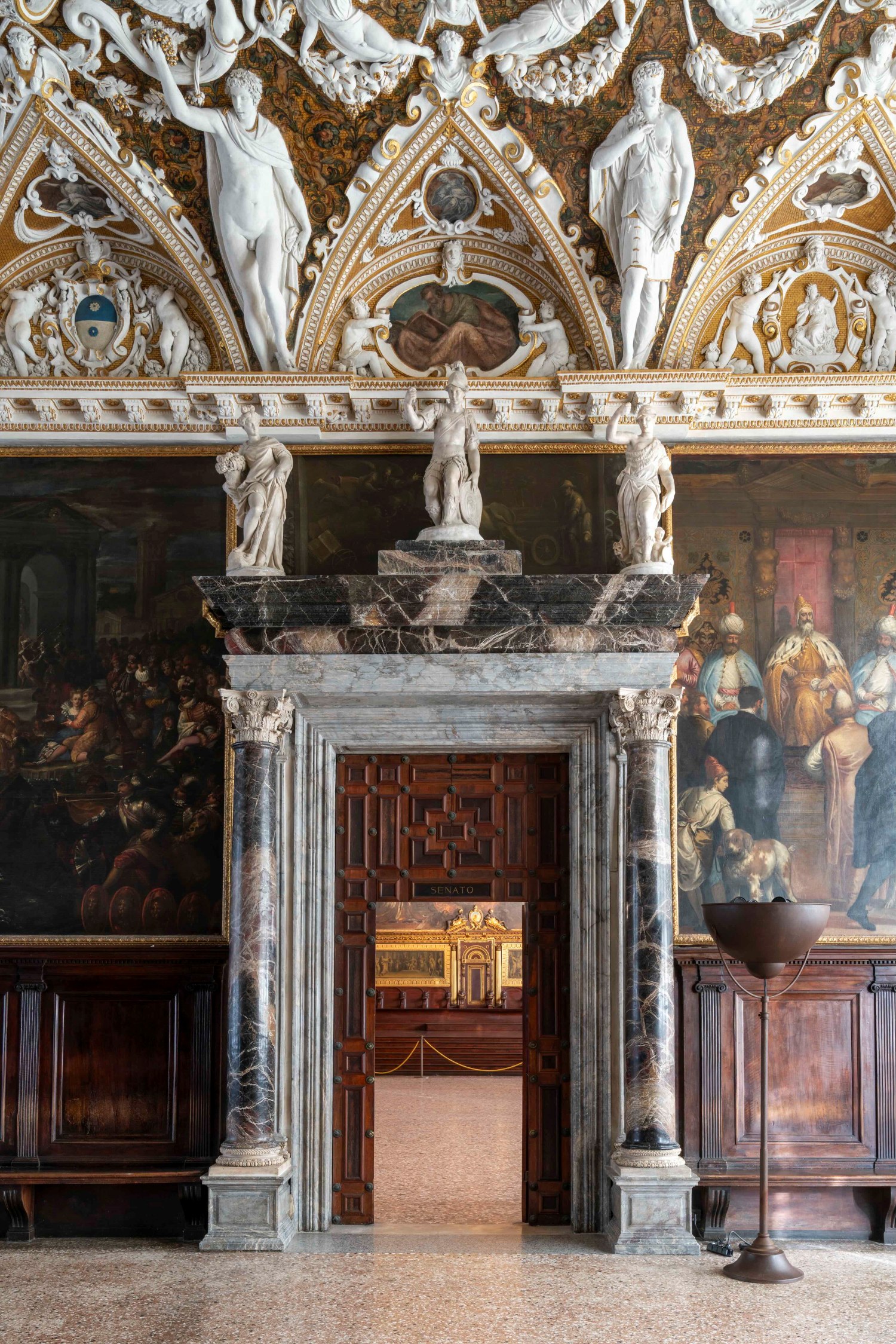
After more than two years of a “didactic open worksite”, launched on November 22, 2023, and completed on January 30, 2026, one of Palazzo Ducale’s most prestigious ceremonial rooms, the Room of the Four Doors, has been reopened to the public. This space, both a symbolic and functional hub of the institutional life of the Serenissima, is particularly sumptuous.
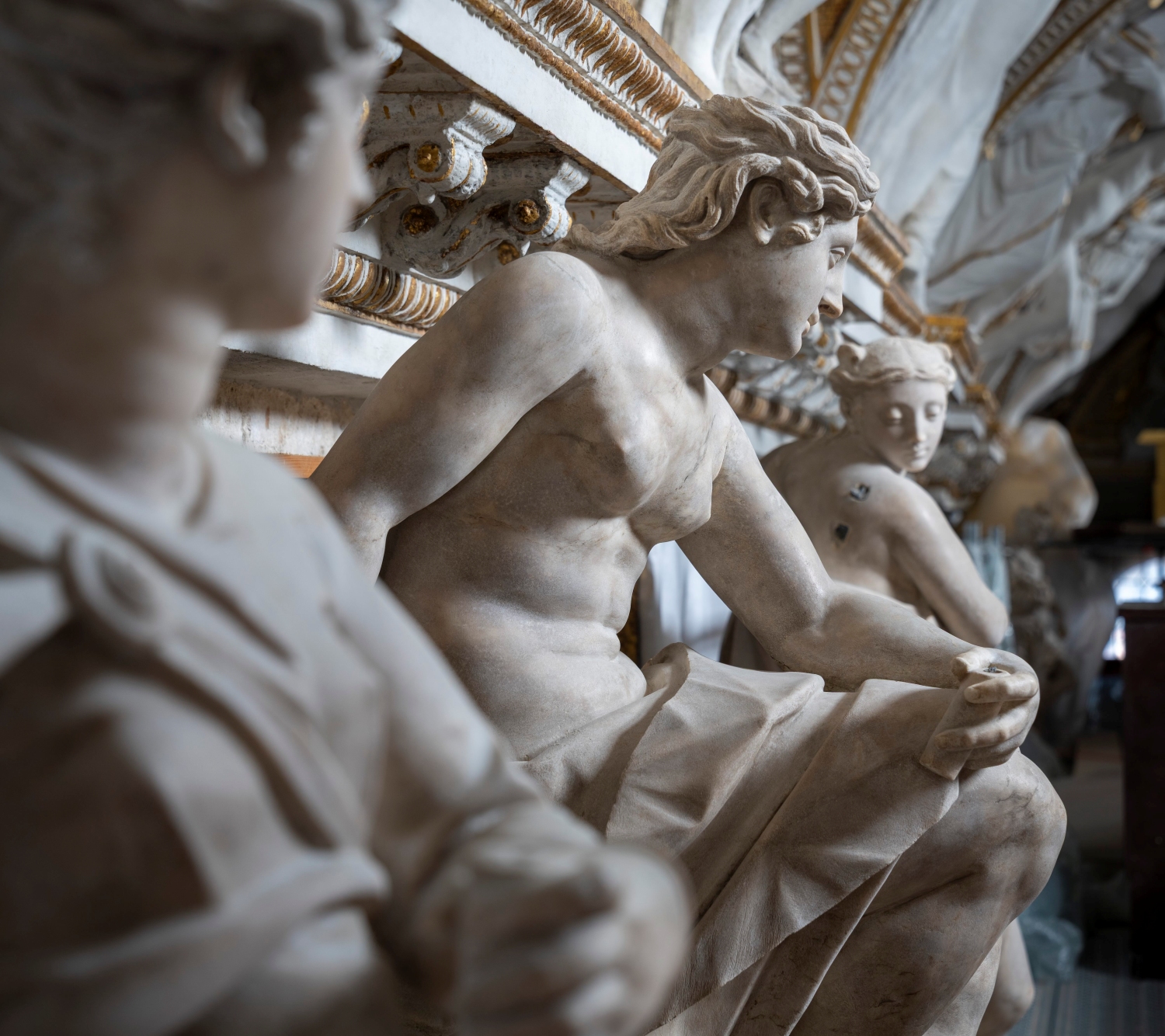
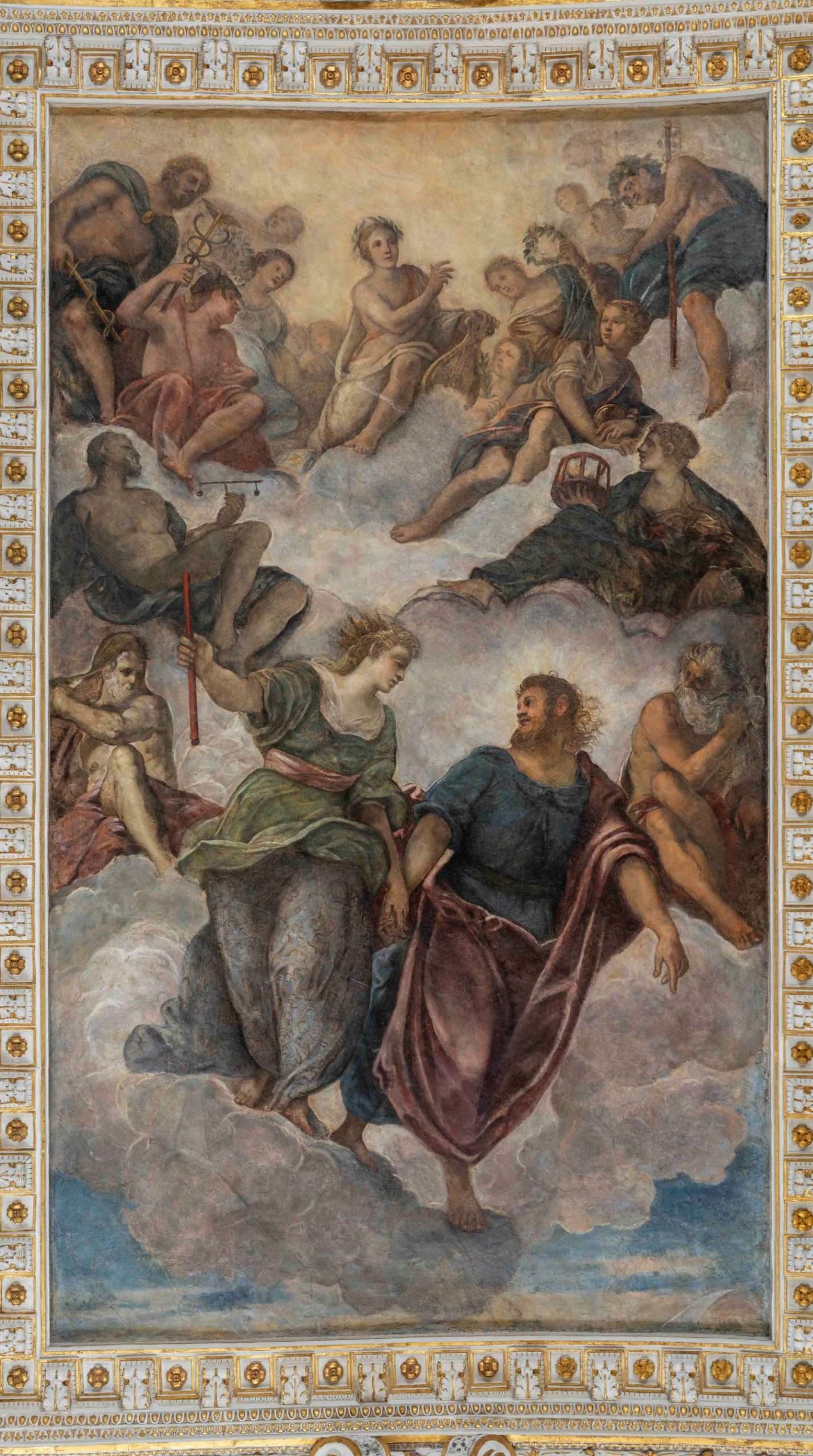
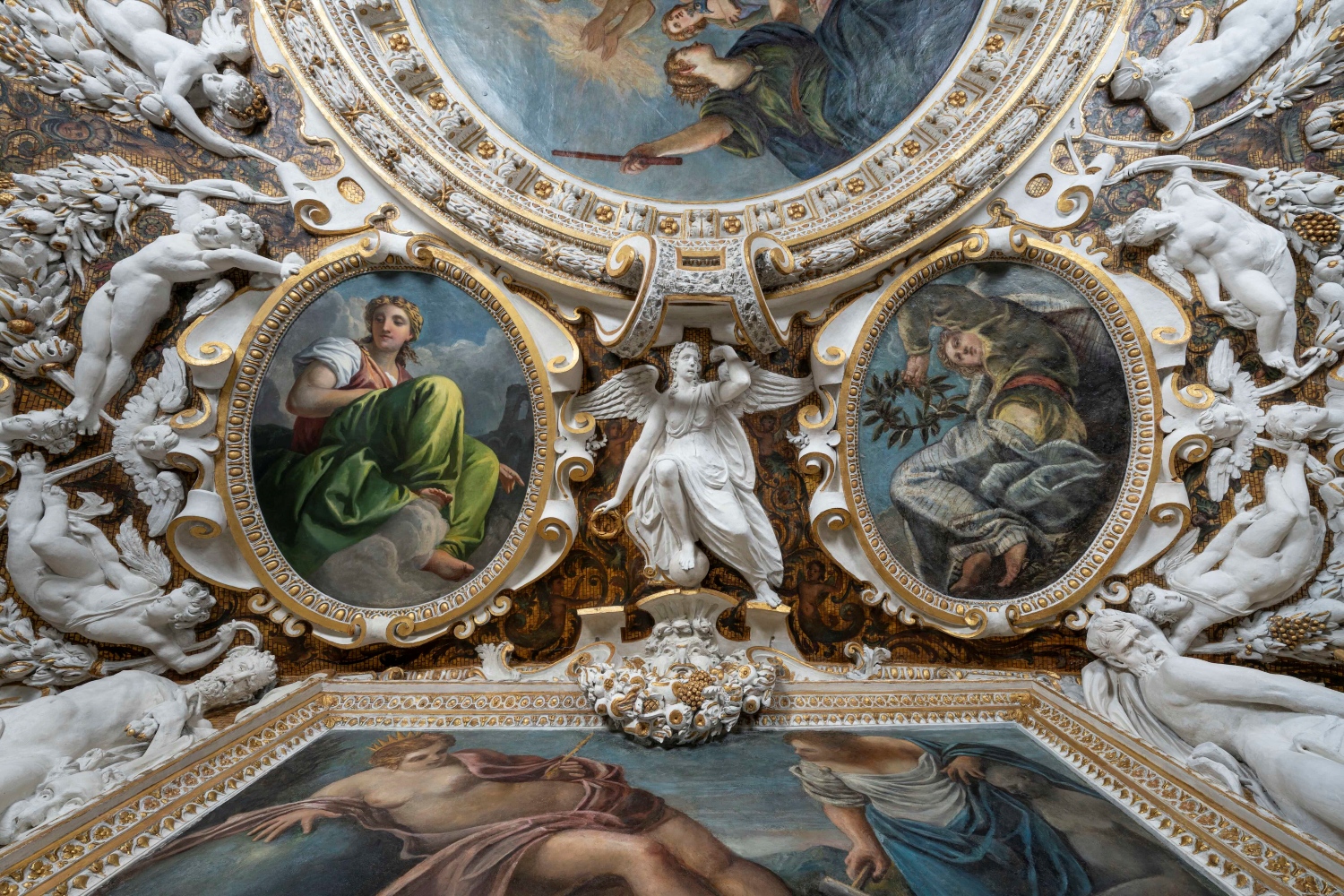
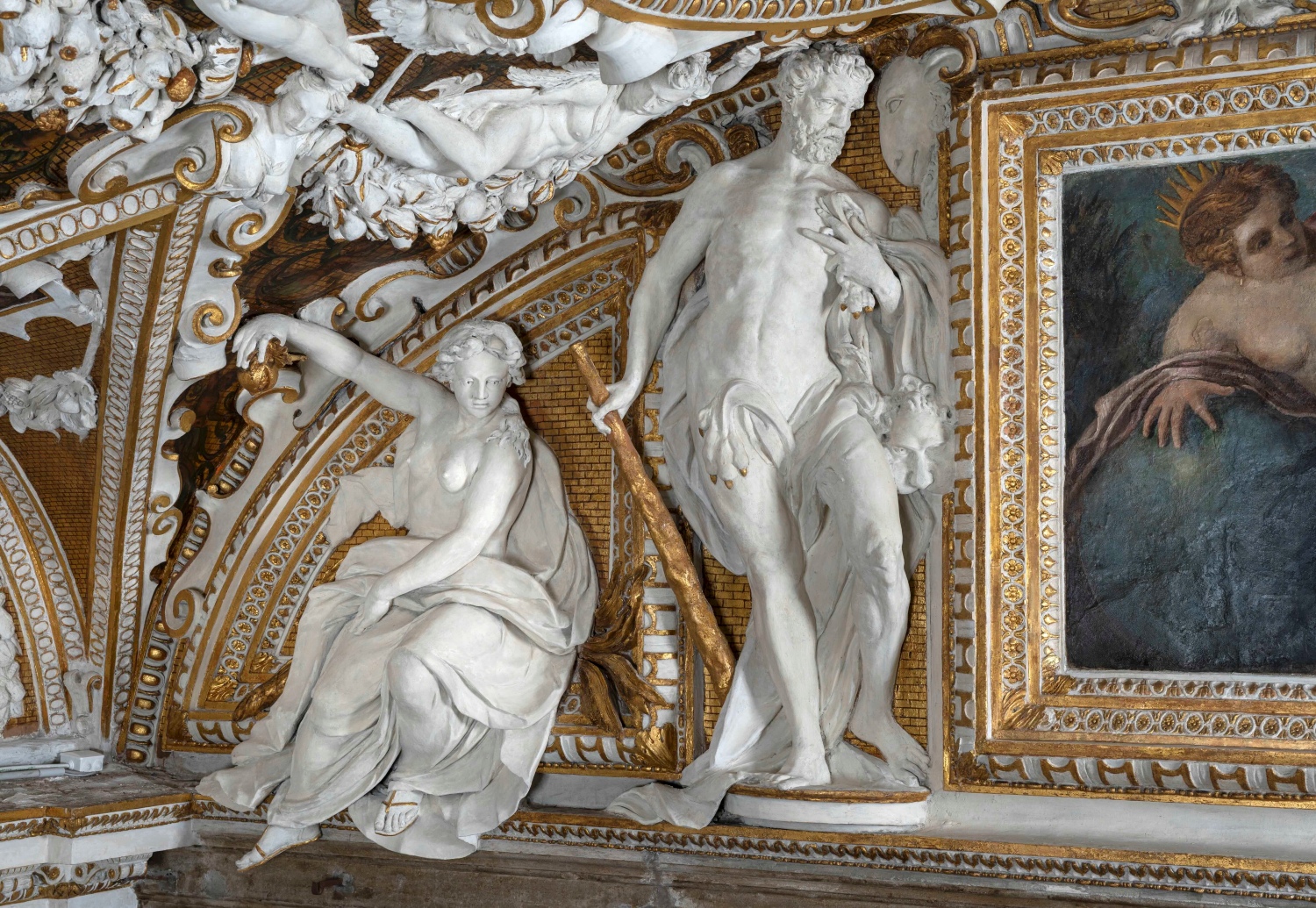
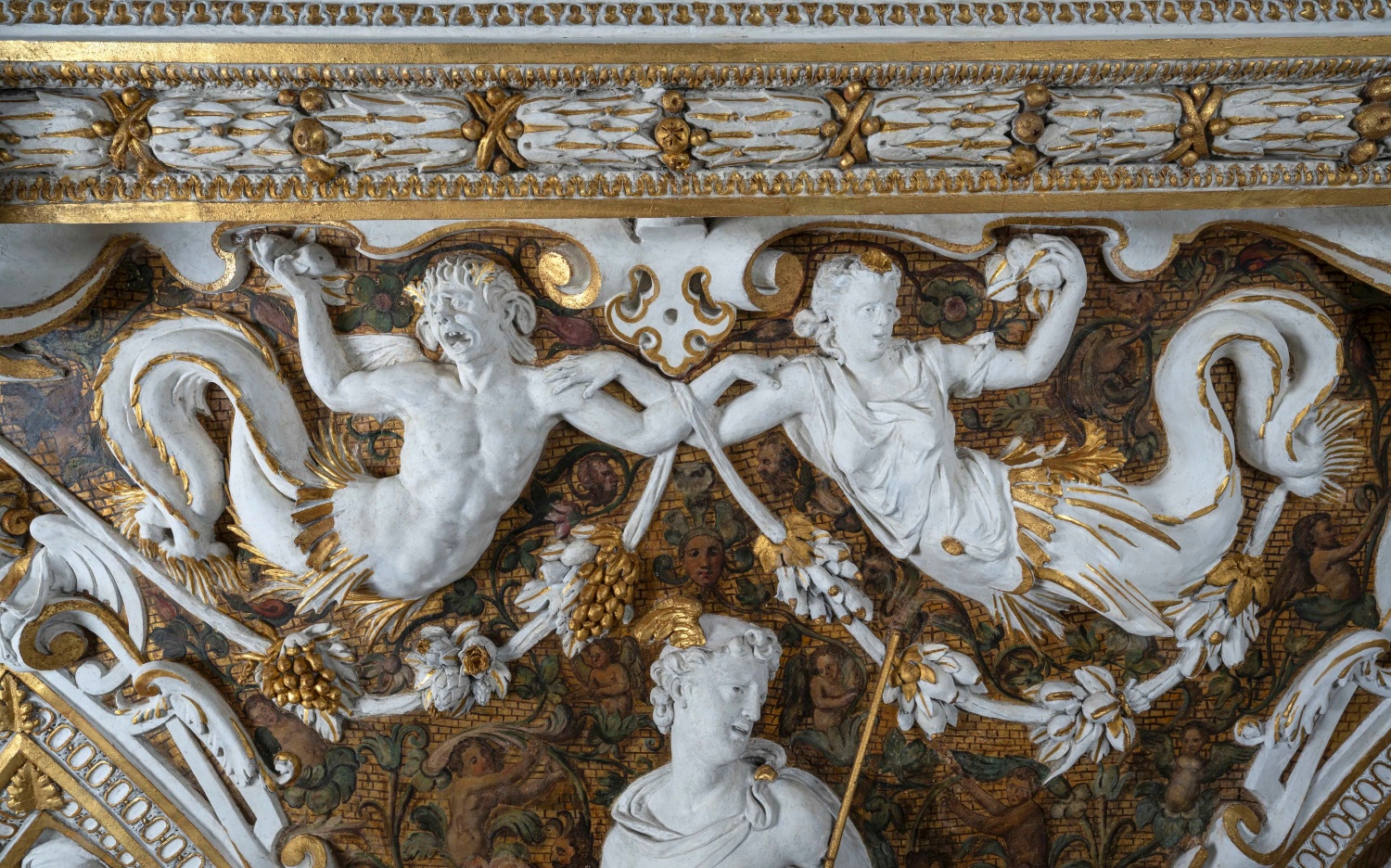
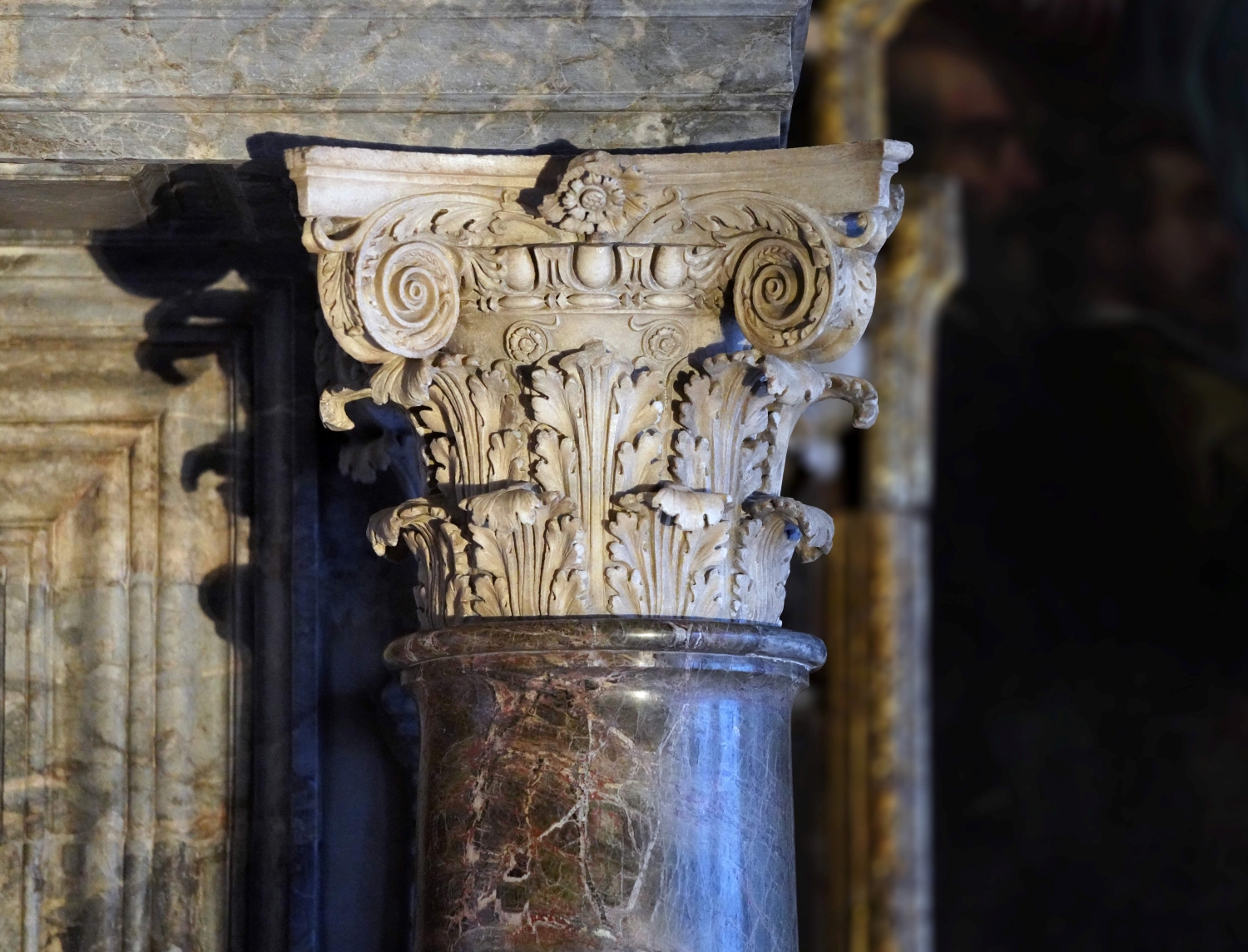
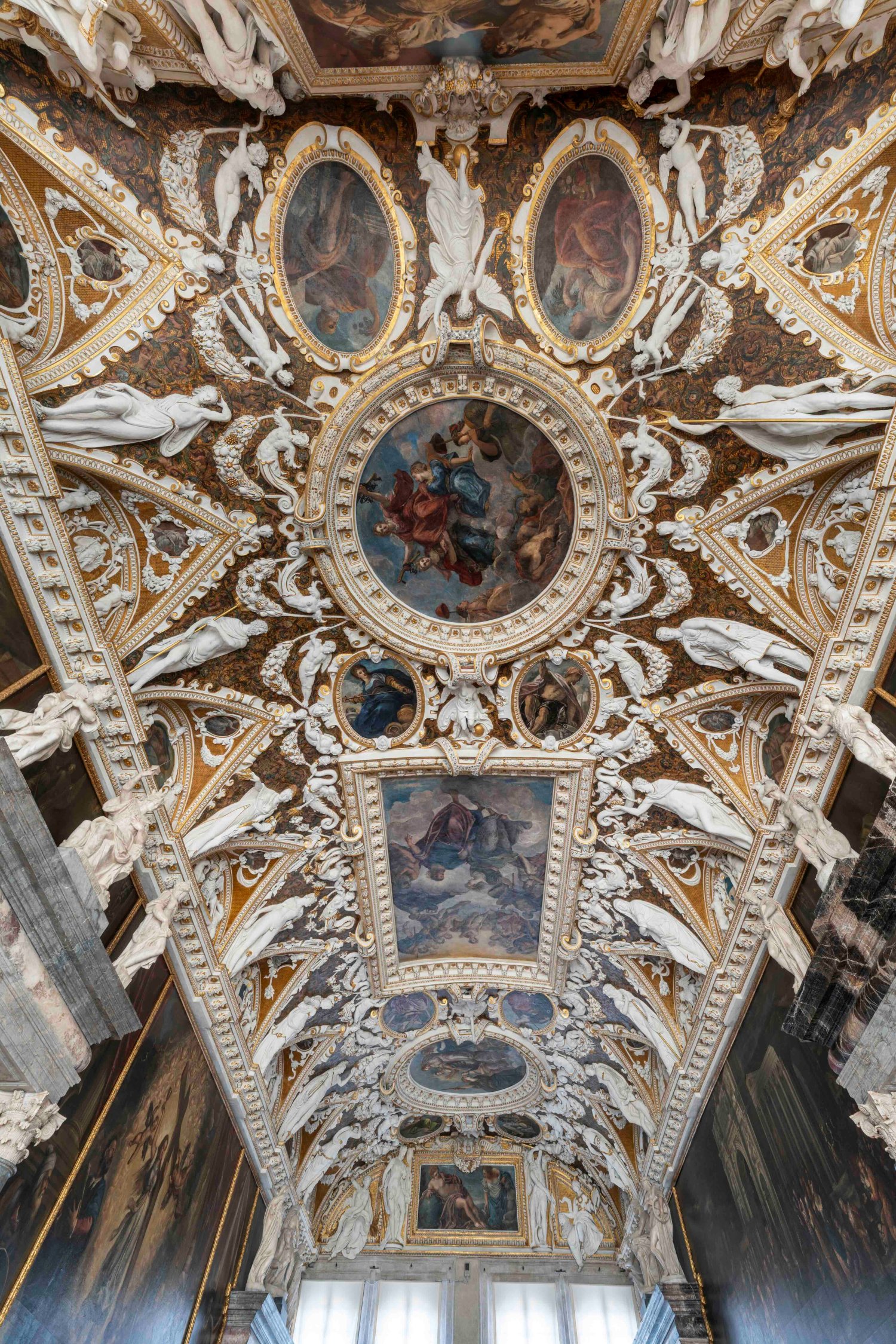
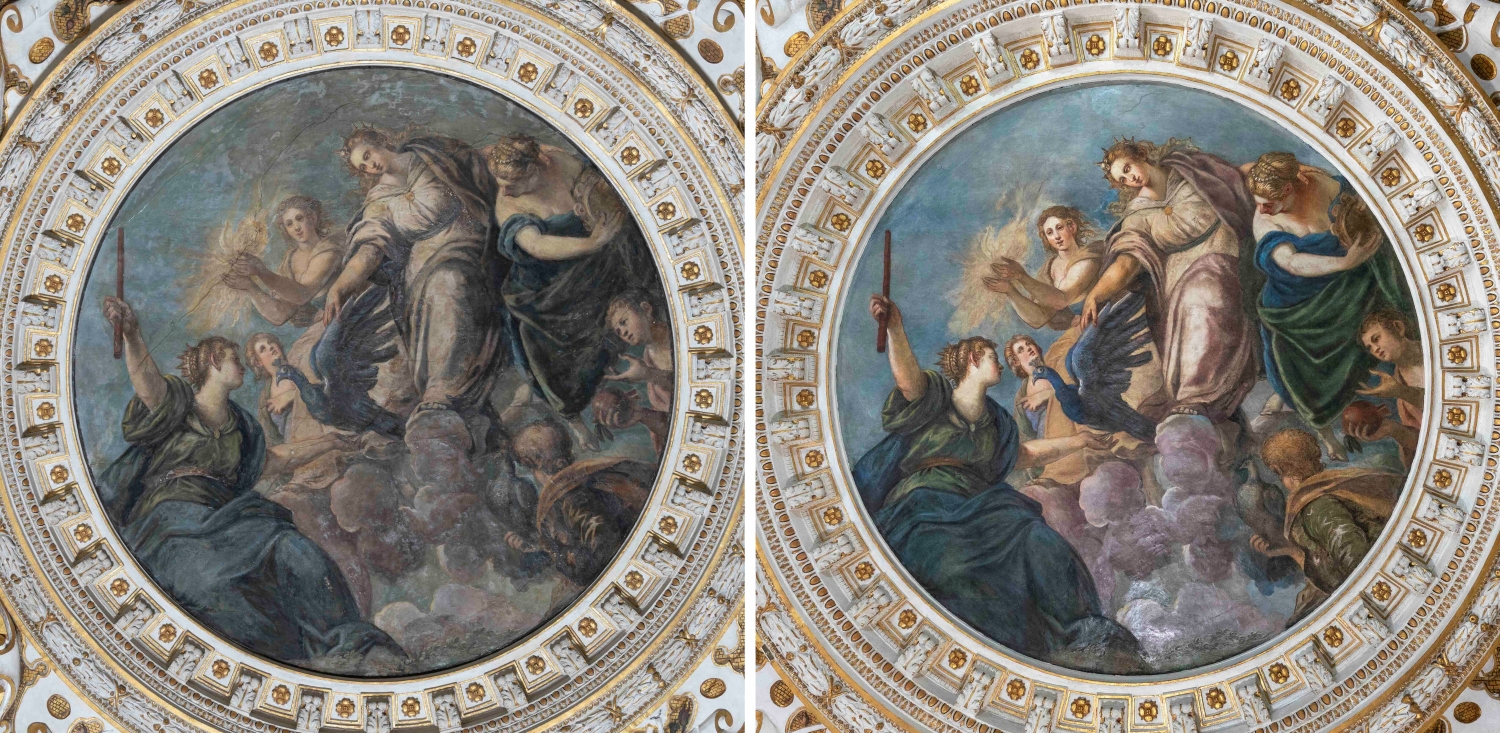
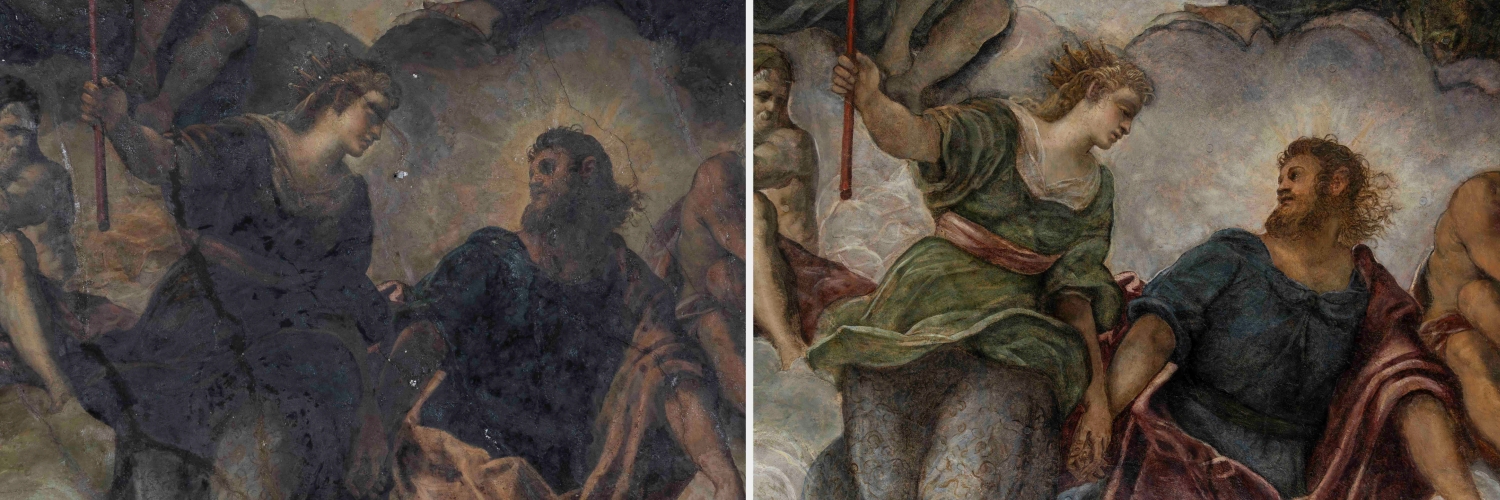
Specifically, the intervention involved the large Roman-style vaulted ceiling, both in its hidden structural components and in its rich decorative apparatus of mural paintings and stuccoes, as well as the stone portals and sculptural groups, the stone-framed windows, and the monochrome painted canvases. The study of the ceiling paintings led to one of the most significant technical discoveries of the project: the works were not executed as frescoes, but with oil paints applied over a ground of gypsum and glue, using a technique akin to canvas painting. This method of execution, compounded by subsequent, not always documented interventions, has over time made the conservation of the surfaces and their legibility more complex.
The work included a detailed mapping of the state of conservation, visual and tactile inspections, and an analytical campaign that made it possible to identify layers added to the original paint layer. The cleaning phase involved the removal of a twentieth-century varnish and several repaintings dating to restorations carried out in the last century, with analytical checks conducted before and after the intervention. Degraded old fillings were also removed, the paint layer consolidated, and the numerous cracks and losses treated. Finally, following extensive iconographic and stylistic comparison with scholars and art history experts, the missing areas and abrasions were reintegrated using watercolors and glazes, to restore a unified and balanced reading of the decorated surfaces.
Equally remarkable was the effort made over the two years of work to continue to guarantee access to the room and visibility of its decorations during the intervention. This was achieved through the installation of a visible restoration laboratory, an “open worksite” on the first floor along the museum itinerary, which allowed visitors to observe restorers at work on the canvas paintings that decorate the walls above the room’s four portals.
With the contribution of
SAVE VENICE
The Room of the Four Doors
The Room of the Four Doors is one of the most remarkable public spaces in the Doge’s Palace. A large rectangular hall, the Sala delle Quattro Porte serves as a passageway into the meeting rooms of Venice’s most powerful political bodies: the Senate, the Collegio, and the Council of Ten. Influential patricians, foreign diplomats, and royal guests passed through the Room of the Four Doors to reach their offices and meet government officials.
Following a devastating fire that destroyed part of the Doge’s Palace on May 11, 1574, a campaign to rebuild and redecorate the room was immediately launched involving the most important artists of the era. The head architect of the Venetian Republic (proto) Antonio da Ponte directed the work, and architect Andrea Palladio contributed to the project plans.
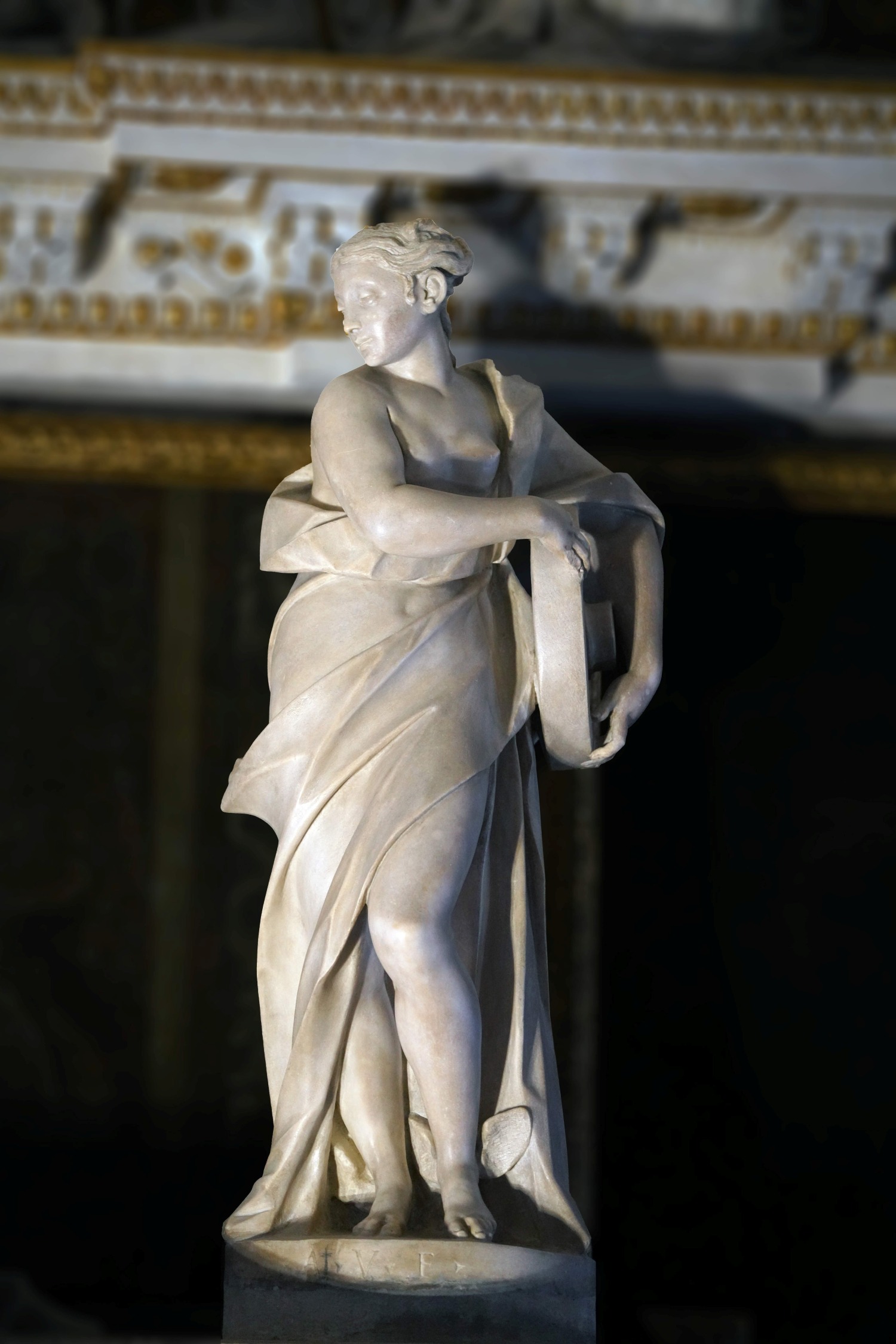
Between 1575 and 1576, Giovanni Battista Cambi, called “il Bombarda,” carved the ceiling’s stucco moldings and mythological sculptures. Nearly a year later, the vault was enriched with intricate grotesque decorations.
From 1576–1577, Jacopo Tintoretto frescoed the ceiling and the lunettes with allegorical scenes. The iconographic program of the frescoes was devised by humanist Francesco Sansovino to glorify Venice’s mythical birth, independence, power, and virtues. Due to condition issues, many of the frescoes were restored and repainted by Nicolò Bambini 1713.
Galerie
Conservation project funded thanks to the contribution of SAVE VENICE >
Supplemented by additional funding activated through the Art Bonus including support from The Gritti Palace, a Luxury Collection Hotel, Venice together with investments by the Fondazione Musei Civici di Venezia.