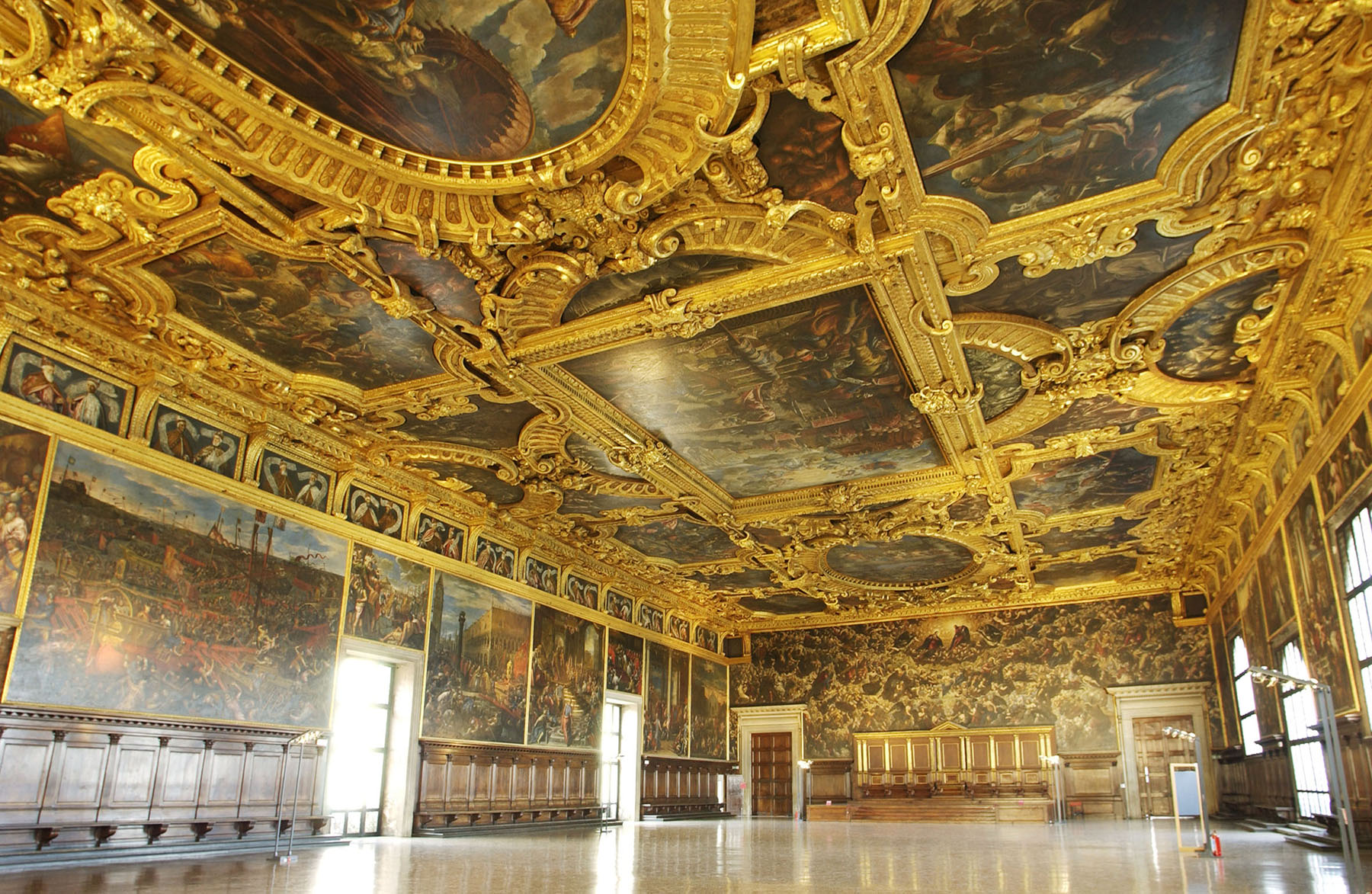
The Picture Gallery
From 1615 on, in the atmosphere of the Palazzo Ducale had been offered for public enjoyment a set of paintings formerly owned by the Doge’s Domenico Grimani and upon his death purchased by la Serenissima Repubblica. Easel Paintings of Flemish Origin, not relevant to the host venue, but becoming in a short time, a permanent presence in the halls of the Palazzo.
During the last Century seventies, an attempt was made to restore this tradition by placing together with la Sala dei Tre Capi also the Sala del Magistrato alle Leggi to the exhibition of that original nucleus of paintings still present in the Palazzo, as the panel paintings of Jheronimus Bosch, today exhibited in the Gallerie dell’Accademia di Venezia placed alongside others from different origins.
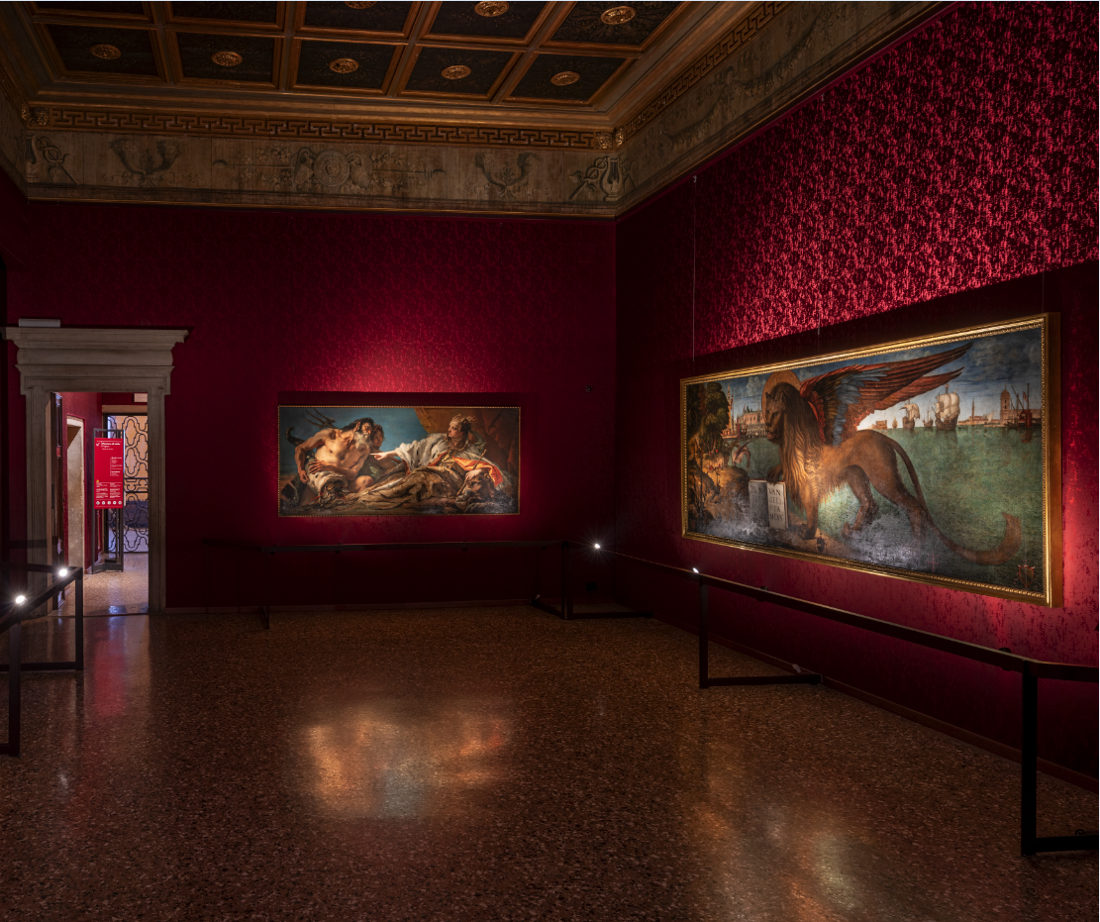
The current rearrangement of the Sala della Quarantia Criminale, Sala dei Cuoi and Sala del Magistrato alle Leggi fits into this tradition together with « institutional » decorative apparatus and other easel paintings from private collections.
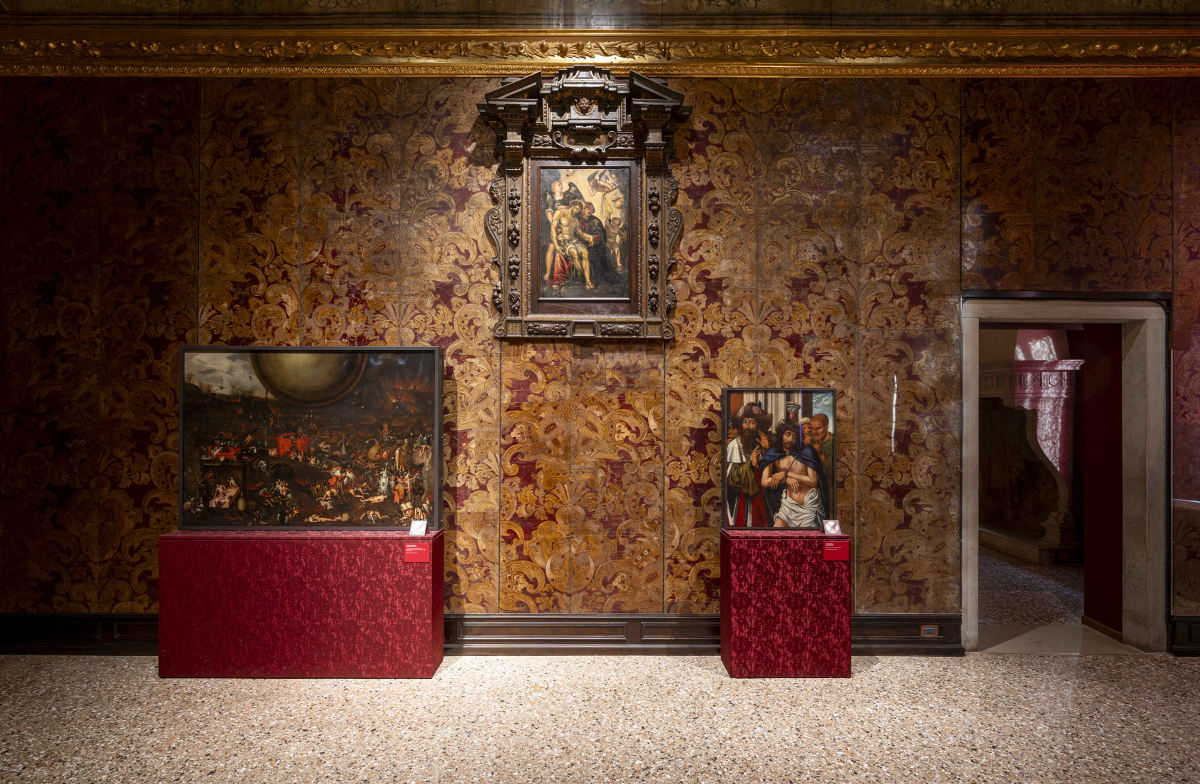
In reference to the secular presence of Flemish paintings in the Palazzo, it has been decided to show in the Sala dei Cuoi some Flemish works, among which there is the only survivor of those offered for public use from 1615: The Apocalyptic vision already attributed to Civetta and today more appropriately attributed to an anonymous follower of Bosch.
In the other rooms are exhibited masterpieces by Giovanni Bellini, Carpaccio, Titian and Giambattista Tiepolo, absolute masters of Venetian art.
In collaboration with
Venice International Foundation
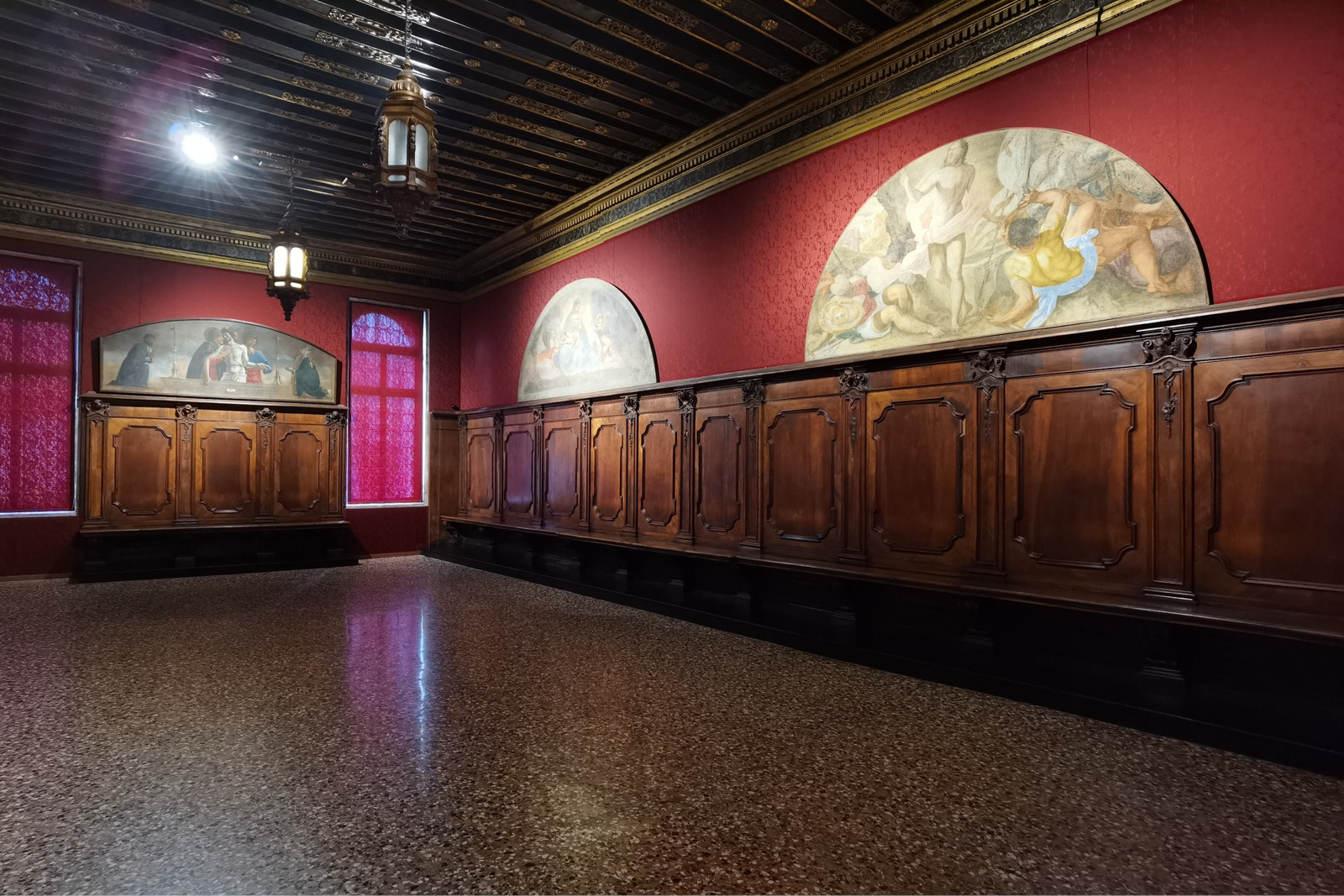
The Chamber of the Quarantia Criminale
Housing one of the three Councils of Forty, the highest appeal courts in the Venetian Republic, this is another room used in the administration of justice. The Quarantia Criminal was set up in the fifteenth century and, as the name suggests, dealt with cases of criminal law. It was a very important body as its members, who were part of the Senate as well, also had legislative powers.
The wooden stalls date from the seventeenth century.
Discover the exhibited works
The Cuoi Room
The room beyond the Chamber of the Quarantia Criminale served as an archive, and was presumably lined with shelves and cabinets, similar to that one can now see on the far wall. This was not part of the original furnishings, nor were the cuoridoro, the gold-embossed leather panelling one can see on the other walls.
Discover the exhibited works
The Chamber of the Magistrato alle Leggi
This chamber housed the Magistratura dei Conservatori ed esecutori delle leggi e ordini degli uffici di San Marco e di Rialto, to give them their full title. Created in 1553, this authority was headed by three of the city’s patricians and was responsible for making sure the regulations concerning the practice of law were observed.
In a mercantile city such as Venice, the courts were of enormous importance and the administration of justice in the city was made all the more special by the fact that it was not based on Imperial, Common or Roman law but on a legal system that was peculiar to Venice.
Discover the exhibited works
Atrium of the Prisons
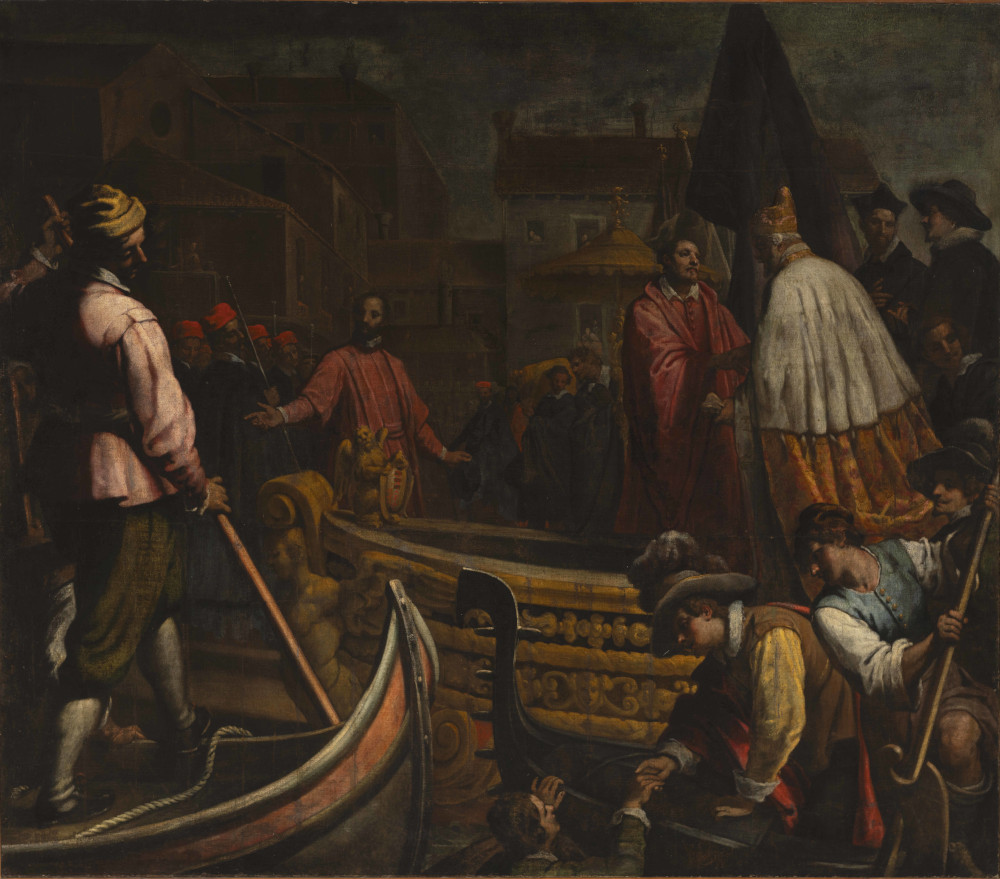
The room displays the work by Matteo Ponzone (1583 – after 1663), The Visit of Doge Giovanni Corner to the Church of San Vio (after 1641).
Originally created to decorate the sumptuous Sala dei Banchetti, the painting depicts Doge Giovanni Corner’s visit to the Church of Saints Vito and Modesto—a ceremony held in remembrance of the foiled conspiracy of Bajamonte Tiepolo in 1310.
Discover the work