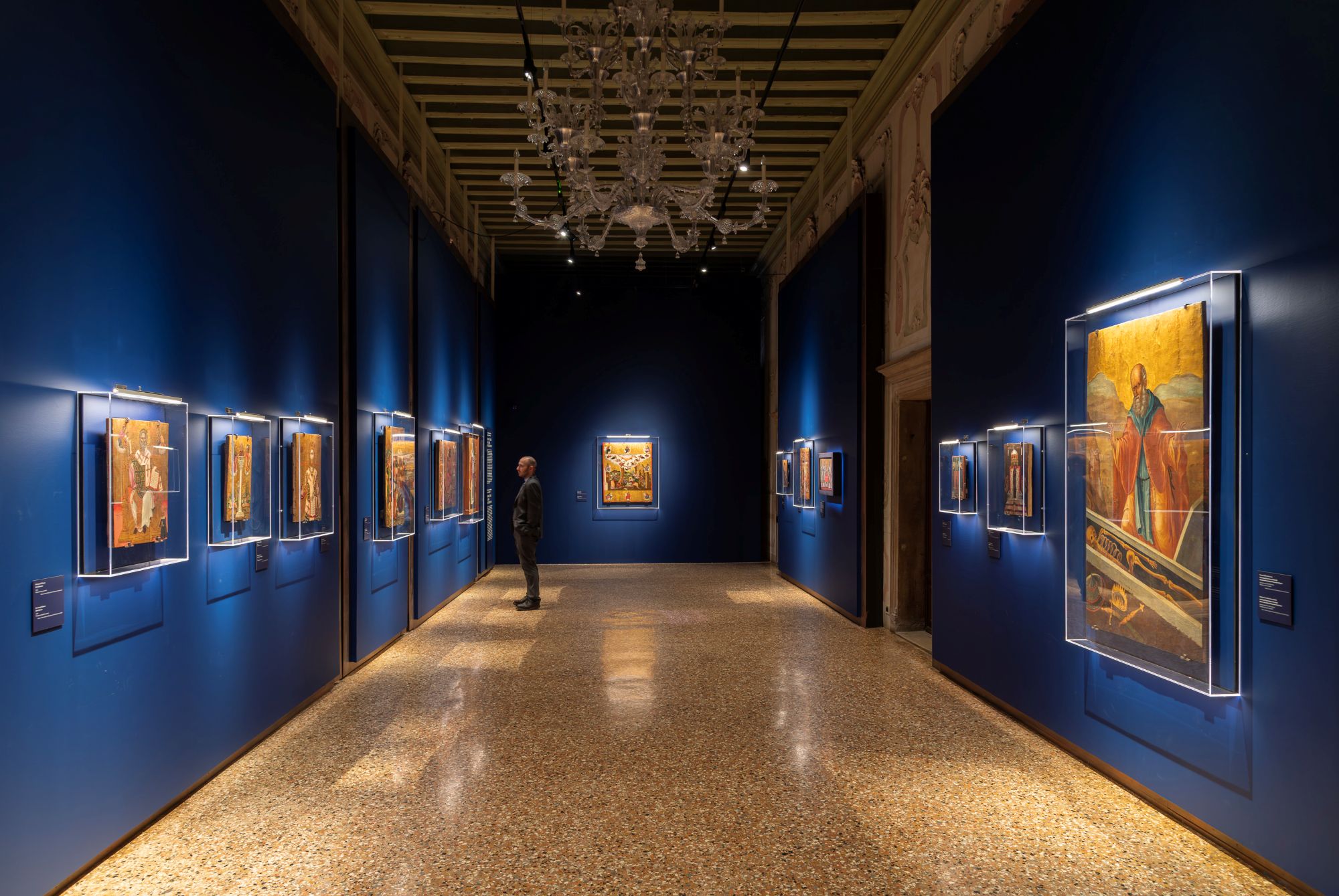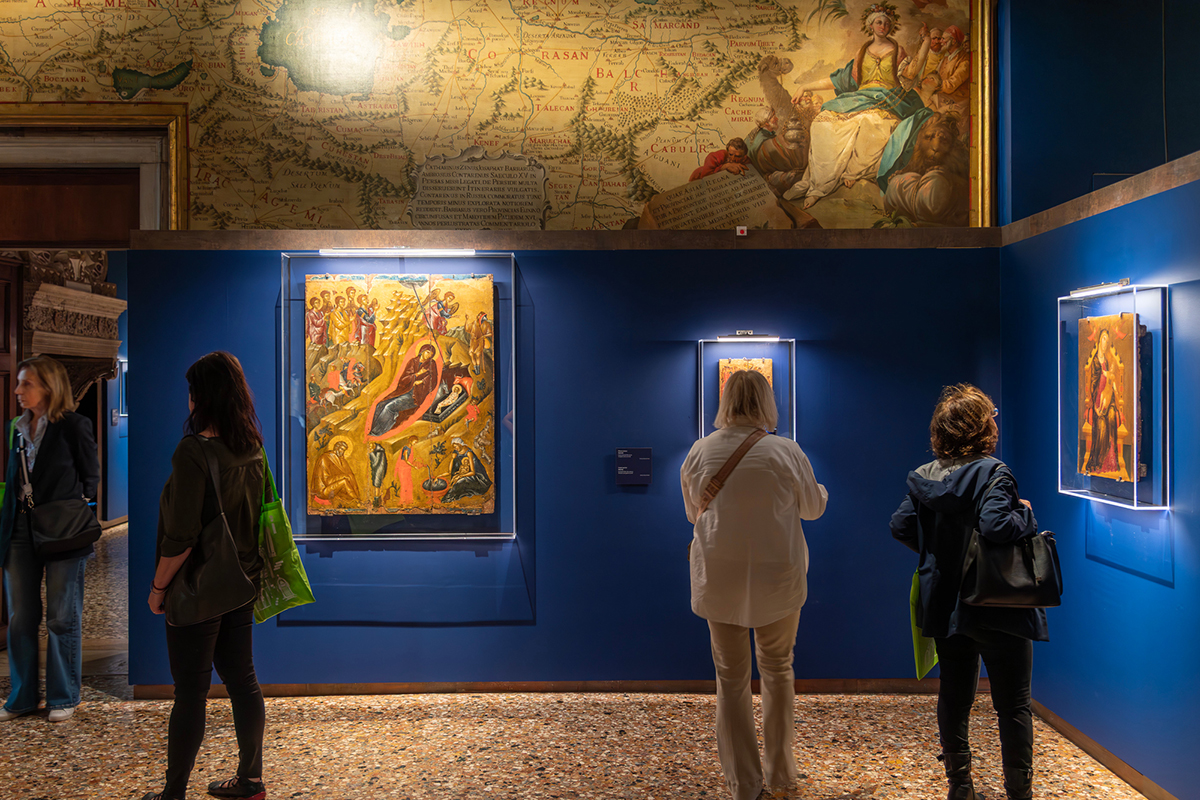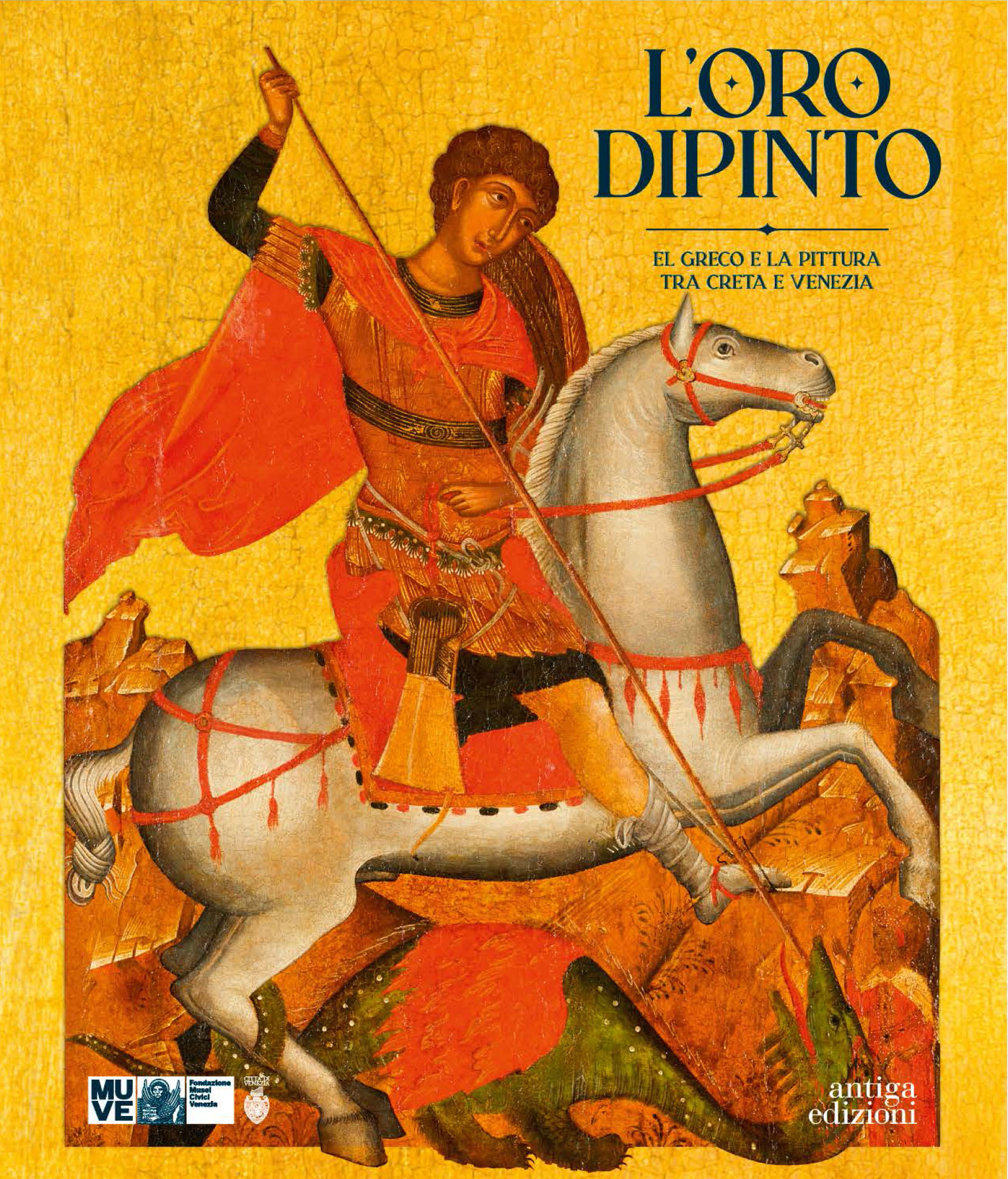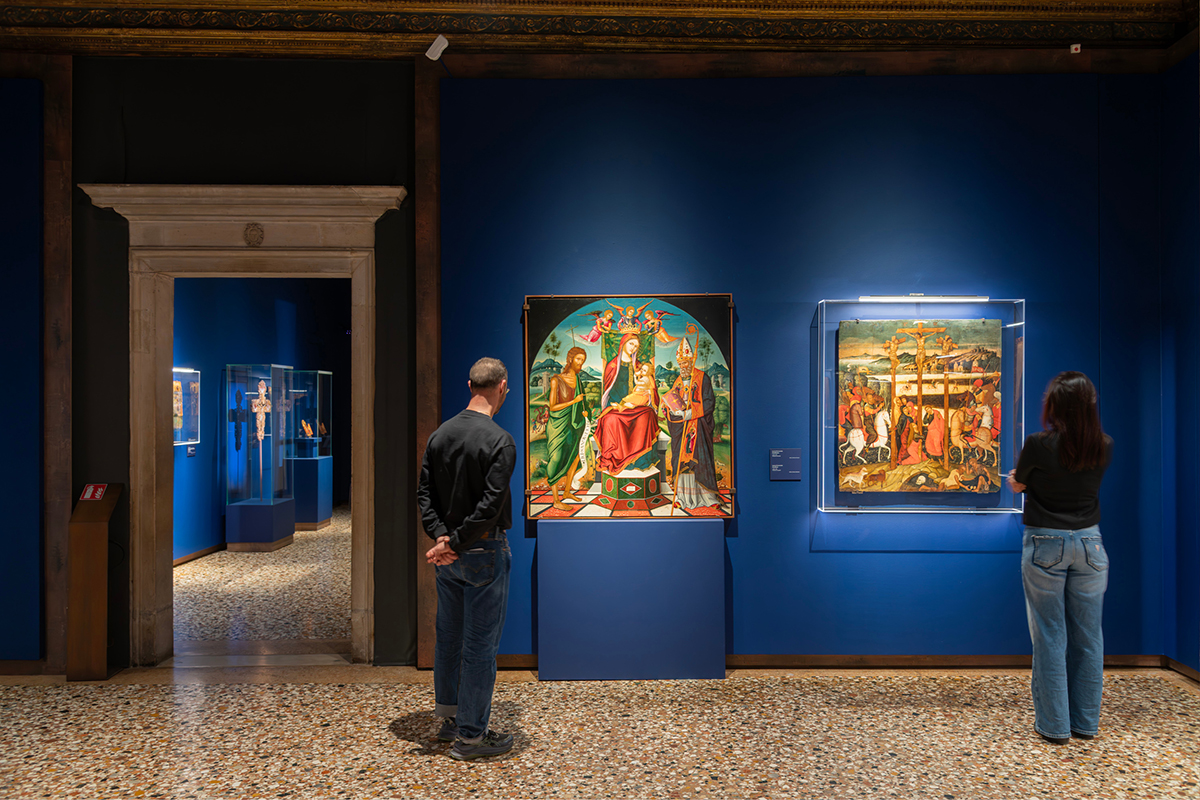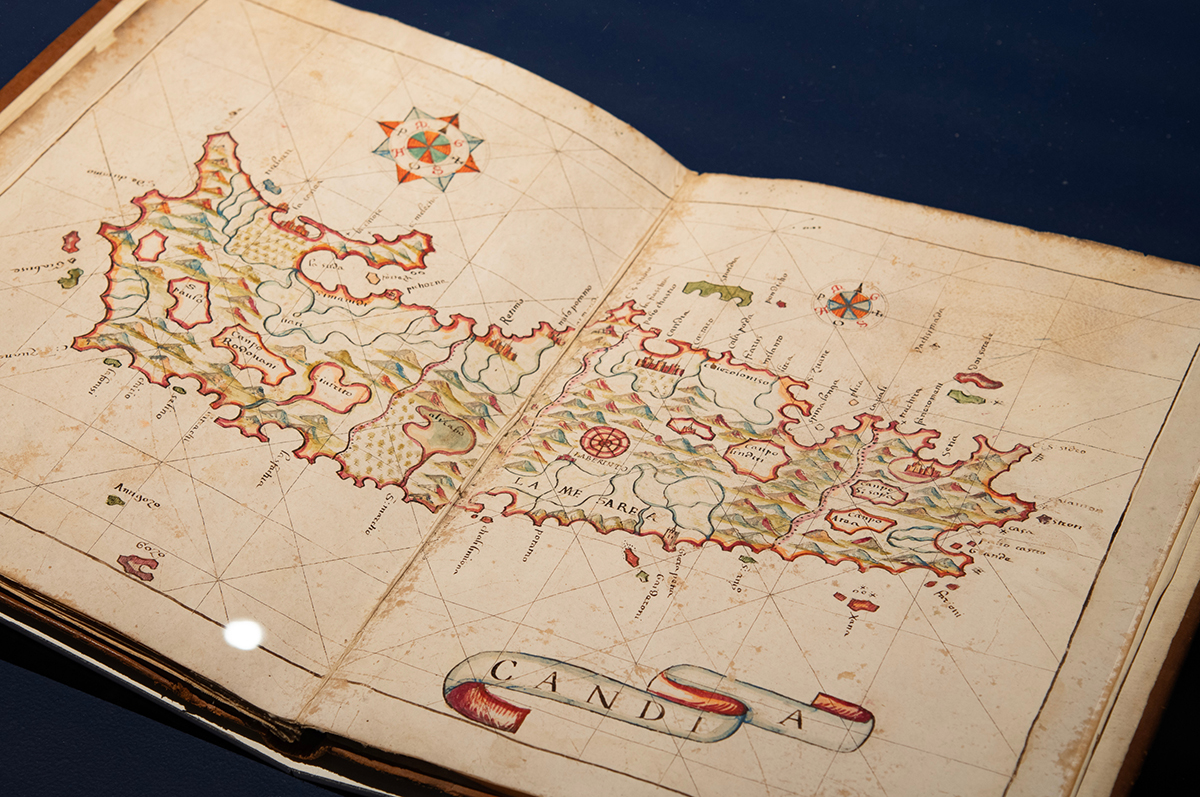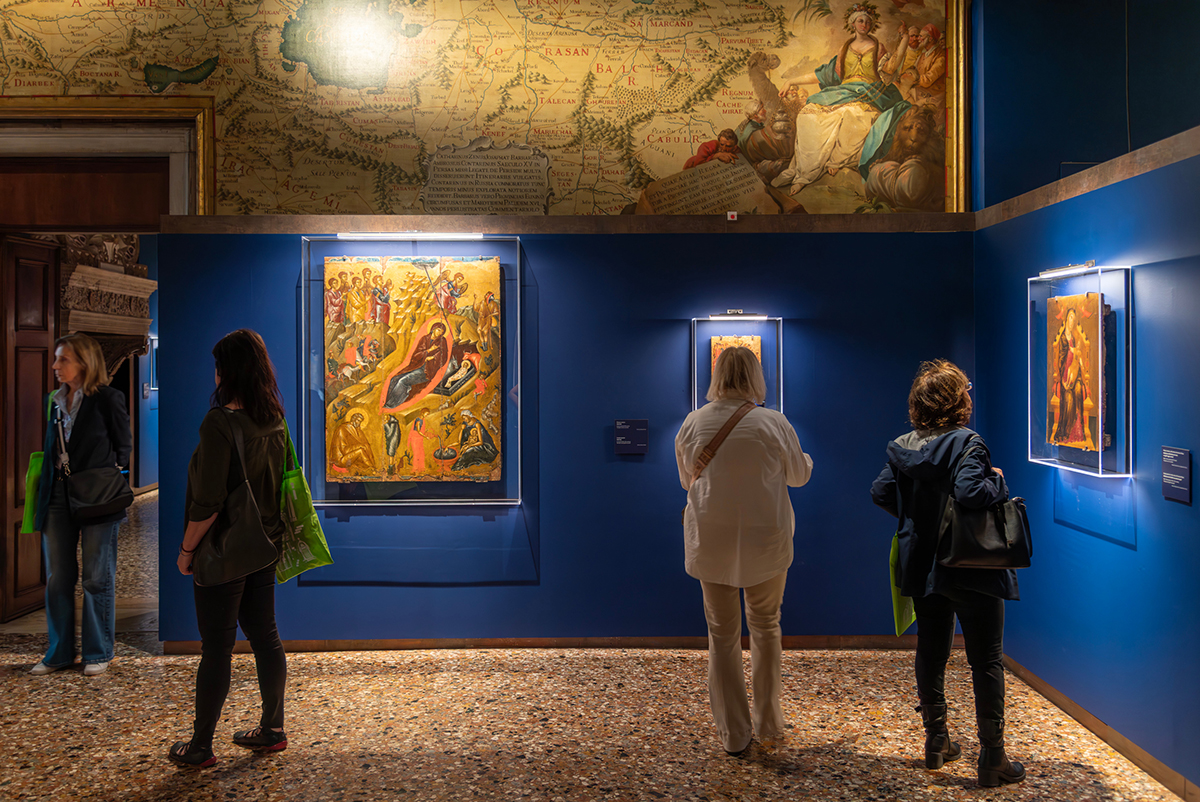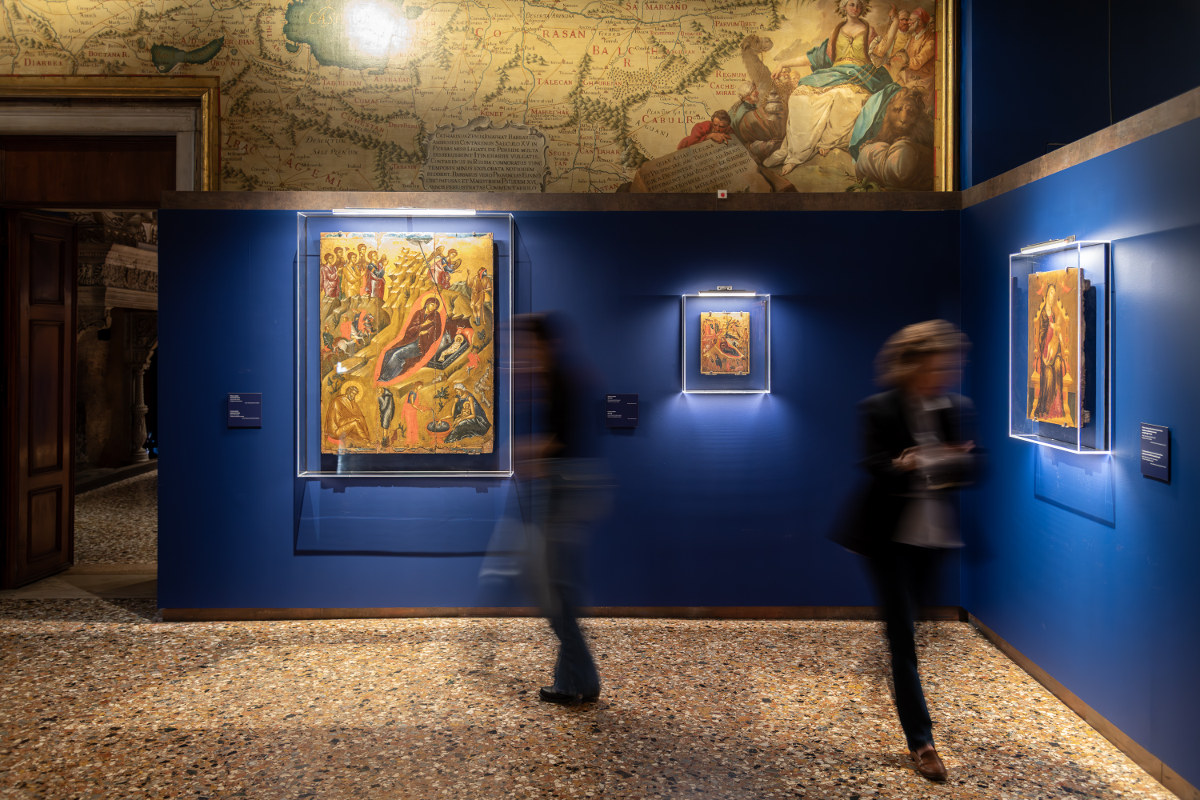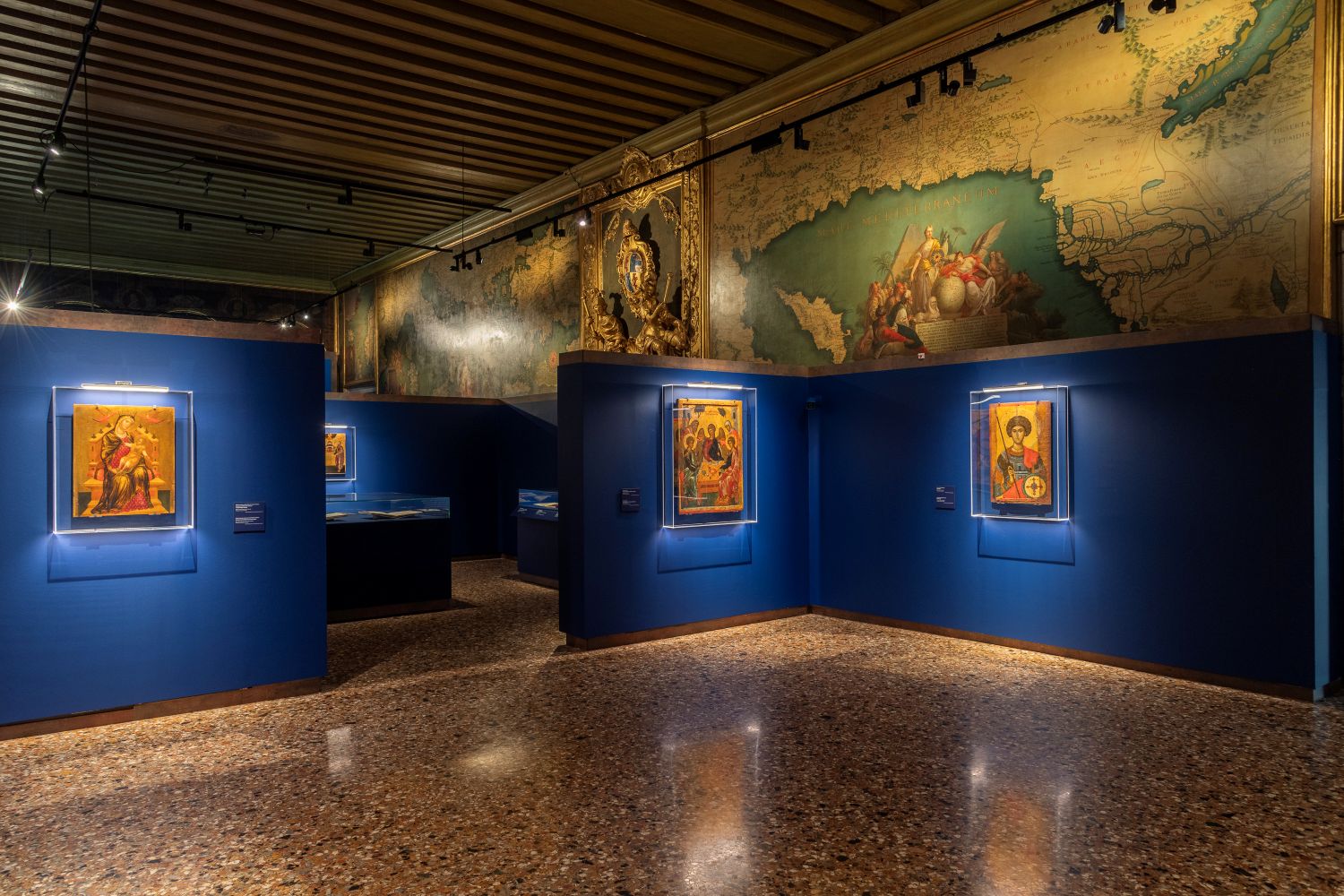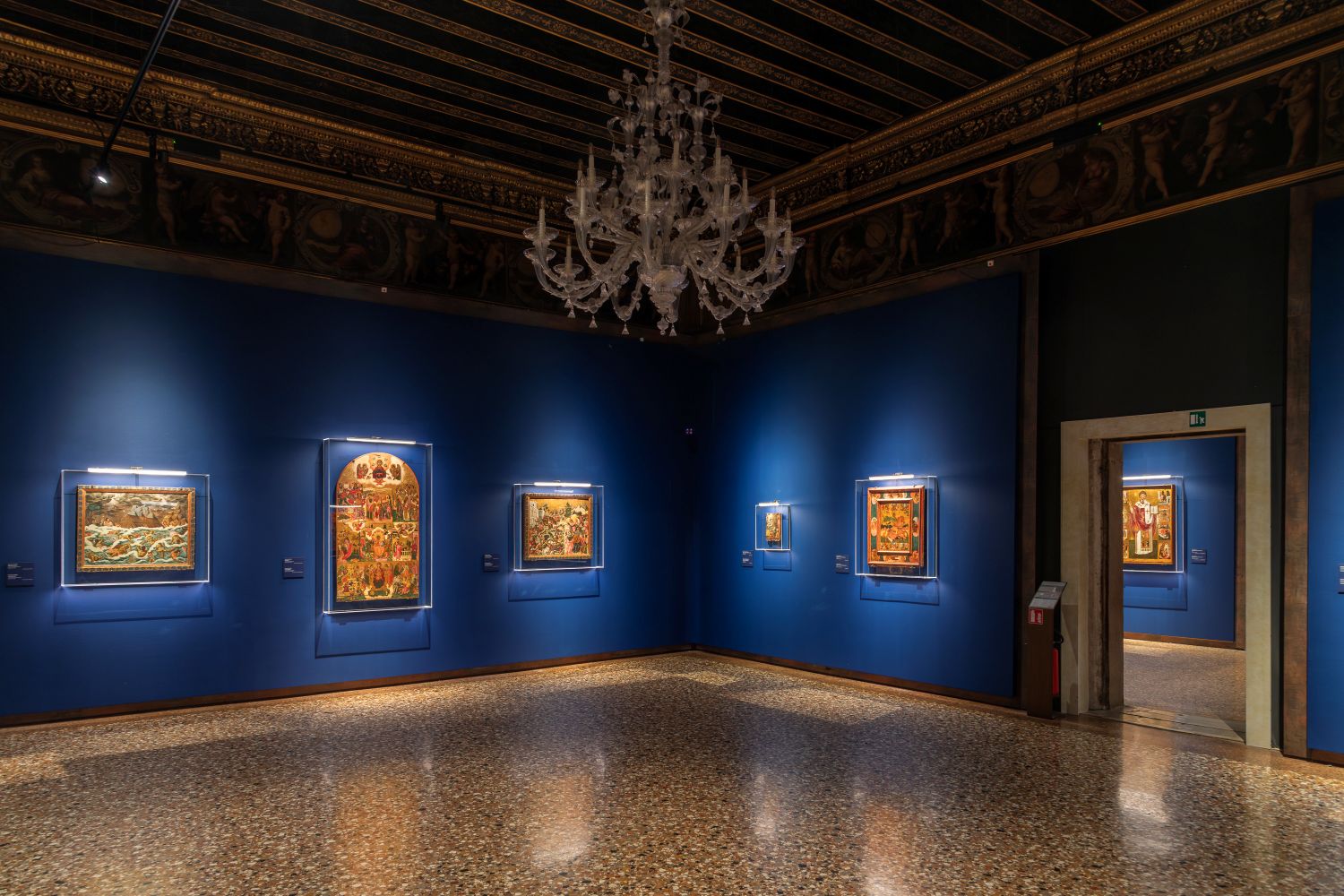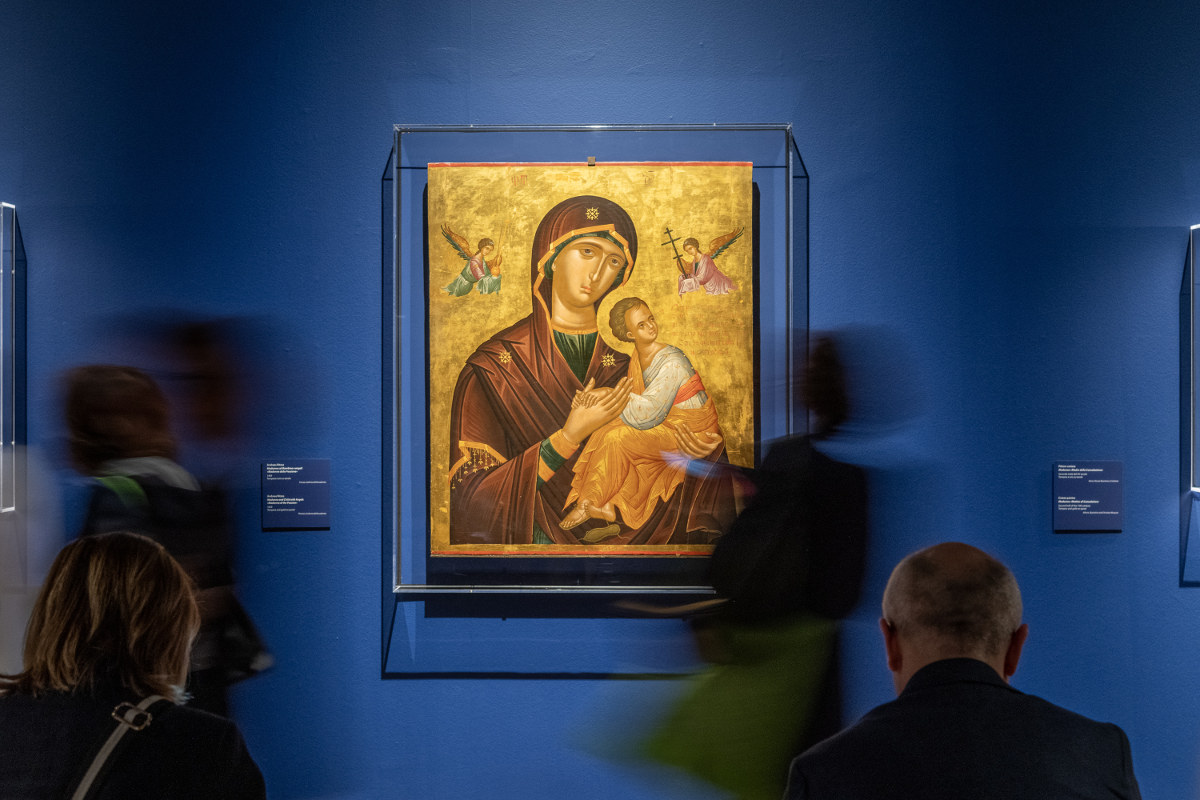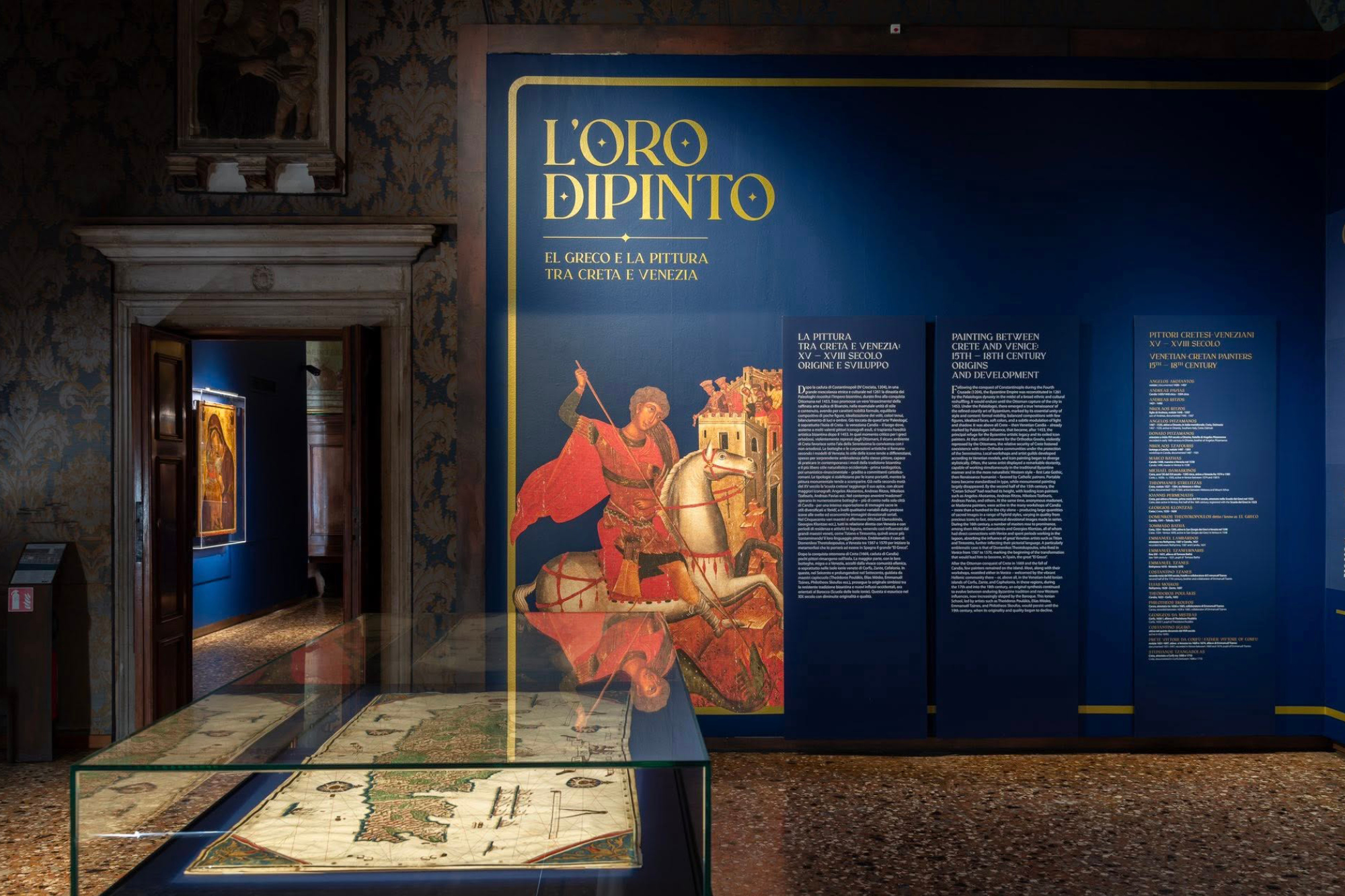
A golden thread links the historical and artistic events, the diplomatic balances and the devotion in the Mediterranean area along the route between Venice and Crete, or Candia as it was known from the thirteenth century, when it became the pearl of the Serenissima’s Stato da Mar. Painted gold, which makes icons shine with spiritual light, is the protagonist of the exhibition at the Doge’s Palace, and provides the backdrop to a long history of intense pictorial relations between the two islands.
After the fall of Constantinople in 1453, Candia became the most important artistic centre for the ancient Byzantine tradition, which saw the involvement of over a hundred workshops of ‘madoneri’, especially iconographers producing popular devotional images. At the same time, Venice – like a new Byzantium – welcomed a growing influx of artworks and artists from the Aegean islands. Iconographers, or painters of icons, travelled or immigrated between Crete, the Ionian Islands, and the Venetian capital. This led to a unique synthesis between the native Byzantine courtly tradition – already an essential element of Venetian artistic heritage – and the Western figurative language, which evolved from late Gothic to the Renaissance, becoming more human-centred, naturalistic, and dynamic.
A fortunate relationship developed and remained unbroken between the golden age of the Venetian Renaissance in the fifteenth and sixteenth centuries and the early nineteenth century, marked by moments of always original symbiosis. The seven sections of the exhibition chronologically illustrate this unique pictorial journey; at the heart of this fascinating narrative of history and painting stands the most famous and extraordinary figure of the ‘school’: Dominikos Theotokopoulos, or El Greco (1541–1614). Born in Crete, he began his training within the post-Byzantine tradition before making his way to Venice around 1567 – an essential step for artists of the time.
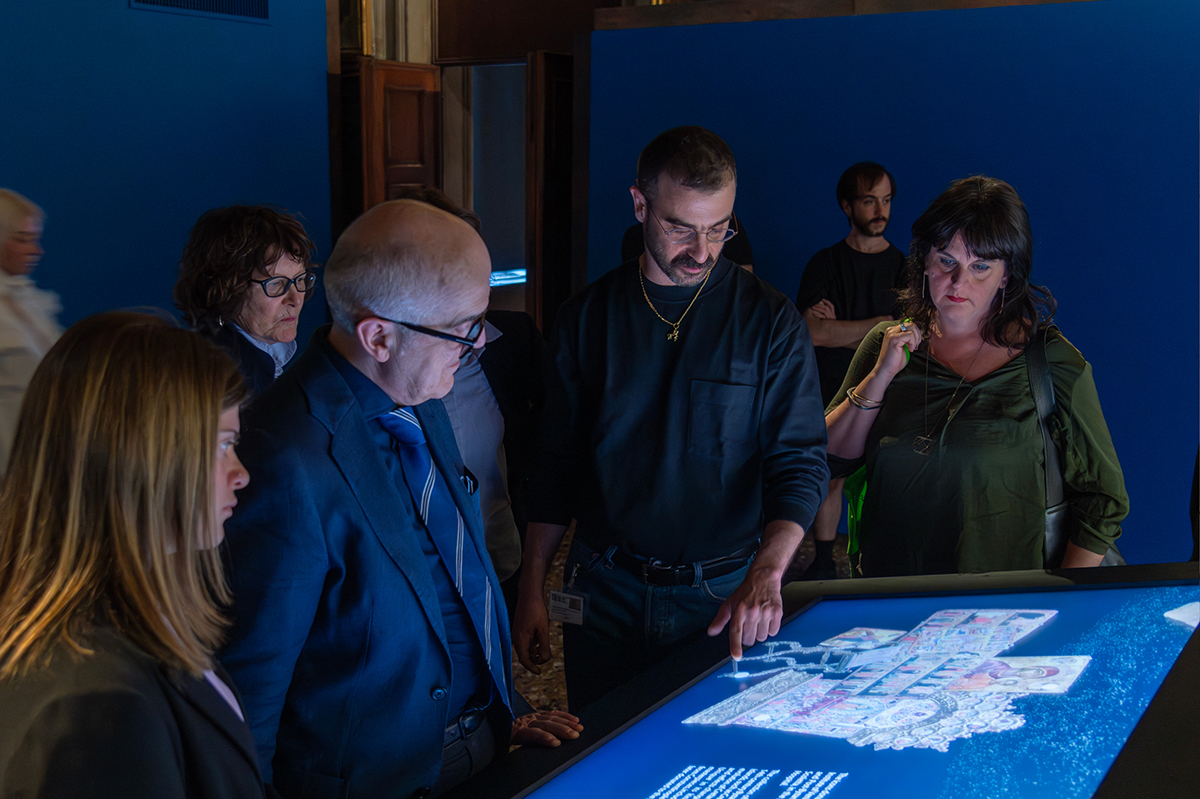
The exhibition concludes with an in-depth exploration of the icon, examining its material, technical, and artistic aspects. This section offers visitors a valuable insight into the craftsmanship behind these works and has been developed in collaboration with the Istituto Nazionale di Fisica Nucleare – CHNet Cultural Heritage Network.