The Institutional Chambers on the 1st floor
After visiting the second floor, coming from the Armoury, visitors can explore the Liagò Room. In Venetian dialect liagò means a terrace or balcony enclosed by glass. This particular example was a sort of corridor and meeting-place for patrician members of the Great Council in the intervals between their discussions of government business.
On display here are three important original sculptures by Antonio Rizzo: Adam, Eve, and the Shield-Bearer, which once adorned the façade of the Foscari Arch (1462–1471).
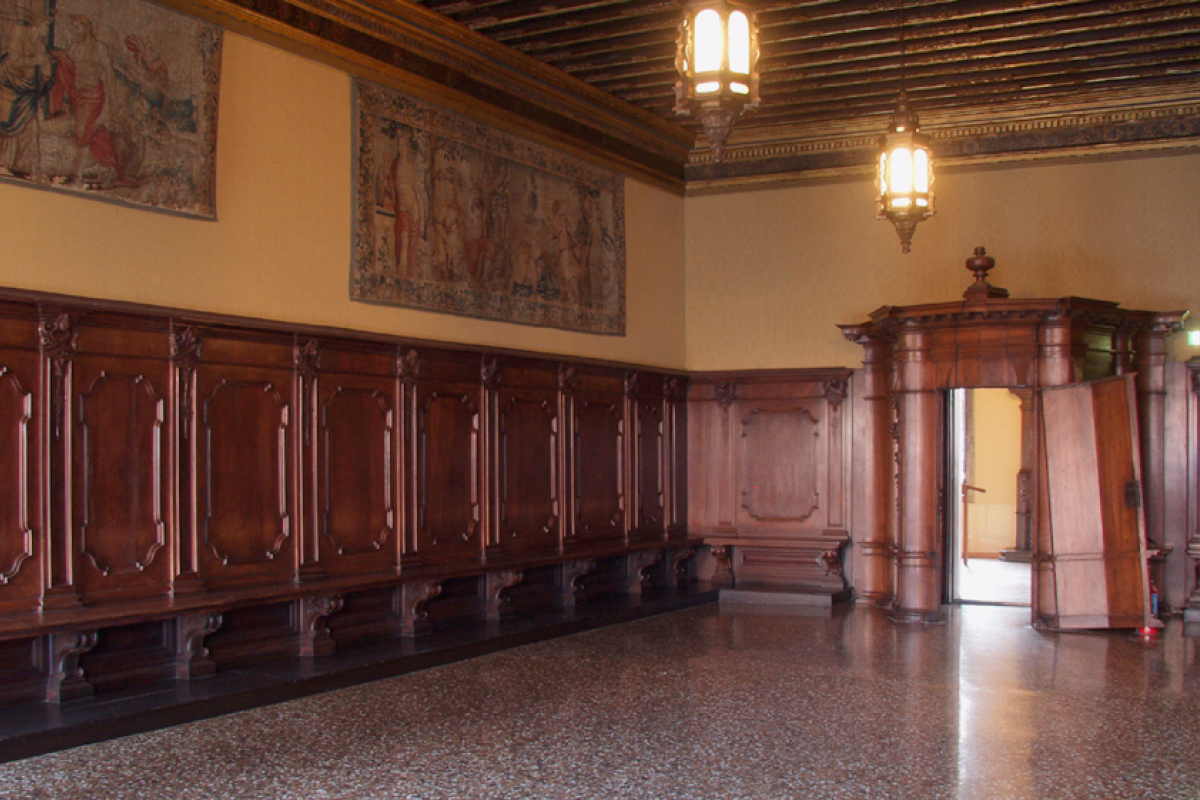
The visit continues with the Chamber of Quarantia Civil Vecchia, one of the three Councils into which the supreme judicial body of Venice, established as early as the 12th century, was divided in the 15th century. This section was responsible for civil actions within the Venetian territory. The room, restored in the 17th century, preserves a fragment of the original fresco and features important paintings from that period.
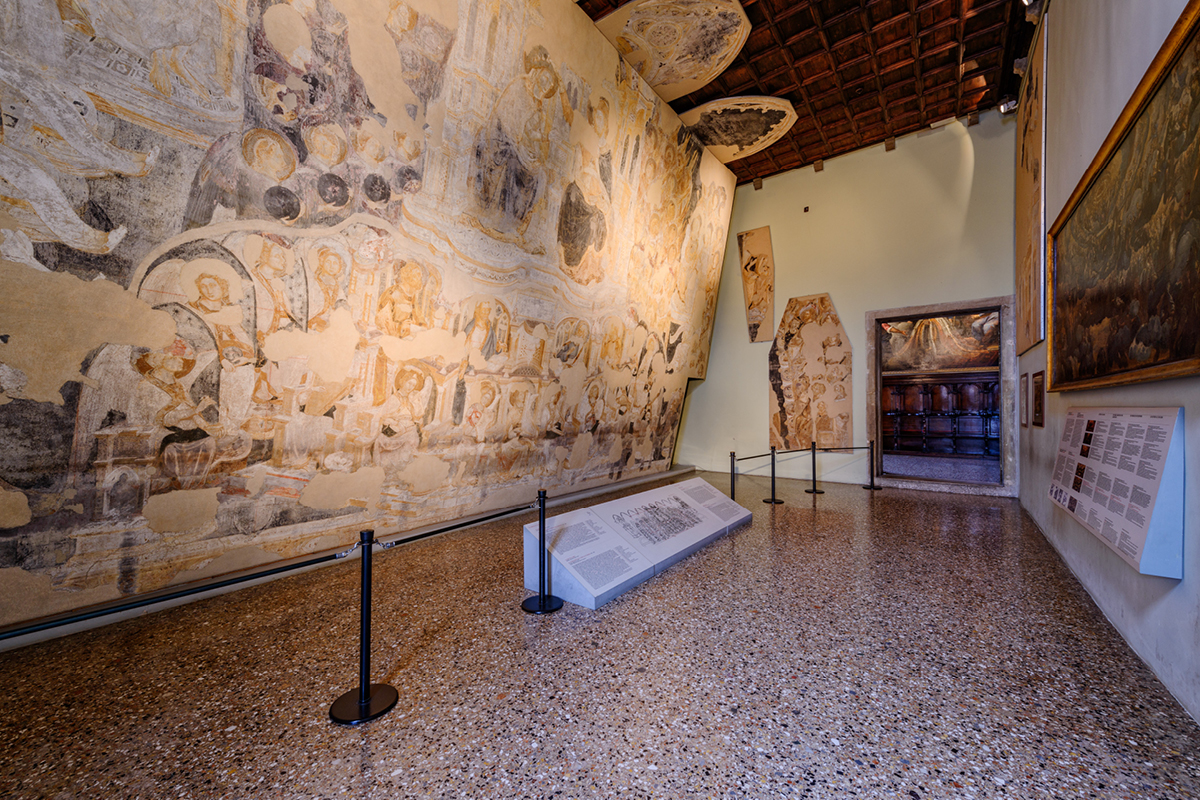
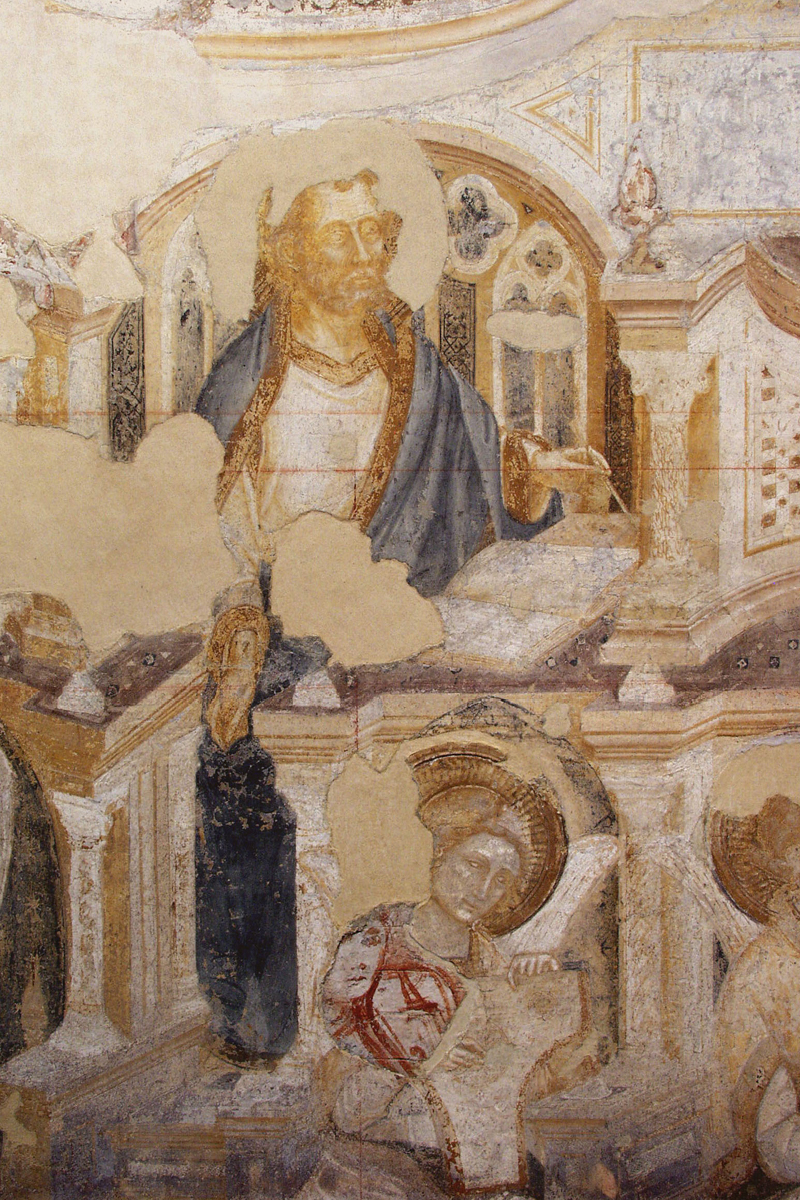
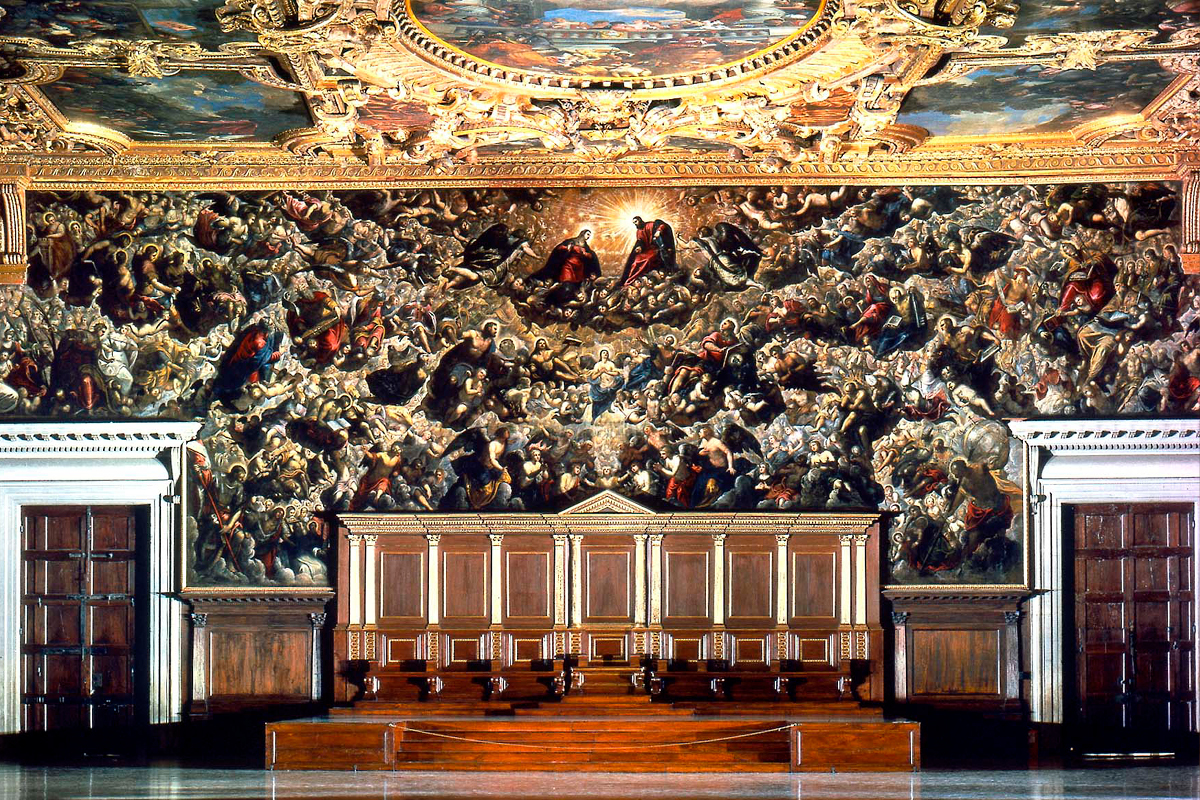
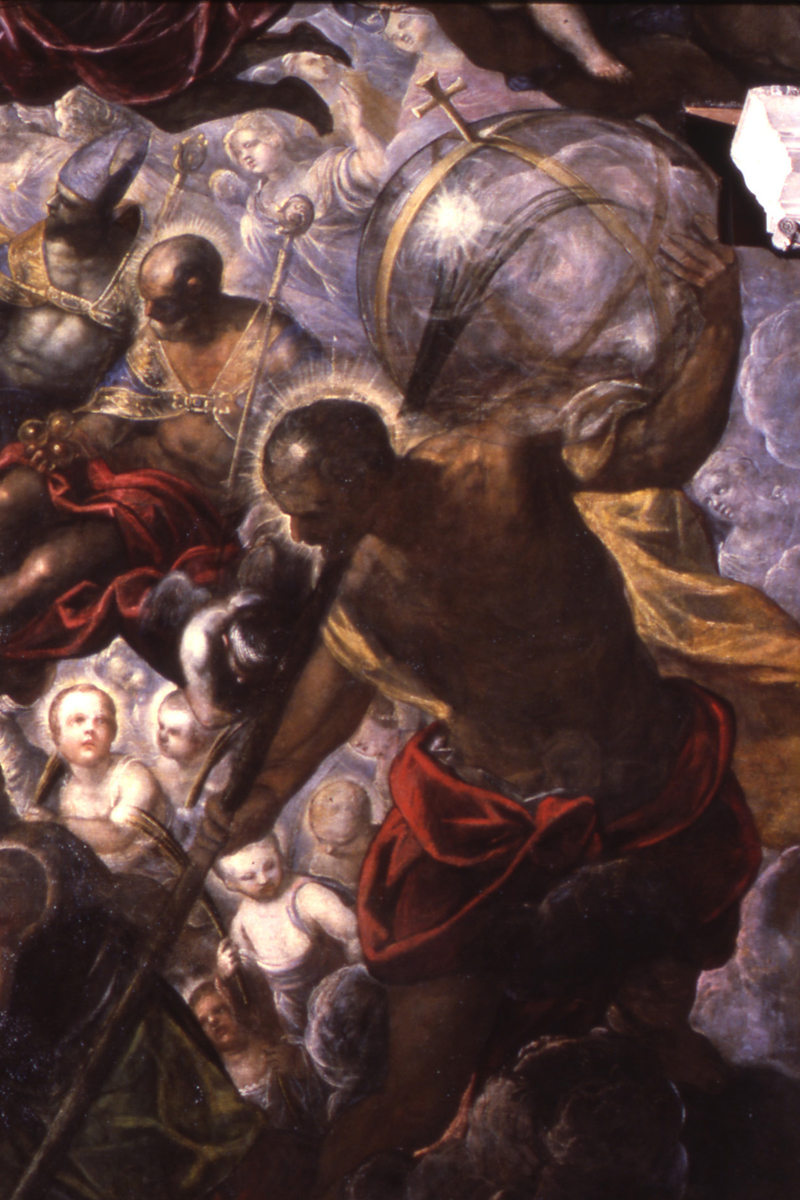
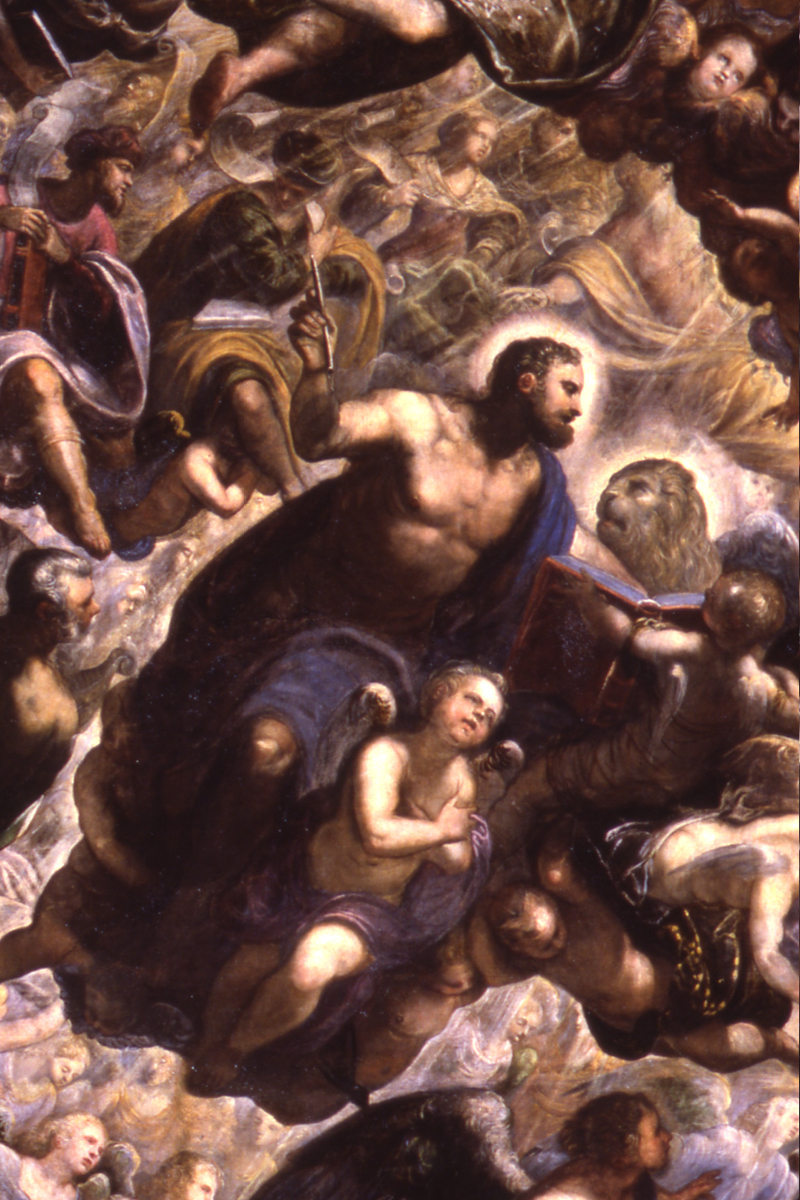
Next is the Guariento Room, formerly an arms depot, now home to the remains of the large fresco The Coronation of the Virgin, painted for the Chamber of the Great Council by Guariento between 1365 and 1368, and severely damaged in the fire of 1577. In response to the destruction, the Republic launched a competition to redecorate the wall behind the throne with a grand canvas depicting Paradise. The project was ultimately entrusted to Tintoretto, who completed it with his son Domenico. One of the precious original sketches for the work is on display in this room.
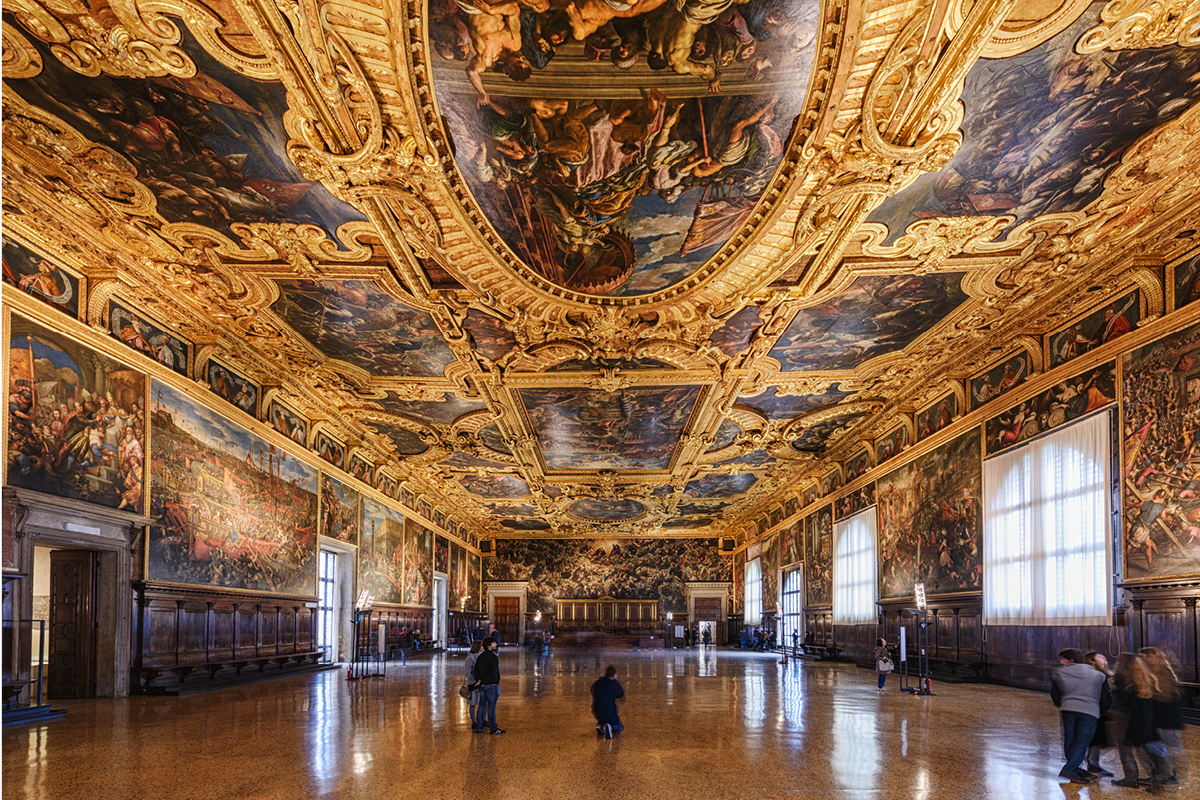
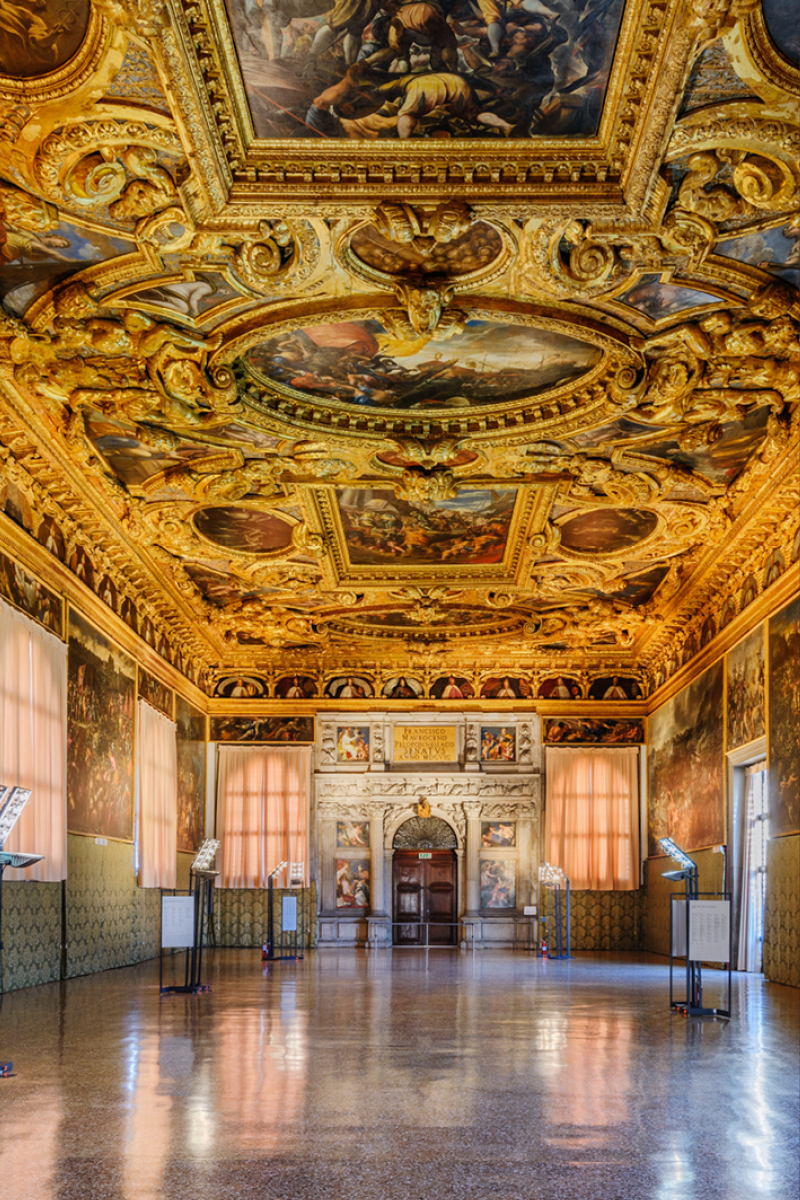
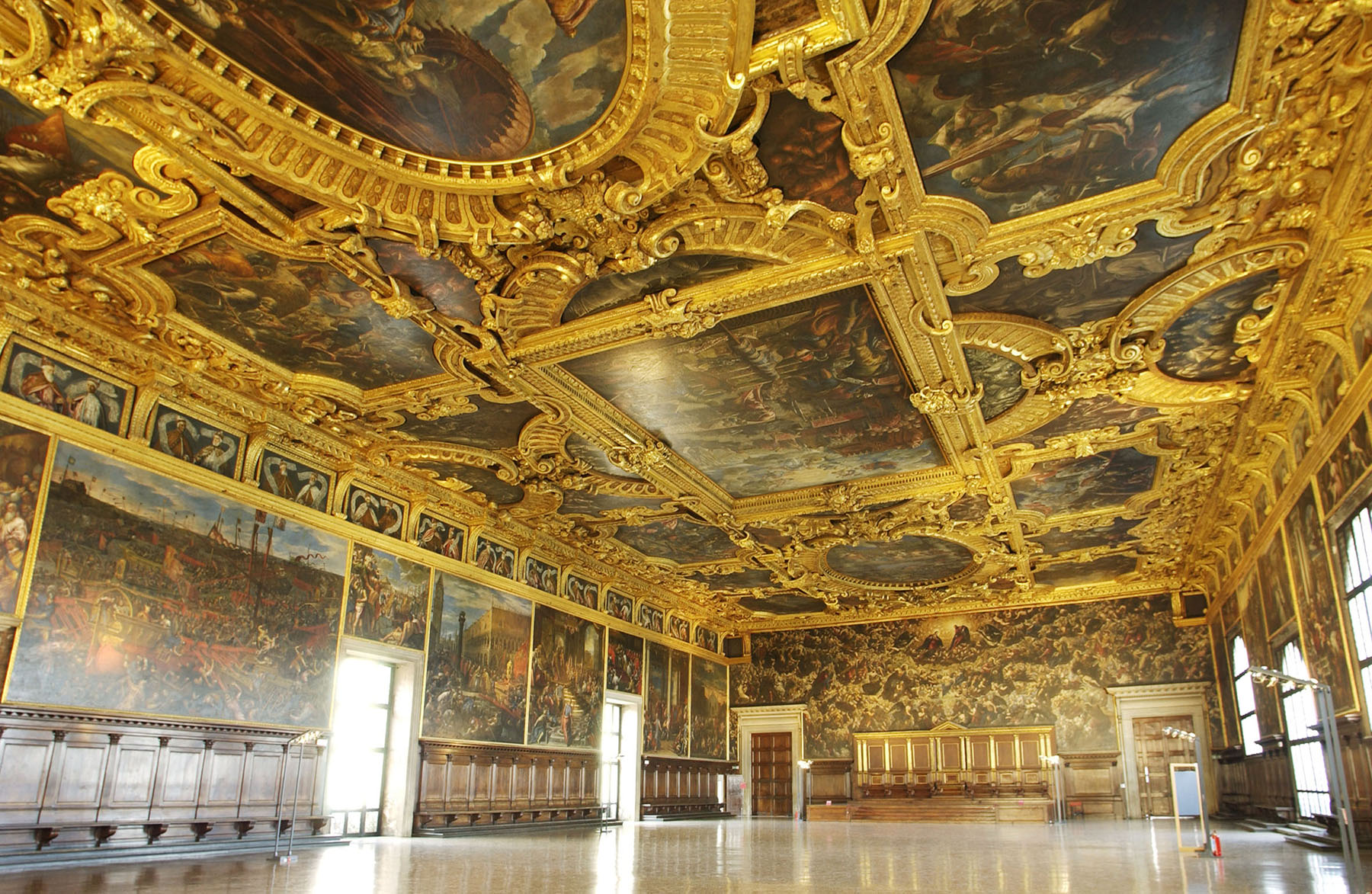
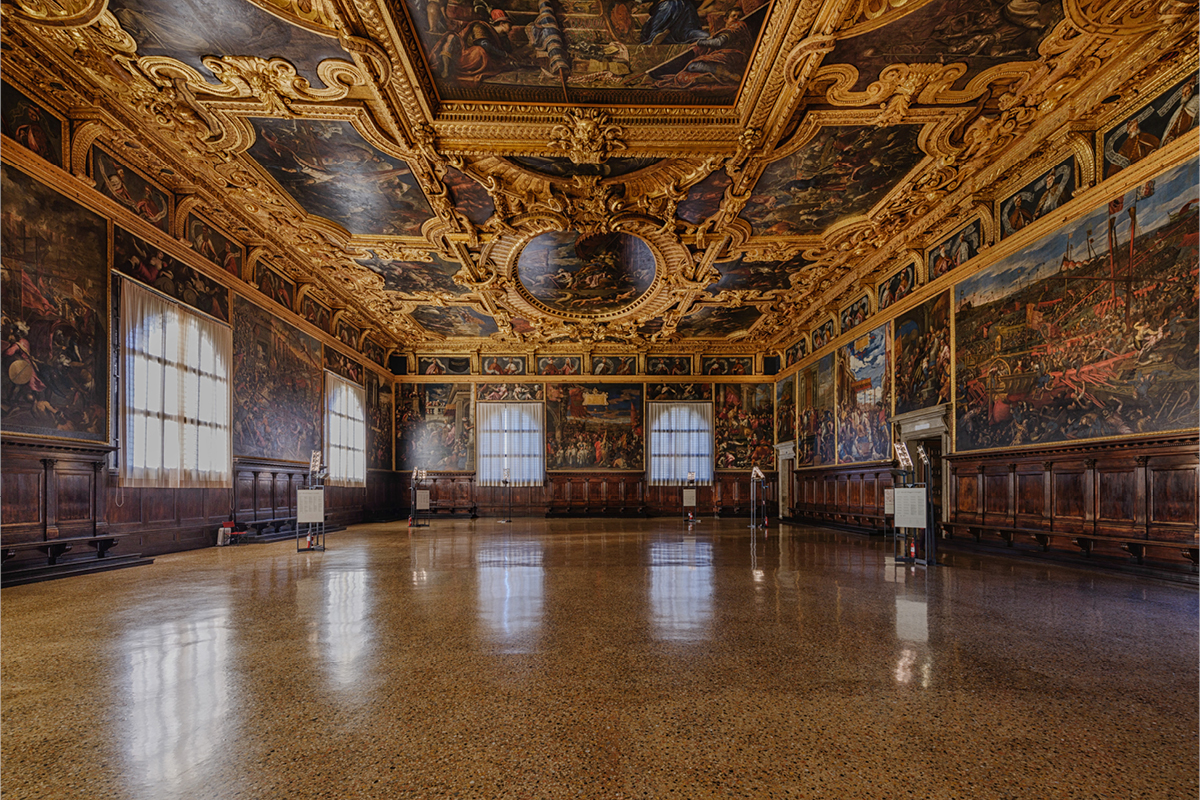
Next, visitors enter the Chamber of the Great Council, 53 meters long and 25 meters wide, this is not only the largest and most majestic chamber in the Doge’s Palace, but also one of the largest rooms in Europe. Here, meetings of the Great Council were held, the most important political body in the Republic.A very ancient institution, this Council was made up of all the male members of patrician Venetian families over 25 years old, irrespective of their individual status, merits or wealth.
The Council had the right to call to account all the other authorities and bodies of the State. The 1,200 to 2,000 noblemen who sat in the Council always considered themselves guardians of the laws that were the basis of all the other authorities within the State.
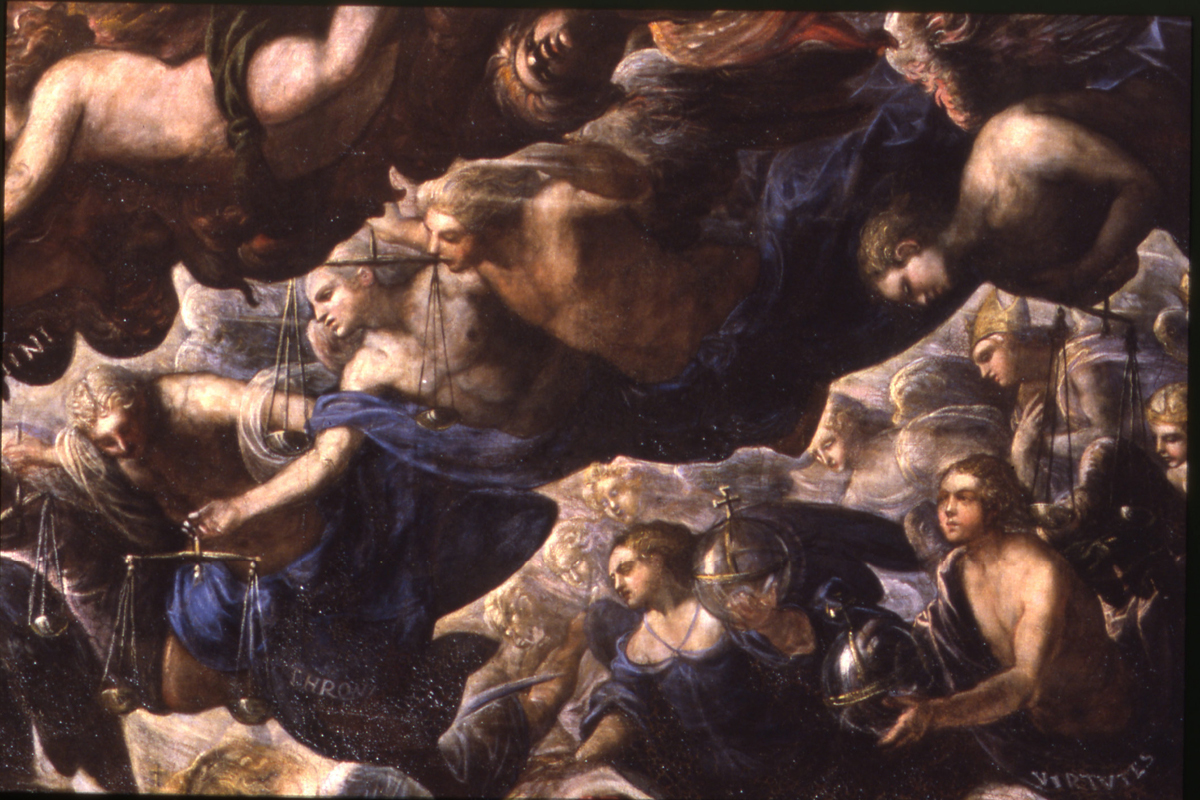
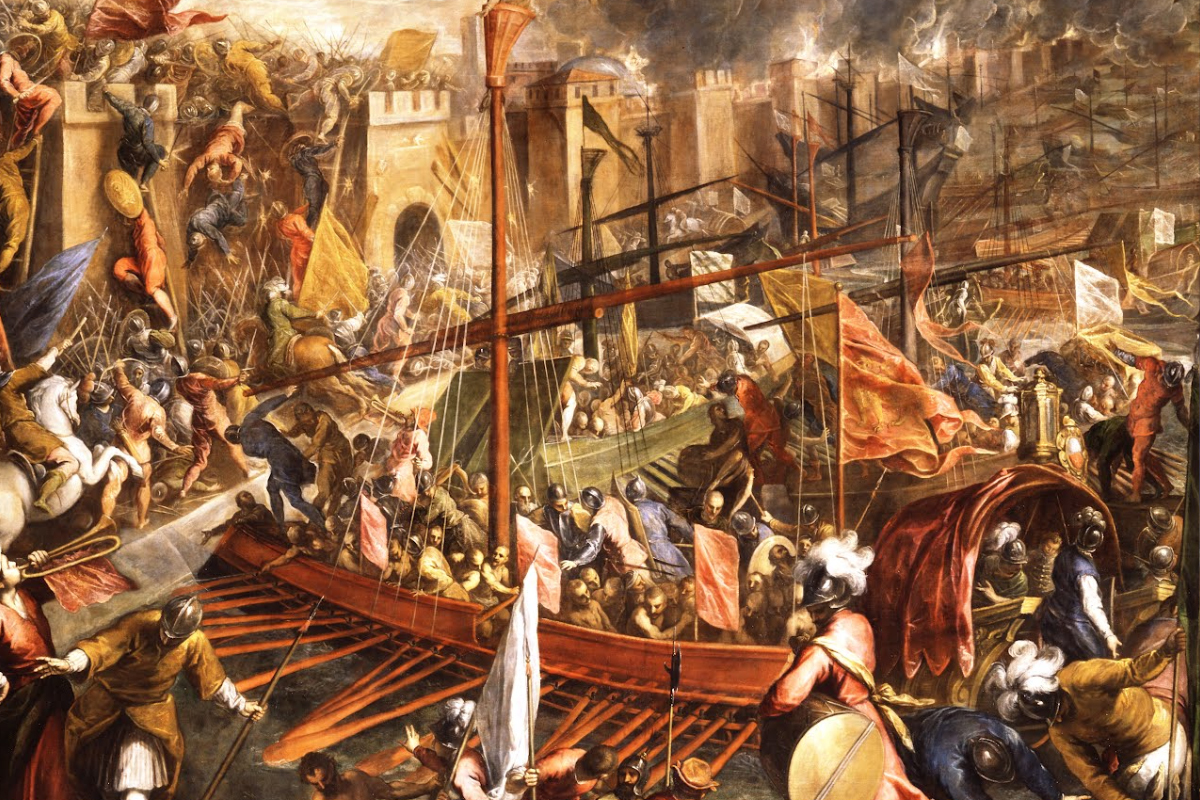
The current decoration dates back to the restorations carried out after the fire of 1577, featuring works by artists such as Veronese, Jacopo and Domenico Tintoretto, and Palma il Giovane. The walls were decorated with episodes of the Venetian history, while the ceiling was decorated with the Virtues and individual examples of Venetian heroism, and a central panel containing an allegorical glorification of the Republic. Facing each other in groups of six, the twelve wall paintings depict acts of valor or incidents of war that had occurred during the city’s history. Immediately below the ceiling runs a frieze with portraits of the first 76 doges (the portraits of the others are to be found in the Chamber of the Scrutinio).
One of the long walls, behind the Doge’s throne, is occupied by one of the longest canvas painting in the world, the Paradiso, which Jacopo Tintoretto and workshop produced between 1588 and 1592.
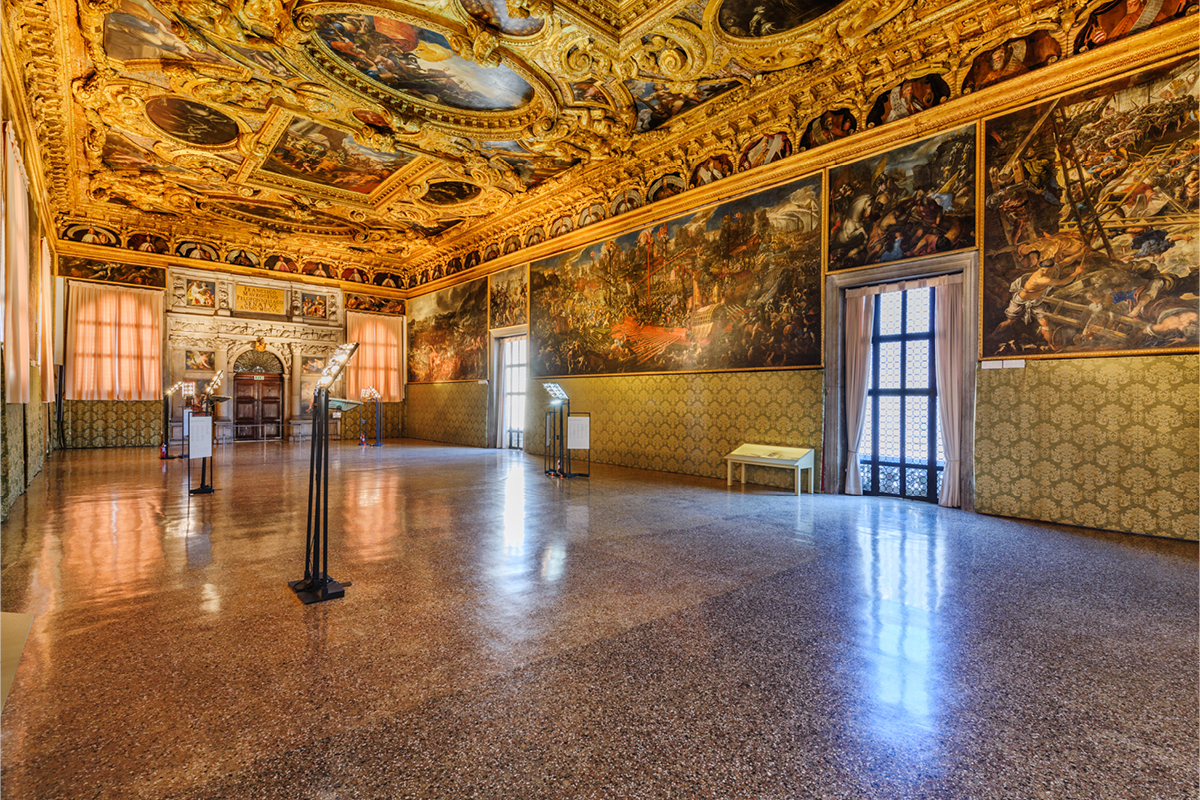
The Chamber of the Scrutinio, built in the 15th century, was initially intended to house the precious manuscripts left to the Republic by Petrarch and Bessarione (1468). Starting in 1532, the room was also used for electoral procedures, which eventually became its sole function.
After the fire of 1577, the room was restored between 1578 and 1615, featuring an elaborate ceiling designed by Cristoforo Sorte that celebrates Venetian military victories.
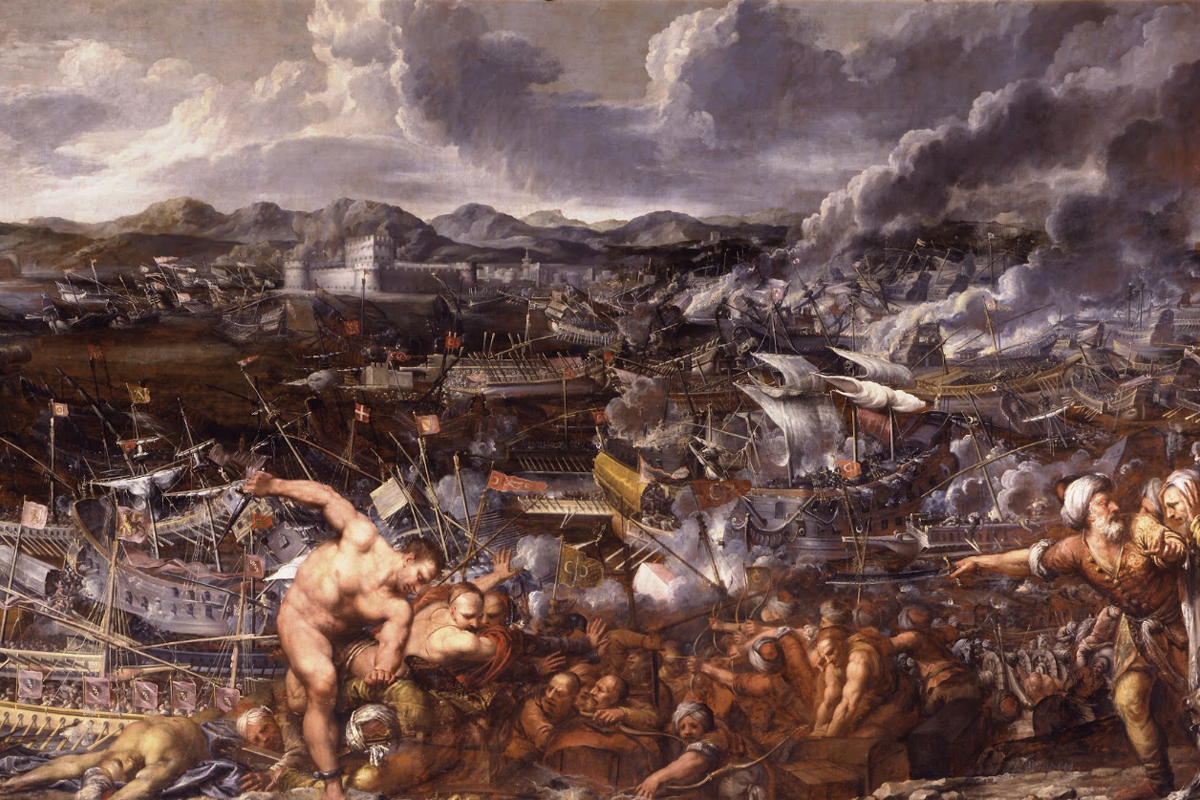
The walls recount battles won between 809 and 1656, including The Battle of Lepanto (1571) by Andrea Vicentino, framed by other battle scenes. The series of Doges portraits of the Chamber of the Great Council continues in the frieze beneath the ceiling, while the south wall is decorated with the Last Judgment (1594-95) by Jacopo Palma Giovane.
The room is closed to the north by a triumphal arch by Andrea Tirali, erected in honor of Doge Francesco Morosini.
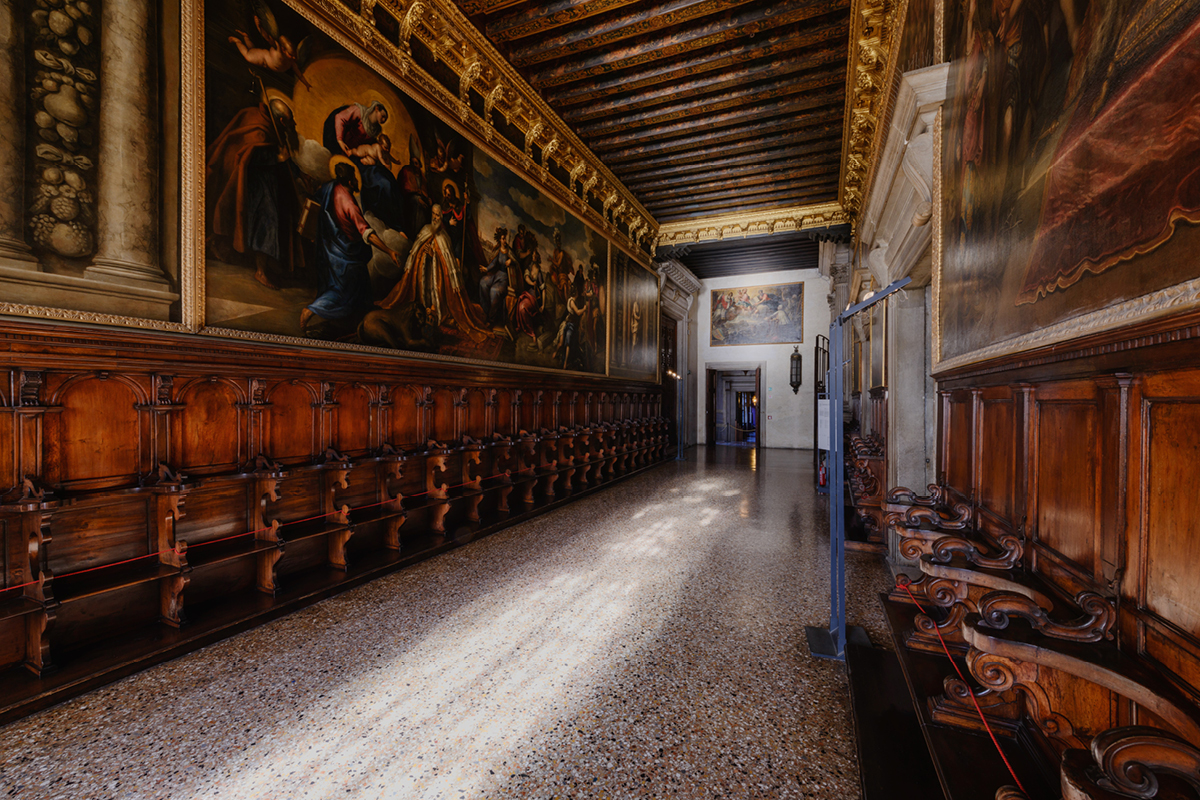
The Chamber of the Quarantia Criminale housed one of the three Councils of Forty, the highest appeal courts in the Venetian Republic. Set up in the 15th century, the Quarantia Criminal dealt with cases of criminal law. The wooden stalls date from the 17th century.
The room beyond this, the Cuoi Room, served as an archive, and was presumably lined with shelves and cupboards.
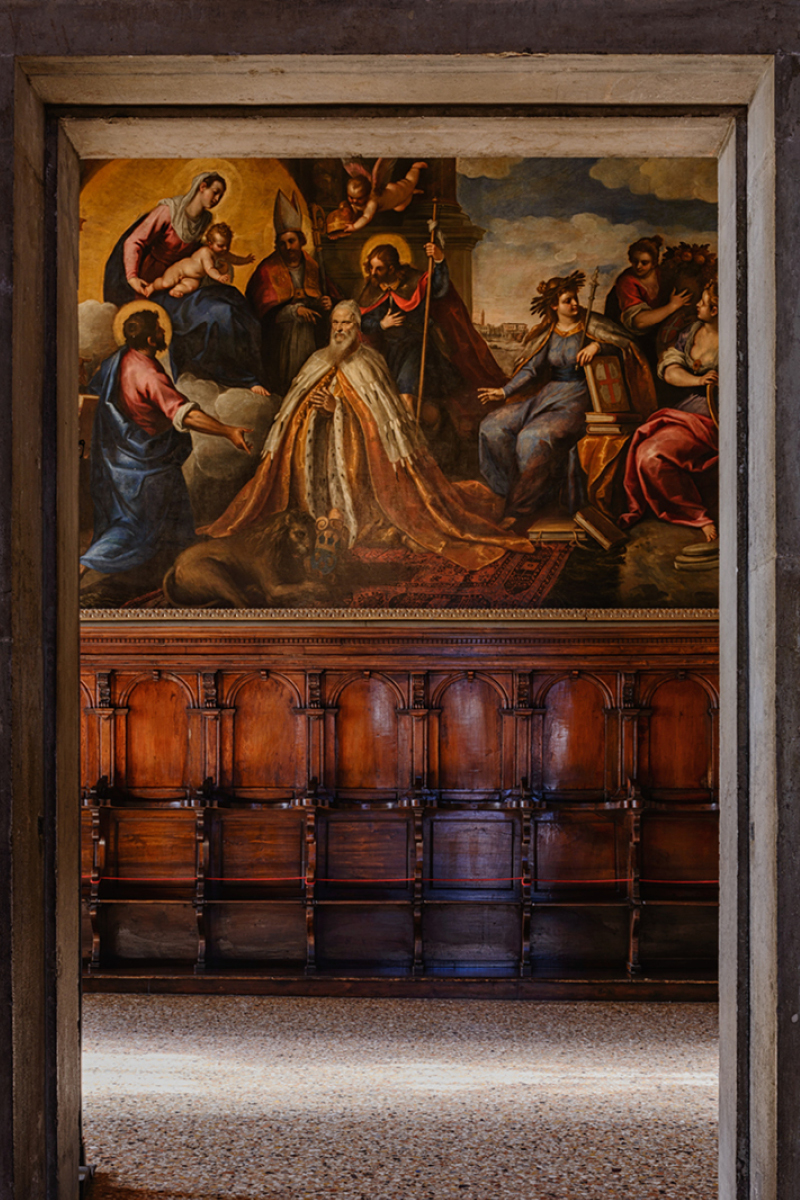
The visit continues to the Chamber of the Magistrato alle Leggi, which housed the Magistratura dei Conservatori ed esecutori delle leggi e ordini degli uffici di San Marco e di Rialto. Created in 1553, this authority was headed by 3 of the city’s patricians and was responsible for making sure the regulations concerning the practice of law were observed.
In a mercantile city such as Venice, the courts were of enormous importance. And the administration of justice in the city was made all the more special by the fact that it was not based on Imperial, Common or Roman law but on a legal system that was peculiar to Venice.