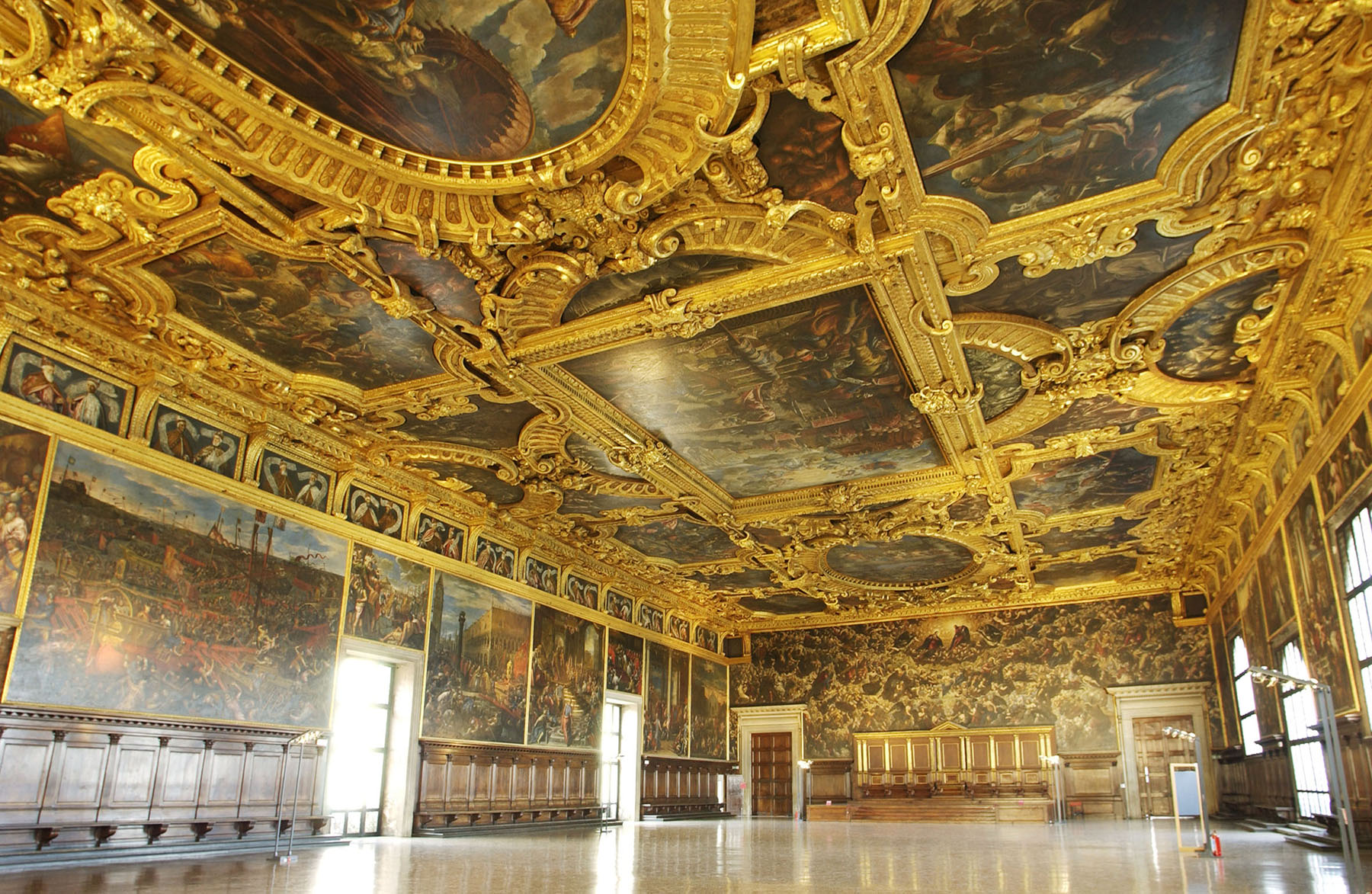
The Institutional Chambers on the Loggia floor
The Chamber of Censors takes us back to the time of the magistracy set up in 1517 by Marco Foscari di Giovanni. The Censors were two in number and were not judges as such, but more like moral consultants, being their main task the repression of electoral fraud and the protection of the State’s public institutions.
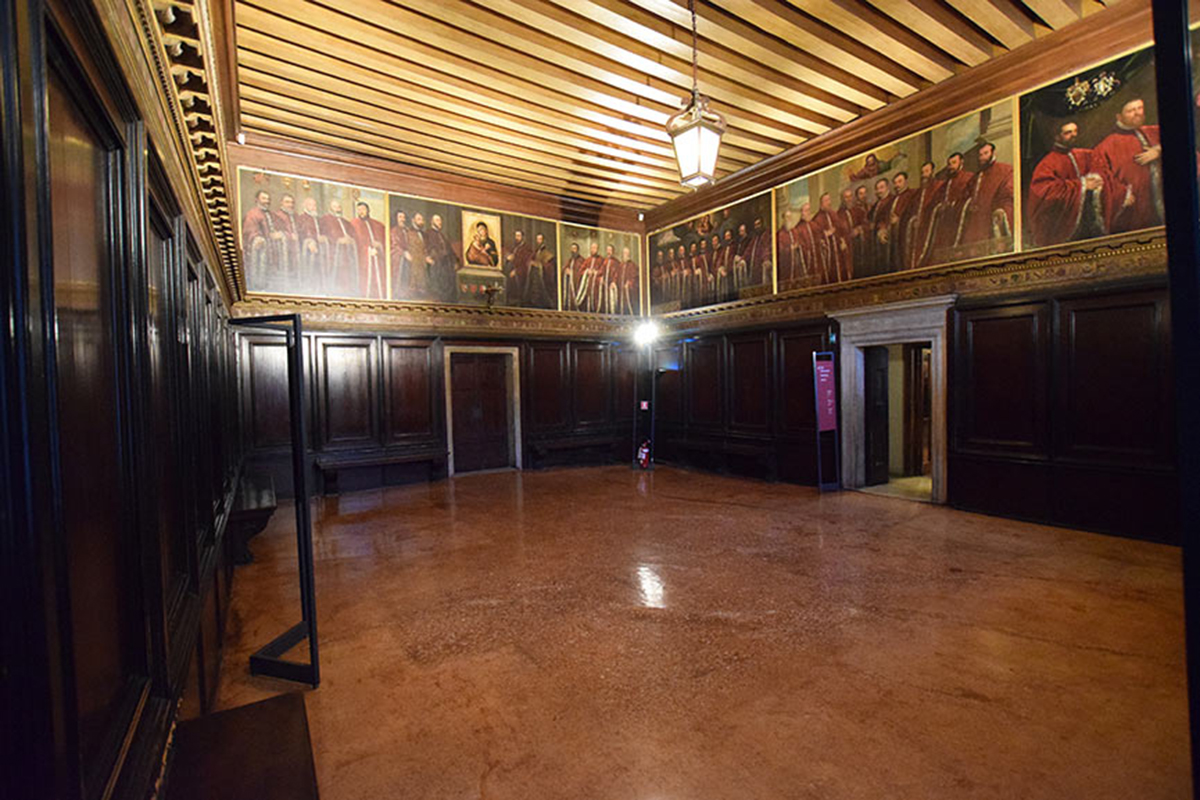
On the walls hang a number of Domenico Tintoretto’s portraits of these magistrates, and below the armorial bearings of some of those who held the position.
The Chamber of the State Advocacies was dedicated to a very ancient magistracy, which dates back to the 12th century The 3 members, the Avogadori, were the figures who safeguarded the very principle of legality, making sure that the laws were applied correctly. Though they never enjoyed the status and power of the Council of Ten, the Avogadori remained one of the most prestigious authorities in Venice right up to the fall of the Republic. They were also responsible for preserving the integrity of the city’s patrician class, verifying the legitimacy of marriages and births inscribed in the Golden Book. The room is decorated with paintings representing some of the Avogadori venerating the Virgin, the Christ and various saints.
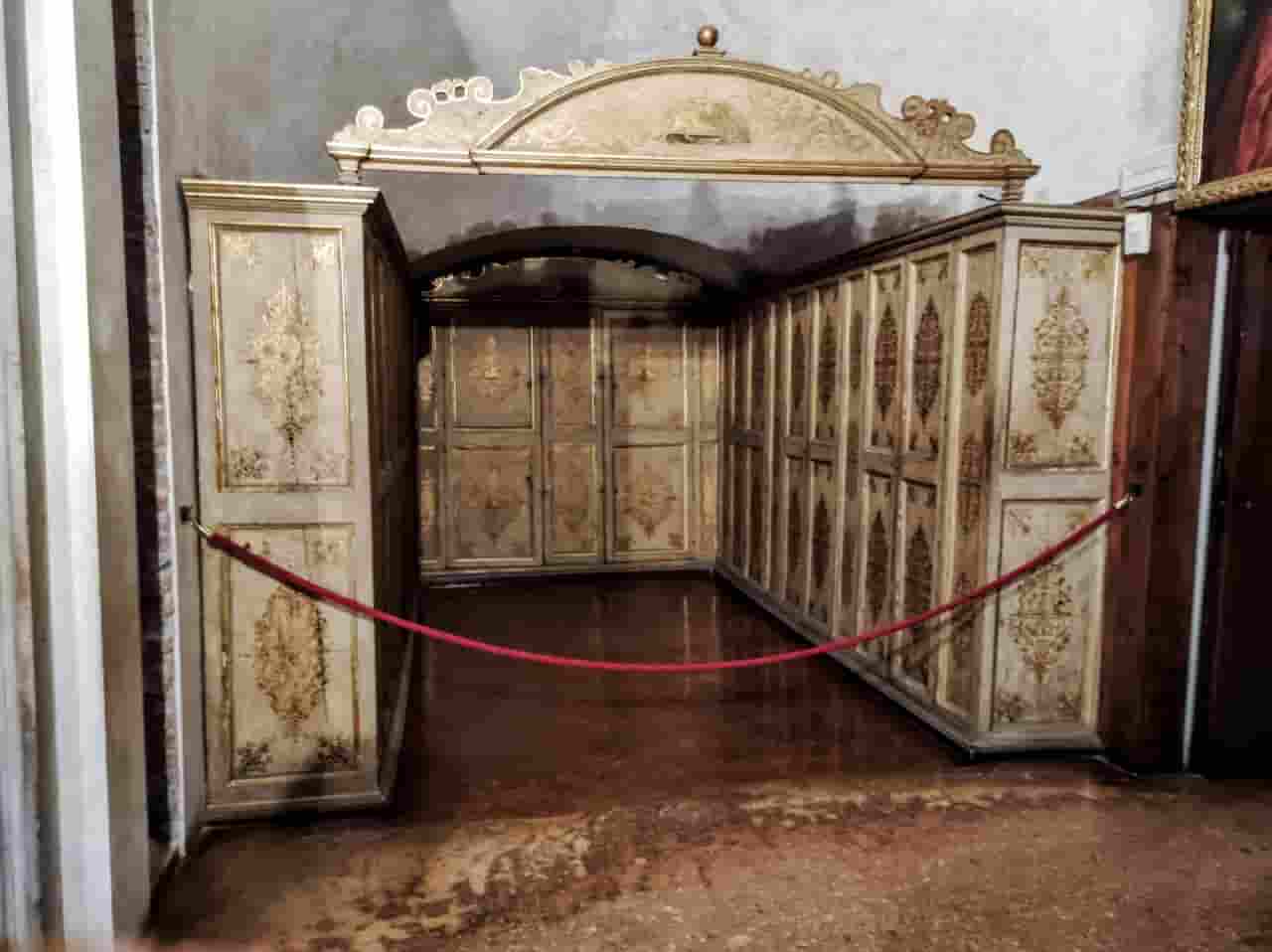
Next is the “Scrigno” Room, where the precious Golden and Silver Books were kept—registers that determined membership in the Venetian nobility. The Golden Book recorded the births of patricians, while the Silver Book listed the families of the original citizen class. The Golden and Silver Books were kept in a chest in this room, inside a cupboard that also contained all the documents proving the legitimacy of claims to be inscribed therein. The cupboard which one sees here nowadays extends around three sides of a wall niche; lacquered in white with gilded decorations, it dates from the 18th century.
The Chamber of the Navy Captains was dedicated to the magistracy, made up of 20 members from the Senate and the Great Council, the Milizia da Mar. First set up in the mid 16th century, was responsible for recruiting crews necessary for Venice’s war galleys. The bulk of these crews were made up of paid oarsman drawn from the Venetian manufacturing industries. Another similar body, entitled the Provveditori all’Armar, was responsible for the actual fitting and supplying of the fleet
The next room, now the bookshop, used to house the Lower Chancellery of Palazzo Ducale. Upon exiting this area, visitors emerge into the loggia, facing the majestic Giants’ Staircase, where the Doge was solemnly crowned between the statues of Mars and Neptune.